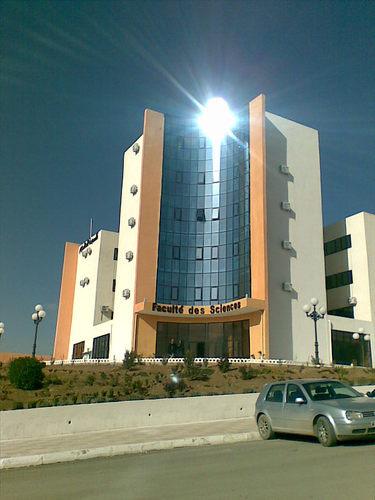
University Sétif 1 FERHAT ABBAS Faculty of Sciences
Détail de l'auteur
Auteur Hamza Belhadj |
Documents disponibles écrits par cet auteur


 Ajouter le résultat dans votre panier Affiner la recherche
Titre : Bottom-up Synthesis of Nano-catalysts for Electrochemical Energy Type de document : texte imprimé Auteurs : Loukmane Morchedi, Auteur ; Ahmed Ridha Kahia, Auteur ; Hamza Belhadj, Directeur de thèse Année de publication : 2022 Importance : 1 vol (44 f .) Format : 29cm Langues : Français (fre) Catégories : Thèses & Mémoires:Chimie Mots-clés : Chimie Index. décimale : 540 Chimie et sciences connexes Résumé :
Molybdenum Disulfide (MoS2) alloy was deposited on a copper substrate by chemical
bath deposition using different ratios of Mo and S source at different times of
deposition.
Effects of different ratios of Mo and S source, and time of deposition on hydrogenevolution
reaction (HER) as well as the electrochemical stability in alkaline solution
were investigated. The electrocatalytic activity of MoS2 at different ratios was
evaluated by the determination of kinetic and mechanism of HER in alkali medium by
the polarization measurements, cyclic voltammetry, and electrochemical impedance
spectroscopy techniques. The morphology and surface roughness of the deposit MoS2
were investigated using SEM and AFM analyses. Among different ratios of MoS2 the
film deposit at 60 min with ratio 4:1 demonstrates a highest electrocatalytic activity
toward hydrogen evolution reaction in 1M KOH. The results of SEM and AFM
investigation showed that the corresponding HER over potential of the MoS2 film
depends strongly on chemical bath deposition time and surface morphology of Mo
and S content. Moreover, the performance and stability behaviors of MoS2 electrodes
at different ratios were also discussed , and their reaction kinetics were compared in
alkaline solution.Côte titre : MACH/0255 En ligne : https://drive.google.com/file/d/1O1D1DUvcWyXSrlgpDxAYILb0GPtwGIKY/view?usp=share [...] Format de la ressource électronique : Bottom-up Synthesis of Nano-catalysts for Electrochemical Energy [texte imprimé] / Loukmane Morchedi, Auteur ; Ahmed Ridha Kahia, Auteur ; Hamza Belhadj, Directeur de thèse . - 2022 . - 1 vol (44 f .) ; 29cm.
Langues : Français (fre)
Catégories : Thèses & Mémoires:Chimie Mots-clés : Chimie Index. décimale : 540 Chimie et sciences connexes Résumé :
Molybdenum Disulfide (MoS2) alloy was deposited on a copper substrate by chemical
bath deposition using different ratios of Mo and S source at different times of
deposition.
Effects of different ratios of Mo and S source, and time of deposition on hydrogenevolution
reaction (HER) as well as the electrochemical stability in alkaline solution
were investigated. The electrocatalytic activity of MoS2 at different ratios was
evaluated by the determination of kinetic and mechanism of HER in alkali medium by
the polarization measurements, cyclic voltammetry, and electrochemical impedance
spectroscopy techniques. The morphology and surface roughness of the deposit MoS2
were investigated using SEM and AFM analyses. Among different ratios of MoS2 the
film deposit at 60 min with ratio 4:1 demonstrates a highest electrocatalytic activity
toward hydrogen evolution reaction in 1M KOH. The results of SEM and AFM
investigation showed that the corresponding HER over potential of the MoS2 film
depends strongly on chemical bath deposition time and surface morphology of Mo
and S content. Moreover, the performance and stability behaviors of MoS2 electrodes
at different ratios were also discussed , and their reaction kinetics were compared in
alkaline solution.Côte titre : MACH/0255 En ligne : https://drive.google.com/file/d/1O1D1DUvcWyXSrlgpDxAYILb0GPtwGIKY/view?usp=share [...] Format de la ressource électronique : Exemplaires (1)
Code-barres Cote Support Localisation Section Disponibilité MACH/0255 MACH/0255 Mémoire Bibliothèque des sciences Anglais Disponible
DisponibleÉlaboration et Caractérisation des Alliages Nanostructurés et leur Activité Électrocatalytique / Oulhi ,maroua katr el nada

Titre : Élaboration et Caractérisation des Alliages Nanostructurés et leur Activité Électrocatalytique Type de document : texte imprimé Auteurs : Oulhi ,maroua katr el nada, Auteur ; Hamza Belhadj, Directeur de thèse Editeur : Setif:UFA Année de publication : 2021 Importance : 1 vol (40 f .) Format : 29 cm Langues : Français (fre) Catégories : Thèses & Mémoires:Chimie Mots-clés : Électrodéposition
Alliages NiFeIndex. décimale : 540 Chimie et sciences connexes Résumé :
L'objectif dans ce travail est d'étudier la synthèse des alliages NiFe a différent rapport NiFe(1:1),NiFe(1:3),NiFe(3:1)L'hydroxyde double couche de nickel fer (NiFe HDLs) et d'autres matériaux en couches de métaux de transition ont attiré une énorme en raison de leur activité électrocatalytique élevée envers la réaction de dégagement d’hydrogéne ,ainsi que leur faible coût, leurs méthodes de préparation simples et l'abondance de la Terre Le nickel est connu pour être un matériau actif qui résiste mieux à la corrosion que les autres métaux de transition. La formation de L'hydroxyde double couche d’échantillon NiFe(1:3),NiFe(3:1) est optimal,l’effet d’électrolyte 0,5M H2SO4 à NiFe(3:1) et plus rapide. Les différentes couches électrodéposées sont caractérisées par différentes techniques d'analyse à savoir : la morphologie par microscopie a balayage MEB NiFe(3:1)observé la formation d'un nodule morphologie avec différentes tailles de grains.la présence de quelques trous de pins est due au réaction de dégagement d’hydrogéne .Côte titre : MACH/0231 En ligne : https://drive.google.com/file/d/1dhHtz0cjRL9_IuzmBvJrpiJFmqtaak7R/view?usp=shari [...] Format de la ressource électronique : Élaboration et Caractérisation des Alliages Nanostructurés et leur Activité Électrocatalytique [texte imprimé] / Oulhi ,maroua katr el nada, Auteur ; Hamza Belhadj, Directeur de thèse . - [S.l.] : Setif:UFA, 2021 . - 1 vol (40 f .) ; 29 cm.
Langues : Français (fre)
Catégories : Thèses & Mémoires:Chimie Mots-clés : Électrodéposition
Alliages NiFeIndex. décimale : 540 Chimie et sciences connexes Résumé :
L'objectif dans ce travail est d'étudier la synthèse des alliages NiFe a différent rapport NiFe(1:1),NiFe(1:3),NiFe(3:1)L'hydroxyde double couche de nickel fer (NiFe HDLs) et d'autres matériaux en couches de métaux de transition ont attiré une énorme en raison de leur activité électrocatalytique élevée envers la réaction de dégagement d’hydrogéne ,ainsi que leur faible coût, leurs méthodes de préparation simples et l'abondance de la Terre Le nickel est connu pour être un matériau actif qui résiste mieux à la corrosion que les autres métaux de transition. La formation de L'hydroxyde double couche d’échantillon NiFe(1:3),NiFe(3:1) est optimal,l’effet d’électrolyte 0,5M H2SO4 à NiFe(3:1) et plus rapide. Les différentes couches électrodéposées sont caractérisées par différentes techniques d'analyse à savoir : la morphologie par microscopie a balayage MEB NiFe(3:1)observé la formation d'un nodule morphologie avec différentes tailles de grains.la présence de quelques trous de pins est due au réaction de dégagement d’hydrogéne .Côte titre : MACH/0231 En ligne : https://drive.google.com/file/d/1dhHtz0cjRL9_IuzmBvJrpiJFmqtaak7R/view?usp=shari [...] Format de la ressource électronique : Exemplaires (1)
Code-barres Cote Support Localisation Section Disponibilité MACH/0231 MACH/0231 Mémoire Bibliothèque des sciences Français Disponible
DisponibleFabrication of Nanostructured Heterojunction Electrode for Photo-Electrocatalytic Hydrogen Evolution Reaction / Ikam Zizi
Titre : Fabrication of Nanostructured Heterojunction Electrode for Photo-Electrocatalytic Hydrogen Evolution Reaction Type de document : document électronique Auteurs : Ikam Zizi, Auteur ; Rettab, Maroua Nihed, Auteur ; Hamza Belhadj, Directeur de thèse Editeur : Sétif:UFA1 Année de publication : 2025 Importance : 1 vol (62 f .) Format : 29cm Langues : Français (fre) Catégories : Thèses & Mémoires:Chimie Mots-clés : Electrocatalytic activity
Photo-electrocatalysis
Hydrogen Evolution Reaction (HER)
HeterojunctionIndex. décimale : 540 - Chimie et sciences connexes Résumé :
Abstract
Heterojunction nanostructures based on transition metal oxide electrodes have attracted significant attention as electrocatalysts for the hydrogen evolution reaction (HER). In this work, a CoWO₄/ZnO nanostructure heterojunction was developed as an HER electrocatalyst. The individual components were synthesized via the co-precipitation method and subsequently integrated into a heterostructure using the ball milling technique. Compared to pristine CoWO₄ and ZnO, the CoWO₄/ZnO heterojunction demonstrated superior HER activity, requiring a low overpotential of 525.31 mV to achieve a current density of 20 mA cm⁻² in alkaline medium. This enhanced performance is attributed to the synergistic interaction between CoWO₄ and ZnO, resulting in a large number of exposed heterointerfaces that serve as highly abundant active sites. The heterojunction also exhibited rapid charge transfer and a high electrochemical active surface area (ECSA: 9.5 cm²), along with a roughness factor of 38. These characteristics reflect a strong correlation between interfacial engineering and electrocatalytic performance. Furthermore, the CoWO₄/ZnO heterojunction exhibited a significantly higher photocurrent density compared to the individual ZnO and CoWO₄ components, indicating that heterojunction formation enhances the separation efficiency of photogenerated electron–hole pairs in HER. In addition, the band gap energy of the heterojunction was reduced, thereby improving the material’s ability to absorb visible light. These outstanding features, achieved through heterojunction engineering, position the CoWO₄/ZnO electrocatalyst as a highly effective and promising candidate for future applications in photo-electrocatalytic hydrogen production.Note de contenu :
Table of contents
Abbreviations……………………………………………………………………………….....i
List of figures……………………………………………………………………………….....ii
List of tables……………………………………………………………………...………….. 5
General introduction………………………………………………………………………….1
References……………………………………………………………………………………..3
Chapter I: Literature review
I.1. Nanomaterials…………………………………………………………………………….4
I.1.1. General Properties of Nanomaterials…………………………………………………..…4
I.1.2. Classification of Nanomaterials by Dimensions………………………………………….5
I.2. Approaches for the Synthesis of Nanomaterials…………………………...……………6
I.2.1. Bottom-up Approaches………………………………………………………...……..….7
I.2.2. Top-down Approaches………………………………………………………...………....8
I.3. Characterization of Nanomaterials…………………………………………………..….8
I.4. Metal Oxide Semiconductors……………………………………………………….…....9
I.4.1. Fundamental Properties of Semiconductors………………………………..…………….9
I.4.2. The Fermi Level…………………………………………………………………….…..10
I.4.3. Intrinsic Semiconductor………………………………………………………………...10
I.4.4. Extrinsic Semiconductors……………………………………………………………….10
I.4.5. Flat-band Potential ……………………………………………………………………...11
I.4.6. Band Gap Energie …………………………………………………………………..…..11
I.4.7. Applications of Metal Oxides…………………………………………………………...11
I.5. Hydrogen Production…………………………...……………………………….….......11
I.5.1. Electrocatalysis…………………………………………………………………………12
I.5.1.1. Reaction Mechanism in Different Media……………………………………………..12
I.5.2. Photo-electrocatalysis…………………………………………………………………..13
I.5.3. Electronic Band Alignment in an Electrocatalyst……………………………….………14
I.5.4. The Hydrogen Evolution Reaction (HER)………………………………………………15
I.6. Challenges and Strategies in Photo-electrocatalytic Hydrogen Production………….16
I.7. Heterojunction of Semiconductor………………………………………………….…...17
I.7.1. Straddling Band Alignment (type I heterojunction)…………………………………….18
I.7.2. Staggered Band Alignment (type II heterojunction)…………………………………….18
I.7.3. Broken Band Alignment (type III)………………………………………………………19
References……………………………………………………………………………………20
Chapter Ⅱ: Experimental procedure
Ⅱ.1. Properties of ZnO and CoWO4………………………………………….……………..25
Ⅱ.1.1. Zinc Oxide (ZnO)……………………………………………………………………... 25
Ⅱ.1.2. Cobalt Tungstate (CoWO₄)……………………………………...……………………. 26
Ⅱ.2. Synthesis of CoWO4 and ZnO……………………………………….……………….. 28
II.2.1. Co-precipitation Method…………………………………………….………………....28
II.2.2. Preparation of CoWO4 and ZnO by Co-precipitation…………………………………..28
II.3. Fabrication of CoWO4/ZnO Heterojunction …………………………………..…......32
II.3.1. Vibration Ball Mill ………………………………………….……………………… ...32
II.3.2. CoWO4/ZnO Heterojunction…………………………………………………………..33
Ⅱ.4. Electrode Fabrication………………………………………………………………….34
Ⅱ.4.1. Doctor Blading Method………………………………………………………………...35
Ⅱ.4.2. Electrode Coating Procedure…………………………………………………………..35
Ⅱ.5. Experimental Setup…………………………………………………………………… 36
II.5.1. Setup Assembly…………………………………………………………………...…...36
Ⅱ.5.2. Electrochemical Cell…………………………………………………………………...37
Ⅱ.5.3. Description of Electrodes……………………………………………………………... 37
Ⅱ.6. Electrochemical and Photoelectrochemical Characterization……………………….38
References……………………………………………………………………………………40
Chapter Ⅲ: Results and discussion
III.1. Characterization Techniques…………………………………………………………43
III.1.1. X-Ray Diffraction (XRD)……………………………………………………………..43
III.1.2. UV-Visible Spectroscopy……………………………………………………………..45
III.2. Electrochemical Characterization……………………………………………………46
III.2.1. Linear Sweep Voltammetry…………………………………………………………...46
III.2.2. Tafel Measurement……………………………………………………………………47
III.2.3. Electrochemical Impedance Spectroscopy (EIS)……………………………………...48
III.2.4. Cyclic Voltammetry (CV)…………………………………………………………….49
III.2.5. Electrocatalytic Stability………………………………………………………………51
III.2.6. Photocurrent Analysis………………………………………………………………...52
Ⅲ.2.7. Mott–Schottky Analysis……………………………………………………………...53
Ⅲ.2.8. Mechanism of p-n Heterojunction Formation…………………………………………55
References……………………………………………………………………………………57
Conclusion……………………………………………………………………………………61
AbstractCôte titre : MACH/0371 Fabrication of Nanostructured Heterojunction Electrode for Photo-Electrocatalytic Hydrogen Evolution Reaction [document électronique] / Ikam Zizi, Auteur ; Rettab, Maroua Nihed, Auteur ; Hamza Belhadj, Directeur de thèse . - [S.l.] : Sétif:UFA1, 2025 . - 1 vol (62 f .) ; 29cm.
Langues : Français (fre)
Catégories : Thèses & Mémoires:Chimie Mots-clés : Electrocatalytic activity
Photo-electrocatalysis
Hydrogen Evolution Reaction (HER)
HeterojunctionIndex. décimale : 540 - Chimie et sciences connexes Résumé :
Abstract
Heterojunction nanostructures based on transition metal oxide electrodes have attracted significant attention as electrocatalysts for the hydrogen evolution reaction (HER). In this work, a CoWO₄/ZnO nanostructure heterojunction was developed as an HER electrocatalyst. The individual components were synthesized via the co-precipitation method and subsequently integrated into a heterostructure using the ball milling technique. Compared to pristine CoWO₄ and ZnO, the CoWO₄/ZnO heterojunction demonstrated superior HER activity, requiring a low overpotential of 525.31 mV to achieve a current density of 20 mA cm⁻² in alkaline medium. This enhanced performance is attributed to the synergistic interaction between CoWO₄ and ZnO, resulting in a large number of exposed heterointerfaces that serve as highly abundant active sites. The heterojunction also exhibited rapid charge transfer and a high electrochemical active surface area (ECSA: 9.5 cm²), along with a roughness factor of 38. These characteristics reflect a strong correlation between interfacial engineering and electrocatalytic performance. Furthermore, the CoWO₄/ZnO heterojunction exhibited a significantly higher photocurrent density compared to the individual ZnO and CoWO₄ components, indicating that heterojunction formation enhances the separation efficiency of photogenerated electron–hole pairs in HER. In addition, the band gap energy of the heterojunction was reduced, thereby improving the material’s ability to absorb visible light. These outstanding features, achieved through heterojunction engineering, position the CoWO₄/ZnO electrocatalyst as a highly effective and promising candidate for future applications in photo-electrocatalytic hydrogen production.Note de contenu :
Table of contents
Abbreviations……………………………………………………………………………….....i
List of figures……………………………………………………………………………….....ii
List of tables……………………………………………………………………...………….. 5
General introduction………………………………………………………………………….1
References……………………………………………………………………………………..3
Chapter I: Literature review
I.1. Nanomaterials…………………………………………………………………………….4
I.1.1. General Properties of Nanomaterials…………………………………………………..…4
I.1.2. Classification of Nanomaterials by Dimensions………………………………………….5
I.2. Approaches for the Synthesis of Nanomaterials…………………………...……………6
I.2.1. Bottom-up Approaches………………………………………………………...……..….7
I.2.2. Top-down Approaches………………………………………………………...………....8
I.3. Characterization of Nanomaterials…………………………………………………..….8
I.4. Metal Oxide Semiconductors……………………………………………………….…....9
I.4.1. Fundamental Properties of Semiconductors………………………………..…………….9
I.4.2. The Fermi Level…………………………………………………………………….…..10
I.4.3. Intrinsic Semiconductor………………………………………………………………...10
I.4.4. Extrinsic Semiconductors……………………………………………………………….10
I.4.5. Flat-band Potential ……………………………………………………………………...11
I.4.6. Band Gap Energie …………………………………………………………………..…..11
I.4.7. Applications of Metal Oxides…………………………………………………………...11
I.5. Hydrogen Production…………………………...……………………………….….......11
I.5.1. Electrocatalysis…………………………………………………………………………12
I.5.1.1. Reaction Mechanism in Different Media……………………………………………..12
I.5.2. Photo-electrocatalysis…………………………………………………………………..13
I.5.3. Electronic Band Alignment in an Electrocatalyst……………………………….………14
I.5.4. The Hydrogen Evolution Reaction (HER)………………………………………………15
I.6. Challenges and Strategies in Photo-electrocatalytic Hydrogen Production………….16
I.7. Heterojunction of Semiconductor………………………………………………….…...17
I.7.1. Straddling Band Alignment (type I heterojunction)…………………………………….18
I.7.2. Staggered Band Alignment (type II heterojunction)…………………………………….18
I.7.3. Broken Band Alignment (type III)………………………………………………………19
References……………………………………………………………………………………20
Chapter Ⅱ: Experimental procedure
Ⅱ.1. Properties of ZnO and CoWO4………………………………………….……………..25
Ⅱ.1.1. Zinc Oxide (ZnO)……………………………………………………………………... 25
Ⅱ.1.2. Cobalt Tungstate (CoWO₄)……………………………………...……………………. 26
Ⅱ.2. Synthesis of CoWO4 and ZnO……………………………………….……………….. 28
II.2.1. Co-precipitation Method…………………………………………….………………....28
II.2.2. Preparation of CoWO4 and ZnO by Co-precipitation…………………………………..28
II.3. Fabrication of CoWO4/ZnO Heterojunction …………………………………..…......32
II.3.1. Vibration Ball Mill ………………………………………….……………………… ...32
II.3.2. CoWO4/ZnO Heterojunction…………………………………………………………..33
Ⅱ.4. Electrode Fabrication………………………………………………………………….34
Ⅱ.4.1. Doctor Blading Method………………………………………………………………...35
Ⅱ.4.2. Electrode Coating Procedure…………………………………………………………..35
Ⅱ.5. Experimental Setup…………………………………………………………………… 36
II.5.1. Setup Assembly…………………………………………………………………...…...36
Ⅱ.5.2. Electrochemical Cell…………………………………………………………………...37
Ⅱ.5.3. Description of Electrodes……………………………………………………………... 37
Ⅱ.6. Electrochemical and Photoelectrochemical Characterization……………………….38
References……………………………………………………………………………………40
Chapter Ⅲ: Results and discussion
III.1. Characterization Techniques…………………………………………………………43
III.1.1. X-Ray Diffraction (XRD)……………………………………………………………..43
III.1.2. UV-Visible Spectroscopy……………………………………………………………..45
III.2. Electrochemical Characterization……………………………………………………46
III.2.1. Linear Sweep Voltammetry…………………………………………………………...46
III.2.2. Tafel Measurement……………………………………………………………………47
III.2.3. Electrochemical Impedance Spectroscopy (EIS)……………………………………...48
III.2.4. Cyclic Voltammetry (CV)…………………………………………………………….49
III.2.5. Electrocatalytic Stability………………………………………………………………51
III.2.6. Photocurrent Analysis………………………………………………………………...52
Ⅲ.2.7. Mott–Schottky Analysis……………………………………………………………...53
Ⅲ.2.8. Mechanism of p-n Heterojunction Formation…………………………………………55
References……………………………………………………………………………………57
Conclusion……………………………………………………………………………………61
AbstractCôte titre : MACH/0371 Exemplaires (1)
Code-barres Cote Support Localisation Section Disponibilité MACH/0371 MACH/0371 Mémoire Bibliothèque des sciences Anglais Disponible
Disponible
Titre : Synthesis and Characterization of Nanoparticles Based on Metal Oxide for Electrocatalysis Type de document : texte imprimé Auteurs : Achouak Mekarni, Auteur ; Hamza Belhadj, Directeur de thèse Editeur : Setif:UFA Année de publication : 2021 Importance : 1 vol (44 f .) Format : 29 cm Langues : Français (fre) Catégories : Thèses & Mémoires:Chimie Mots-clés : Chimie et sciences connexes Index. décimale : 540 Chimie et sciences connexes Résumé :
Dans ce travail, les ferrites métalliques MFe2O4 (M= Co, Cu, Ni and Zn) ont été
synthétisées par la méthode sol-gel et déposées sur des substrats en cuivre par la
technique de lame, et ces propriétés électrocatalytiques ont été étudiées en milieu
alcalin. l’électrocatalyseur fabriqué présente excellente propriétés pour l’évolution de
H2. CoFe2O4 nécessitait un surtension de 270mV pour HER, ce qui en fait le meilleur
électrocatalyseur suivi par CuFe2O4, NiFe2O4 and ZnFe2O4 respectivement. Les études
EIS menées révèlent que le CoFe2O4 a moins de valeurs de résistance de transfert de
charge ce qui confirme la meilleur activité életrocatalytique par rapport aux autre
ferrites. De plus, CoFe2O4 a montré une stabilité électrocatalytique exceptionnelle
après une application de 1000 cycles. Ces performances souhaitables de l'électrode
fabriquée en tant qu'électrocatalyseur pour la séparation complète de l'eau peuvent être
attribuées au facteur de surface active élevé, à l'effet synergique des éléments et à la
séparation rapide des bulles en surface de l'électrode. Cette étude fournit une méthode
simple pour la construction rapide d'électrocatalyseur efficace pour les sources
d'énergie renouvelablesCôte titre : MACH/0239 En ligne : https://drive.google.com/file/d/1N-tZ0U2mhKu9iKPTf8FejwyA0WxUMaGX/view?usp=shari [...] Format de la ressource électronique : Synthesis and Characterization of Nanoparticles Based on Metal Oxide for Electrocatalysis [texte imprimé] / Achouak Mekarni, Auteur ; Hamza Belhadj, Directeur de thèse . - [S.l.] : Setif:UFA, 2021 . - 1 vol (44 f .) ; 29 cm.
Langues : Français (fre)
Catégories : Thèses & Mémoires:Chimie Mots-clés : Chimie et sciences connexes Index. décimale : 540 Chimie et sciences connexes Résumé :
Dans ce travail, les ferrites métalliques MFe2O4 (M= Co, Cu, Ni and Zn) ont été
synthétisées par la méthode sol-gel et déposées sur des substrats en cuivre par la
technique de lame, et ces propriétés électrocatalytiques ont été étudiées en milieu
alcalin. l’électrocatalyseur fabriqué présente excellente propriétés pour l’évolution de
H2. CoFe2O4 nécessitait un surtension de 270mV pour HER, ce qui en fait le meilleur
électrocatalyseur suivi par CuFe2O4, NiFe2O4 and ZnFe2O4 respectivement. Les études
EIS menées révèlent que le CoFe2O4 a moins de valeurs de résistance de transfert de
charge ce qui confirme la meilleur activité életrocatalytique par rapport aux autre
ferrites. De plus, CoFe2O4 a montré une stabilité électrocatalytique exceptionnelle
après une application de 1000 cycles. Ces performances souhaitables de l'électrode
fabriquée en tant qu'électrocatalyseur pour la séparation complète de l'eau peuvent être
attribuées au facteur de surface active élevé, à l'effet synergique des éléments et à la
séparation rapide des bulles en surface de l'électrode. Cette étude fournit une méthode
simple pour la construction rapide d'électrocatalyseur efficace pour les sources
d'énergie renouvelablesCôte titre : MACH/0239 En ligne : https://drive.google.com/file/d/1N-tZ0U2mhKu9iKPTf8FejwyA0WxUMaGX/view?usp=shari [...] Format de la ressource électronique : Exemplaires (1)
Code-barres Cote Support Localisation Section Disponibilité MACH/0239 MACH/0239 Mémoire Bibliothèque des sciences Anglais Disponible
Disponible
Titre : Synthesis of Bimetallic Nanoparticles for Electrochemical Application Type de document : texte imprimé Auteurs : Meriem Zair ; Hamza Belhadj, Directeur de thèse Editeur : Setif:UFA Année de publication : 2023 Importance : 1 vol. (38 f.) Format : 29 cm Langues : Anglais (eng) Catégories : Thèses & Mémoires:Chimie Mots-clés : Methode hydrothermique
Production d'hydrogèneIndex. décimale : 540 Chimie et sciences connexes Résumé :
Dans cette étude, les nanoparticules (WS2, CoS2 et CoS2/WS2) ont été synthétisées par une
méthode hydrothermique et déposées sur des substrats de cuivre. Les résultats obtenus
indiquent que l'électrode CoS2/WS2 nécessite un surtension de 119 mV pour HER, ce qui en
fait le meilleur électrocatalyseur, suivi de l'électrode CoS2 et de l'électrode WS2,
respectivement. Les études EIS réalisées révèlent que l'électrode CoS2/WS2 présente des
valeurs de résistance au transfert de charge plus faibles, ce qui prouve que l'activité
électrocatalytique est meilleure que celle des électrodes CoS2 et WS2. En outre, l'électrode
CoS2/WS2 a démontré une stabilité électrocatalytique exceptionnelle après avoir été
appliquée pendant une heure. Les résultats de cette étude permettent de conclure que
l'électrode CoS2/WS2 est un catalyseur prometteur pour la production d'hydrogène = In this study, the nanoparticles (WS2, CoS2, and CoS2/WS2) were synthesized using a
hydrothermal method and deposited on copper substrates. The obtained results indicate that
the CoS2/WS2 electrode required an overpotential of119.mV for HER, making it the best
electrocatalyst, followed by the CoS2 electrode and the WS2 electrode, respectively. The
conducted EIS studies reveal that the CoS2/WS2 electrode has lower charge transfer
resistance values, providing evidence for enhanced electrocatalytic activity compared to CoS2
and WS2. Additionally, the CoS2/WS2 electrode demonstrated outstanding electrocatalytic
stability after being applied for one hour. Based on the findings of the study, it can be
concluded that the CoS2/WS2 electrode is a promising catalyst for hydrogen production.Côte titre : MACH/0325 En ligne : https://drive.google.com/file/d/1mrq0bIu58jugDVSPyiXlSmg_CZ_b-Mvh/view?usp=shari [...] Format de la ressource électronique : Synthesis of Bimetallic Nanoparticles for Electrochemical Application [texte imprimé] / Meriem Zair ; Hamza Belhadj, Directeur de thèse . - [S.l.] : Setif:UFA, 2023 . - 1 vol. (38 f.) ; 29 cm.
Langues : Anglais (eng)
Catégories : Thèses & Mémoires:Chimie Mots-clés : Methode hydrothermique
Production d'hydrogèneIndex. décimale : 540 Chimie et sciences connexes Résumé :
Dans cette étude, les nanoparticules (WS2, CoS2 et CoS2/WS2) ont été synthétisées par une
méthode hydrothermique et déposées sur des substrats de cuivre. Les résultats obtenus
indiquent que l'électrode CoS2/WS2 nécessite un surtension de 119 mV pour HER, ce qui en
fait le meilleur électrocatalyseur, suivi de l'électrode CoS2 et de l'électrode WS2,
respectivement. Les études EIS réalisées révèlent que l'électrode CoS2/WS2 présente des
valeurs de résistance au transfert de charge plus faibles, ce qui prouve que l'activité
électrocatalytique est meilleure que celle des électrodes CoS2 et WS2. En outre, l'électrode
CoS2/WS2 a démontré une stabilité électrocatalytique exceptionnelle après avoir été
appliquée pendant une heure. Les résultats de cette étude permettent de conclure que
l'électrode CoS2/WS2 est un catalyseur prometteur pour la production d'hydrogène = In this study, the nanoparticles (WS2, CoS2, and CoS2/WS2) were synthesized using a
hydrothermal method and deposited on copper substrates. The obtained results indicate that
the CoS2/WS2 electrode required an overpotential of119.mV for HER, making it the best
electrocatalyst, followed by the CoS2 electrode and the WS2 electrode, respectively. The
conducted EIS studies reveal that the CoS2/WS2 electrode has lower charge transfer
resistance values, providing evidence for enhanced electrocatalytic activity compared to CoS2
and WS2. Additionally, the CoS2/WS2 electrode demonstrated outstanding electrocatalytic
stability after being applied for one hour. Based on the findings of the study, it can be
concluded that the CoS2/WS2 electrode is a promising catalyst for hydrogen production.Côte titre : MACH/0325 En ligne : https://drive.google.com/file/d/1mrq0bIu58jugDVSPyiXlSmg_CZ_b-Mvh/view?usp=shari [...] Format de la ressource électronique : Exemplaires (1)
Code-barres Cote Support Localisation Section Disponibilité MACH/0325 MACH/0325 Mémoire Bibliothèque des sciences Anglais Disponible
DisponiblePermalink