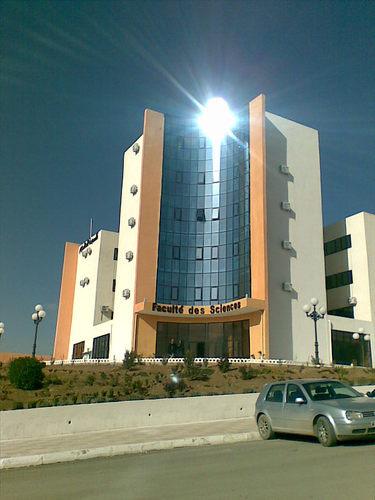
University Sétif 1 FERHAT ABBAS Faculty of Sciences
Détail de l'auteur
Auteur Seif eddine Chouaba |
Documents disponibles écrits par cet auteur


 Ajouter le résultat dans votre panier Affiner la recherche
Titre : Apprentissage profond appliqué au diagnostic précoce de la maladie d’Alzheimer Type de document : texte imprimé Auteurs : Aziza Bensadallah, Auteur ; Amina Mansar, Auteur ; Seif eddine Chouaba, Directeur de thèse Année de publication : 2023 Importance : 1 vol (53 f.) Format : 29 cm Langues : Français (fre) Catégories : Physique Mots-clés : Apprentissage Profond
Maladie d’AlzheimerIndex. décimale : 530-Physique Résumé :
L’intelligence artificielle connait un boom depuis les années 2000 de par le stockage
systématique des données et l’augmentation de la puissance de calcul des ordinateurs ainsi
que l’apparition des méthodes dites de deep learning. Cela a permis d’envisager des
recherches et applications dans de nombreux domaines, et en particulier le domaine médical.
La maladie d'Alzheimer est une maladie neurodégénérative progressive qui affecte la
mémoire, la cognition et les fonctions motrices. Le diagnostic précoce est essentiel pour
permettre une prise en charge efficace de la maladie. Ce travail de master montre qu’il est
possible d’utiliser des modèles type CNN pour classer automatiquement la maladie
d'Alzheimer en quatre stages (légèrement démentes, modérément démentes, non démentes, et
très légèrement démentes) à partir des images IRM. Le modèle proposé a été évalué et testé
sur une base de données constituée de 6400 images d'IRM. Les résultats obtenus sont
encourageants et prometteurs.Côte titre : MAPH/0601 En ligne : https://drive.google.com/file/d/16Hnb8zIu2dX5yoLLx7B4aEE7rxWlTC_u/view?usp=shari [...] Format de la ressource électronique : Apprentissage profond appliqué au diagnostic précoce de la maladie d’Alzheimer [texte imprimé] / Aziza Bensadallah, Auteur ; Amina Mansar, Auteur ; Seif eddine Chouaba, Directeur de thèse . - 2023 . - 1 vol (53 f.) ; 29 cm.
Langues : Français (fre)
Catégories : Physique Mots-clés : Apprentissage Profond
Maladie d’AlzheimerIndex. décimale : 530-Physique Résumé :
L’intelligence artificielle connait un boom depuis les années 2000 de par le stockage
systématique des données et l’augmentation de la puissance de calcul des ordinateurs ainsi
que l’apparition des méthodes dites de deep learning. Cela a permis d’envisager des
recherches et applications dans de nombreux domaines, et en particulier le domaine médical.
La maladie d'Alzheimer est une maladie neurodégénérative progressive qui affecte la
mémoire, la cognition et les fonctions motrices. Le diagnostic précoce est essentiel pour
permettre une prise en charge efficace de la maladie. Ce travail de master montre qu’il est
possible d’utiliser des modèles type CNN pour classer automatiquement la maladie
d'Alzheimer en quatre stages (légèrement démentes, modérément démentes, non démentes, et
très légèrement démentes) à partir des images IRM. Le modèle proposé a été évalué et testé
sur une base de données constituée de 6400 images d'IRM. Les résultats obtenus sont
encourageants et prometteurs.Côte titre : MAPH/0601 En ligne : https://drive.google.com/file/d/16Hnb8zIu2dX5yoLLx7B4aEE7rxWlTC_u/view?usp=shari [...] Format de la ressource électronique : Exemplaires (1)
Code-barres Cote Support Localisation Section Disponibilité MAPH/0601 MAPH/0601 Mémoire Bibliothèque des sciences Français Disponible
DisponibleDeep Learning Models for Predicting Recurrence in Head and Neck Cancer / Imane hibet errahmene Aissaoui
Titre : Deep Learning Models for Predicting Recurrence in Head and Neck Cancer Type de document : document électronique Auteurs : Imane hibet errahmene Aissaoui, Auteur ; Seif eddine Chouaba, Directeur de thèse Editeur : Setif:UFA Année de publication : 2024 Importance : 1 vol (54 f.) Format : 29 cm Langues : Anglais (eng) Catégories : Thèses & Mémoires:Physique Mots-clés : Head and neck cancer
Recurrence Prediction
Deep learning
Medical Imaging
Computed Tomography
Convolutional Neural NetworksIndex. décimale : 530 - Physique Résumé :
This master thesis aims to investigate and develop deep learning models for predicting head and neck cancer recurrence. This latter is a major cause of morbidity and treatment failure and poses a significant challenge in healthcare, which demands accurate prognostic tools for effective patient management. Deep learning, a subset of artificial intelligence, has shown promising results in various medical applications, including cancer recurrence prediction.
The primary goal of this research is to develop a range of deep learning models based on diverse convolutional neural networks architectures and subsequently conduct a thorough comparative analysis to evaluate their performance in predicting head and neck cancer recurrence. By systematically assessing the strengths and limitations of each architecture, this study aims to provide valuable insights into the development of optimal deep learning approaches for accurate recurrence prediction.
The anticipated contributions of this thesis include the identification of the most effective deep learning architecture for predicting head and neck cancer recurrence, providing clinicians with a valuable tool for personalized treatment planning. Additionally, insights gained from the comparative analysis may inform future developments in deep learning applications within the field of oncology.Note de contenu : Sommaire
CHAPITRE01: HEAD AND NECK CANCER
1. BACKGROUND ............................................................................................ 3
2. HEAD AND NECK CANCER RECCURENCE ....................................................... 4
2.1 Head and neck cancer ............................................................................................................ 4
2.2 Head and neck cancer recurrence ......................................................................................... 4
3. HEAD AND NECK CANCER RECCURENCE PREDICTION APPROACHES .............. 5
3.1 Traditional statistical models ................................................................................................. 6
3.2 Machine Learning (ML) ......................................................................................................... 6
3.3 Deep Learning (DL): .............................................................................................................. 8
4 CONCLUSION .............................................................................................. 9
CHAPITRE 02: DEEP LEARNING: BASICS AND CONVOLUTION NEURAL NETWORK
1 BACKGROUND ............................................................................................10
2. FOUNDATIONS OF DEEP LEARNING AND CONVOLUTIONAL NEURAL NETWORKS (CNNs) ........................................................................................... 11
2.1 Artificial Intelligence (AI) .................................................................................. 11
2.2 Machine Learning (ML) .......................................................................................................... 11
2.3 Deep learning (DL) ................................................................................................................ 12
3. LEARNING APPROACHES AND ARCHITECTURES ................................................. 13
3.1 Supervised Learning ............................................................................................................ 13
3.2 Unsupervised learning ......................................................................................................... 14
3.3. Semi-Supervised learning ................................................................................................... 14
4. CONVOLUTIONAL NEURAL NETWORKS ......................................................... 15
4.1 Components of convolutional neural networks ................................................................... 16
4.1.1 Input Layer. ................................................................................................................... 16
4.1.2 Convolution layer .......................................................................................................... 16
4.1.3 Pooling layer .................................................................................................................. 16
4.1.4 Flatten Layer ..................................................................................................................17
4.1.5 Fully-connected layer .....................................................................................................17
4.1.6 Output Layer ..................................................................................................................17
4.2 CNN workflow in medical imaging classification………………………………………………………......17
5. CHALLENGES AND LIMITATIONS OF DL MODELS IN HEAD AND NECK CANCER RECCURENCE PREDICTION .............................................................................. 19
5.1. Data Quality and Quantity .............................................................................................. 19
5.2. Model overfitting ............................................................................................................ 20
5.3. Computation requirement .............................................................................................. 20
5.4 Ethical considerations ..................................................................................................... 20
6. CONCLUSION............................................................................................. 21
CHAPITRE 03: MATERIALS AND METHODS
1. BACKGROUND .......................................................................................... 22
2. MATERIALS IMPLEMENTATION & PREPA-RATION ....................................... 23
2.1 Implementation tools ........................................................................................................... 23
2.1.1 Python ........................................................................................................................... 23
2.1.2 Anaconda Navigator ..................................................................................................... 24
2.1.3 Libraries and frameworks ............................................................................................ 24
2.2 Dataset ................................................................................................................................ 25
2.3 Dataset pre-Processing ........................................................................................................ 25
3. MODEL SELECTION AND TRAINING ............................................................ 26
3.1 CNN model ........................................................................................................................... 27
3.2 Xception model .................................................................................................................... 28
3.3 VGG16 model ....................................................................................................................... 29
4. Evaluation metrics ........................................................................................ 31
4.1 Accuracy ............................................................................................................................... 32
4.2 Receiver operating characteristic curve (ROC) curve ......................................................... 32
4.3 Area Under the ROC Curve (AUC) ...................................................................................... 33
4.4 Sensitivity ............................................................................................................................ 34
4.5 Specificity ............................................................................................................................. 34
5. CONCLUSION ............................................................................................ 34
CHAPITRE04: EXPERIMENTS, DISCUSSION&RESULTS
1. BACKGROUND .......................................................................................... 35
2. RESULTS ................................................................................................... 36
3. DISCUSSION .............................................................................................. 38
3.1 CNN model ........................................................................................................................... 38
3.2 Xception model .................................................................................................................... 39
3.3 VGG16 model ....................................................................................................................... 41
4. COMPARISON OF THE THREE MODELS(CNN, VGG16 AND XCEPTION) ............ 43
5. COMPARISON OF THE CNN MODEL OF THIS STUDY WITH THE RADIOMICS BASED MODEL BY Vallières et al. .........................................................................47
6. CONCLUSION ..............................................................................................47
CONCLUSION&PERSEPECTIVE .................................................................. 49
Bibliography ............................................................................................... 50Côte titre : MAPH/0631 Deep Learning Models for Predicting Recurrence in Head and Neck Cancer [document électronique] / Imane hibet errahmene Aissaoui, Auteur ; Seif eddine Chouaba, Directeur de thèse . - [S.l.] : Setif:UFA, 2024 . - 1 vol (54 f.) ; 29 cm.
Langues : Anglais (eng)
Catégories : Thèses & Mémoires:Physique Mots-clés : Head and neck cancer
Recurrence Prediction
Deep learning
Medical Imaging
Computed Tomography
Convolutional Neural NetworksIndex. décimale : 530 - Physique Résumé :
This master thesis aims to investigate and develop deep learning models for predicting head and neck cancer recurrence. This latter is a major cause of morbidity and treatment failure and poses a significant challenge in healthcare, which demands accurate prognostic tools for effective patient management. Deep learning, a subset of artificial intelligence, has shown promising results in various medical applications, including cancer recurrence prediction.
The primary goal of this research is to develop a range of deep learning models based on diverse convolutional neural networks architectures and subsequently conduct a thorough comparative analysis to evaluate their performance in predicting head and neck cancer recurrence. By systematically assessing the strengths and limitations of each architecture, this study aims to provide valuable insights into the development of optimal deep learning approaches for accurate recurrence prediction.
The anticipated contributions of this thesis include the identification of the most effective deep learning architecture for predicting head and neck cancer recurrence, providing clinicians with a valuable tool for personalized treatment planning. Additionally, insights gained from the comparative analysis may inform future developments in deep learning applications within the field of oncology.Note de contenu : Sommaire
CHAPITRE01: HEAD AND NECK CANCER
1. BACKGROUND ............................................................................................ 3
2. HEAD AND NECK CANCER RECCURENCE ....................................................... 4
2.1 Head and neck cancer ............................................................................................................ 4
2.2 Head and neck cancer recurrence ......................................................................................... 4
3. HEAD AND NECK CANCER RECCURENCE PREDICTION APPROACHES .............. 5
3.1 Traditional statistical models ................................................................................................. 6
3.2 Machine Learning (ML) ......................................................................................................... 6
3.3 Deep Learning (DL): .............................................................................................................. 8
4 CONCLUSION .............................................................................................. 9
CHAPITRE 02: DEEP LEARNING: BASICS AND CONVOLUTION NEURAL NETWORK
1 BACKGROUND ............................................................................................10
2. FOUNDATIONS OF DEEP LEARNING AND CONVOLUTIONAL NEURAL NETWORKS (CNNs) ........................................................................................... 11
2.1 Artificial Intelligence (AI) .................................................................................. 11
2.2 Machine Learning (ML) .......................................................................................................... 11
2.3 Deep learning (DL) ................................................................................................................ 12
3. LEARNING APPROACHES AND ARCHITECTURES ................................................. 13
3.1 Supervised Learning ............................................................................................................ 13
3.2 Unsupervised learning ......................................................................................................... 14
3.3. Semi-Supervised learning ................................................................................................... 14
4. CONVOLUTIONAL NEURAL NETWORKS ......................................................... 15
4.1 Components of convolutional neural networks ................................................................... 16
4.1.1 Input Layer. ................................................................................................................... 16
4.1.2 Convolution layer .......................................................................................................... 16
4.1.3 Pooling layer .................................................................................................................. 16
4.1.4 Flatten Layer ..................................................................................................................17
4.1.5 Fully-connected layer .....................................................................................................17
4.1.6 Output Layer ..................................................................................................................17
4.2 CNN workflow in medical imaging classification………………………………………………………......17
5. CHALLENGES AND LIMITATIONS OF DL MODELS IN HEAD AND NECK CANCER RECCURENCE PREDICTION .............................................................................. 19
5.1. Data Quality and Quantity .............................................................................................. 19
5.2. Model overfitting ............................................................................................................ 20
5.3. Computation requirement .............................................................................................. 20
5.4 Ethical considerations ..................................................................................................... 20
6. CONCLUSION............................................................................................. 21
CHAPITRE 03: MATERIALS AND METHODS
1. BACKGROUND .......................................................................................... 22
2. MATERIALS IMPLEMENTATION & PREPA-RATION ....................................... 23
2.1 Implementation tools ........................................................................................................... 23
2.1.1 Python ........................................................................................................................... 23
2.1.2 Anaconda Navigator ..................................................................................................... 24
2.1.3 Libraries and frameworks ............................................................................................ 24
2.2 Dataset ................................................................................................................................ 25
2.3 Dataset pre-Processing ........................................................................................................ 25
3. MODEL SELECTION AND TRAINING ............................................................ 26
3.1 CNN model ........................................................................................................................... 27
3.2 Xception model .................................................................................................................... 28
3.3 VGG16 model ....................................................................................................................... 29
4. Evaluation metrics ........................................................................................ 31
4.1 Accuracy ............................................................................................................................... 32
4.2 Receiver operating characteristic curve (ROC) curve ......................................................... 32
4.3 Area Under the ROC Curve (AUC) ...................................................................................... 33
4.4 Sensitivity ............................................................................................................................ 34
4.5 Specificity ............................................................................................................................. 34
5. CONCLUSION ............................................................................................ 34
CHAPITRE04: EXPERIMENTS, DISCUSSION&RESULTS
1. BACKGROUND .......................................................................................... 35
2. RESULTS ................................................................................................... 36
3. DISCUSSION .............................................................................................. 38
3.1 CNN model ........................................................................................................................... 38
3.2 Xception model .................................................................................................................... 39
3.3 VGG16 model ....................................................................................................................... 41
4. COMPARISON OF THE THREE MODELS(CNN, VGG16 AND XCEPTION) ............ 43
5. COMPARISON OF THE CNN MODEL OF THIS STUDY WITH THE RADIOMICS BASED MODEL BY Vallières et al. .........................................................................47
6. CONCLUSION ..............................................................................................47
CONCLUSION&PERSEPECTIVE .................................................................. 49
Bibliography ............................................................................................... 50Côte titre : MAPH/0631 Exemplaires (1)
Code-barres Cote Support Localisation Section Disponibilité MAPH/0631 MAPH/0631 Mémoire Bibliothèque des sciences Anglais Disponible
Disponible
Titre : Étude de quelques méthodes de filtrage Application à l’imagerie médicale Type de document : texte imprimé Auteurs : Habi,Abir, Auteur ; Seif eddine Chouaba, Directeur de thèse Editeur : Setif:UFA Année de publication : 2018 Importance : 1 vol (66 f .) Format : 29 cm Langues : Français (fre) Catégories : Thèses & Mémoires:Physique Mots-clés : Finalement
une conclusion générale
clôturera ce rapportIndex. décimale : 530 Physique Résumé : nous présentons des généralités sur l’imagerie médical
dans un premier temps, nous allons présenter les
algorithmes classiquement utilisés en filtrage d’images, puis une classe spécifique de
méthodes sera décrite : celles basées sur les ondelettes ;
Le troisième chapitre est réservé à l’application de quelques algorithmes de filtrages
pour la réduction du bruit dans l’imagerie médicale, ainsi que leurs évaluations.Note de contenu :
Sommaire
Liste des figures ........................................................................................................................ VI
Liste des tableaux ................................................................................................................... VII
Abréviations ............................................................................................................................. IX
Introduction générale ................................................................................................................ 10
Chapitre I : Généralités ............................................................................................................. 11
I. Définition de l’image ............................................................................................................ 13
I.1. Image numérique et image analogique : .................................................................... 13
I.2. Domaine spatial et domaine fréquentiel : .................................................................. 14
I.3. Différents types d'images ........................................................................................... 14
I.3.1. Images de niveaux de gris ou monochrome ...................................................... 14
I.3.2. Images binaires ou noir et blanc ......................................................................... 14
I.3.3. Images en couleur ............................................................................................... 15
I.4. Images 3D ................................................................................................................. 15
I.5. L’image médicale ..................................................................................................... 15
II. Les différentes techniques d’imagerie médicale ........................................................... 16
III. Formats d’images numériques : ..................................................................................... 21
III.1. Le standard DICOM : ................................................................................................ 21
IV. Traitements d’image ......................................................................................................... 23
V. Le bruit ............................................................................................................................ 23
V.1. Le rapport signal sur bruit RSB ................................................................................ 24
V.2. Les différents types de bruit dans l’imagerie médicale ............................................... 24
Conclusion ............................................................................................................................... 24
Chapitre II: Méthodes de filtrage d’imagerie étudiées ............................................................. 25
II.1 Filtrage spatial linéaire ....................................................................................................... 26
II.1.1 Filtrage par la moyenne (filtre moyenneur) ................................................................ 29
II.1.1.a. Les inconvénients : .............................................................................................. 31
II.1.1.b. Avantages : .......................................................................................................... 31
II.1.2 Filtrage par Gauss (filtre gaussien) ............................................................................. 31
II.1.2.a. Inconvénients : ..................................................................................................... 33
II.1.2.b. Avantages : .......................................................................................................... 33
V
II.2 Filtrage spatial non linéaire ................................................................................................ 34
II.2.1 Filtrage médian : ......................................................................................................... 35
II.2.1. a. Inconvénients : .................................................................................................... 35
II.2.1. b. Avantages du filtre médian : ............................................................................... 36
II.3 Filtrage dans le domaine fréquentiel .................................................................................. 36
II.3.1. Représentation fréquentielle d’une image .............................................................. 36
II.3.2. Filtrage spectrale .................................................................................................... 37
II.3.3. Transformée de Fourier discrète : .......................................................................... 38
II.3.4. Principe de filtrage dans le domaine fréquentiel : ...................................................... 39
II.3.5. Types de filtre fréquentiel .......................................................................................... 39
II.3.5.a Filtrage passe-bas ............................................................................................... 40
II.3.5.b Filtre Passe-haut ................................................................................................. 42
II.3.5.c Filtrage coupe-bande........................................................................................... 42
II.4. Débruitage par l’ondelette ................................................................................................ 43
II.4.1 La transformation en ondelettes .................................................................................. 44
II.4.1.1 Transformée en ondelettes continue (CWT) ........................................................ 45
II.4.1.2 Transformée en ondelettes discrète (DWT) ......................................................... 46
II.4.2 Réduction de bruit en utilisant la transformée en ondelettes ...................................... 47
II.4.3 Différents types de seuillage ....................................................................................... 47
II.4.3.1 Seuillage dur ou "hard thresholding" .................................................................... 47
II.4.3.2 Seuillage doux ou "soft thresholding" .................................................................. 48
Conclusion ............................................................................................................................... 48
Chapitre III: Application et discussion ..................................................................................... 49
III.1 Résultats obtenus et discussion : ...................................................................................... 50
III.1.1 L’effet des filtres sur le bruit additif Gaussien : ........................................................ 51
III.1.2 L’effet des filtres sur le bruit impulsionnel « poivre et sel » : ................................... 55
III.1.3 L’effet des filtres sur le bruit multiplicatif « Speckle » : ........................................... 59
Conclusion ................................................................................................................................ 63
Conclusion générale ................................................................................................................. 64
Bibliographie ............................................................................................................................ 65Côte titre : MAPH/0284 En ligne : https://drive.google.com/file/d/1dJqLGg6XtsniJM5OdTZPpxezU9gb8J31/view?usp=shari [...] Format de la ressource électronique : Étude de quelques méthodes de filtrage Application à l’imagerie médicale [texte imprimé] / Habi,Abir, Auteur ; Seif eddine Chouaba, Directeur de thèse . - [S.l.] : Setif:UFA, 2018 . - 1 vol (66 f .) ; 29 cm.
Langues : Français (fre)
Catégories : Thèses & Mémoires:Physique Mots-clés : Finalement
une conclusion générale
clôturera ce rapportIndex. décimale : 530 Physique Résumé : nous présentons des généralités sur l’imagerie médical
dans un premier temps, nous allons présenter les
algorithmes classiquement utilisés en filtrage d’images, puis une classe spécifique de
méthodes sera décrite : celles basées sur les ondelettes ;
Le troisième chapitre est réservé à l’application de quelques algorithmes de filtrages
pour la réduction du bruit dans l’imagerie médicale, ainsi que leurs évaluations.Note de contenu :
Sommaire
Liste des figures ........................................................................................................................ VI
Liste des tableaux ................................................................................................................... VII
Abréviations ............................................................................................................................. IX
Introduction générale ................................................................................................................ 10
Chapitre I : Généralités ............................................................................................................. 11
I. Définition de l’image ............................................................................................................ 13
I.1. Image numérique et image analogique : .................................................................... 13
I.2. Domaine spatial et domaine fréquentiel : .................................................................. 14
I.3. Différents types d'images ........................................................................................... 14
I.3.1. Images de niveaux de gris ou monochrome ...................................................... 14
I.3.2. Images binaires ou noir et blanc ......................................................................... 14
I.3.3. Images en couleur ............................................................................................... 15
I.4. Images 3D ................................................................................................................. 15
I.5. L’image médicale ..................................................................................................... 15
II. Les différentes techniques d’imagerie médicale ........................................................... 16
III. Formats d’images numériques : ..................................................................................... 21
III.1. Le standard DICOM : ................................................................................................ 21
IV. Traitements d’image ......................................................................................................... 23
V. Le bruit ............................................................................................................................ 23
V.1. Le rapport signal sur bruit RSB ................................................................................ 24
V.2. Les différents types de bruit dans l’imagerie médicale ............................................... 24
Conclusion ............................................................................................................................... 24
Chapitre II: Méthodes de filtrage d’imagerie étudiées ............................................................. 25
II.1 Filtrage spatial linéaire ....................................................................................................... 26
II.1.1 Filtrage par la moyenne (filtre moyenneur) ................................................................ 29
II.1.1.a. Les inconvénients : .............................................................................................. 31
II.1.1.b. Avantages : .......................................................................................................... 31
II.1.2 Filtrage par Gauss (filtre gaussien) ............................................................................. 31
II.1.2.a. Inconvénients : ..................................................................................................... 33
II.1.2.b. Avantages : .......................................................................................................... 33
V
II.2 Filtrage spatial non linéaire ................................................................................................ 34
II.2.1 Filtrage médian : ......................................................................................................... 35
II.2.1. a. Inconvénients : .................................................................................................... 35
II.2.1. b. Avantages du filtre médian : ............................................................................... 36
II.3 Filtrage dans le domaine fréquentiel .................................................................................. 36
II.3.1. Représentation fréquentielle d’une image .............................................................. 36
II.3.2. Filtrage spectrale .................................................................................................... 37
II.3.3. Transformée de Fourier discrète : .......................................................................... 38
II.3.4. Principe de filtrage dans le domaine fréquentiel : ...................................................... 39
II.3.5. Types de filtre fréquentiel .......................................................................................... 39
II.3.5.a Filtrage passe-bas ............................................................................................... 40
II.3.5.b Filtre Passe-haut ................................................................................................. 42
II.3.5.c Filtrage coupe-bande........................................................................................... 42
II.4. Débruitage par l’ondelette ................................................................................................ 43
II.4.1 La transformation en ondelettes .................................................................................. 44
II.4.1.1 Transformée en ondelettes continue (CWT) ........................................................ 45
II.4.1.2 Transformée en ondelettes discrète (DWT) ......................................................... 46
II.4.2 Réduction de bruit en utilisant la transformée en ondelettes ...................................... 47
II.4.3 Différents types de seuillage ....................................................................................... 47
II.4.3.1 Seuillage dur ou "hard thresholding" .................................................................... 47
II.4.3.2 Seuillage doux ou "soft thresholding" .................................................................. 48
Conclusion ............................................................................................................................... 48
Chapitre III: Application et discussion ..................................................................................... 49
III.1 Résultats obtenus et discussion : ...................................................................................... 50
III.1.1 L’effet des filtres sur le bruit additif Gaussien : ........................................................ 51
III.1.2 L’effet des filtres sur le bruit impulsionnel « poivre et sel » : ................................... 55
III.1.3 L’effet des filtres sur le bruit multiplicatif « Speckle » : ........................................... 59
Conclusion ................................................................................................................................ 63
Conclusion générale ................................................................................................................. 64
Bibliographie ............................................................................................................................ 65Côte titre : MAPH/0284 En ligne : https://drive.google.com/file/d/1dJqLGg6XtsniJM5OdTZPpxezU9gb8J31/view?usp=shari [...] Format de la ressource électronique : Exemplaires (1)
Code-barres Cote Support Localisation Section Disponibilité MAPH/0284 MAPH/0284 Mémoire Bibliothèque des sciences Français Disponible
Disponible
Titre : Exploration Of Medical Image Registration Methods Using Transformers & CNN Type de document : texte imprimé Auteurs : Nesrine Harbadji, Auteur ; Rayhene Merghem, Auteur ; Seif eddine Chouaba, Directeur de thèse Année de publication : 2023 Importance : 1 vol (101 f.) Format : 29 cm Langues : Français (fre) Catégories : Physique Mots-clés : Recalage
CNN
Transformer
TransMorphIndex. décimale : 530-Physique Résumé :
Le recalage des images m´edicales joue un rˆole important dans diverses applications,
notamment le diagnostic, la planification du traitement et les interventions guid´ees
par l’image. Au fil des ann´ees, les r´eseaux neuronaux convolutionnels (CNN) ont
´et´e consid´er´es comme le choix optimal par d´efaut pour les tˆaches de recalage des
images m´edicales en raison de leur capacit´e `a apprendre les caract´eristiques spatiales.
Cependant, leur incapacit´e `a capturer les d´ependances `a long terme au sein des images
a conduit `a l’introduction des Transformers et de leurs m´ecanismes d’attention en tant
que solution innovante. Notre objectif est d’explorer les m´ethodes r´ecentes de recalage
en entraˆınant deux mod`eles diff´erents : TransMorph, ´etant bas´e sur Swin Transformer,
et VoxelMorph, un cadre non supervis´e bas´e sur les CNN pour le recalage d´eformable
des images. Tout d’abord, nous avons ´evalu´e les performances de TransMorph pour
le recalage affine en utilisant des images mono-modales (RM-RM) et multi-modales
(CT-RM) provenant d’une dataset Learn2Reg. Pour ´etablir une r´ef´erence, nous avons
compar´e les performances de TransMorph `a une m´ethode conventionnelle, Elastix.
L’approche d’´evaluation du mod`ele VoxelMorph a suivi une d´emarche similaire, et les
r´esultats obtenus ont ´et´e compar´es `a ceux de TransMorph pour le recalage d´eformable.
Côte titre : MAPH/0605 En ligne : https://drive.google.com/file/d/15gd9upf9u-dzA3JgF8jMpQteJ3D7MtEj/view?usp=shari [...] Format de la ressource électronique : Exploration Of Medical Image Registration Methods Using Transformers & CNN [texte imprimé] / Nesrine Harbadji, Auteur ; Rayhene Merghem, Auteur ; Seif eddine Chouaba, Directeur de thèse . - 2023 . - 1 vol (101 f.) ; 29 cm.
Langues : Français (fre)
Catégories : Physique Mots-clés : Recalage
CNN
Transformer
TransMorphIndex. décimale : 530-Physique Résumé :
Le recalage des images m´edicales joue un rˆole important dans diverses applications,
notamment le diagnostic, la planification du traitement et les interventions guid´ees
par l’image. Au fil des ann´ees, les r´eseaux neuronaux convolutionnels (CNN) ont
´et´e consid´er´es comme le choix optimal par d´efaut pour les tˆaches de recalage des
images m´edicales en raison de leur capacit´e `a apprendre les caract´eristiques spatiales.
Cependant, leur incapacit´e `a capturer les d´ependances `a long terme au sein des images
a conduit `a l’introduction des Transformers et de leurs m´ecanismes d’attention en tant
que solution innovante. Notre objectif est d’explorer les m´ethodes r´ecentes de recalage
en entraˆınant deux mod`eles diff´erents : TransMorph, ´etant bas´e sur Swin Transformer,
et VoxelMorph, un cadre non supervis´e bas´e sur les CNN pour le recalage d´eformable
des images. Tout d’abord, nous avons ´evalu´e les performances de TransMorph pour
le recalage affine en utilisant des images mono-modales (RM-RM) et multi-modales
(CT-RM) provenant d’une dataset Learn2Reg. Pour ´etablir une r´ef´erence, nous avons
compar´e les performances de TransMorph `a une m´ethode conventionnelle, Elastix.
L’approche d’´evaluation du mod`ele VoxelMorph a suivi une d´emarche similaire, et les
r´esultats obtenus ont ´et´e compar´es `a ceux de TransMorph pour le recalage d´eformable.
Côte titre : MAPH/0605 En ligne : https://drive.google.com/file/d/15gd9upf9u-dzA3JgF8jMpQteJ3D7MtEj/view?usp=shari [...] Format de la ressource électronique : Exemplaires (1)
Code-barres Cote Support Localisation Section Disponibilité MAPH/0605 MAPH/0605 Mémoire Bibliothèque des sciences Anglais Disponible
Disponible
Titre : Exploration de la pr´ediction de la r´ecidive du cancer du sein `a partir d’images histopathologiques en utilisant l’intelligence artificielle Type de document : document électronique Auteurs : Haoua Taiar, Auteur ; Seif eddine Chouaba, Directeur de thèse Editeur : Setif:UFA Année de publication : 2025 Importance : 1 vol (59 f.) Format : 29 cm Langues : Français (fre) Catégories : Thèses & Mémoires:Physique Mots-clés : Breast cancer recurrence
Multiple Instance Learning (MIL)
CNN discriminator
Digital pathology
HistopathologyIndex. décimale : 530 - Physique Résumé :
This study presents a comparative analysis of multiple classification models for
predicting breast cancer recurrence from histopathological features, based on a deep
learning pipeline developed in prior work. The referenced pipeline employs a CNN-based
discriminator to score patches extracted from whole-slide images (WSIs), selects the
top most discriminative patches per slide using the Discrimination Score (DS), extracts
deep feature vectors, and classifies recurrence risk at the slide level using a Multiple
Instance Learning (MIL) framework.
Our contribution lies in the comprehensive evaluation and comparison of several
classification algorithms including Decision Trees, Bagging, Gaussian Naive Bayes, and
K-Nearest Neighbors on the same dataset and features produced by the existing pipeline.
The goal was to investigate their effectiveness, generalizability, and clinical relevance
for breast cancer recurrence prediction.
The MIL classifier, forming part of the original pipeline, achieved a slide-level AUC
of 0.82 and an accuracy of 78.5%, outperforming all traditional models. Among the
latter, Bagging demonstrated relatively strong results (AUC of 0.84), yet suffered from a
high false discovery rate (77.8%). Decision Trees showed decent validation performance
(AUC up to 0.76) but overfitted the training data. Gaussian Naive Bayes achieved
high precision (92.3% PPV) for a single class but failed to generalize across classes.
KNN reached an AUC of 0.85 during validation, which dropped significantly to 0.72 in
testing, indicating poor robustness.
This comparative study reinforces the advantages of MIL-based models for handling
weakly labeled medical data and highlights the limitations of classical approaches in
complex, high-dimensional imaging tasks. Our findings emphasize the importance
of both intelligent patch selection and advanced learning frameworks in improving
diagnostic reliability and decision support in digital pathology.Note de contenu : Sommaire
Aknowledgments i
Abstract ii
List of Figures vii
List of Tables ix
ABBREVIATION LIST x
Introduction 1
1 Prediction of Breast Cancer recurrence – A Brief Review 3
1.1 Introduction . . . . . . . . . . . . . . . . . . . . . . . . . . . . . . . . . 4
1.2 Background . . . . . . . . . . . . . . . . . . . . . . . . . . . . . . . . . 4
1.3 Traditional approaches to predict Breast cancer recurrence . . . . . . . 6
1.3.1 Approaches: . . . . . . . . . . . . . . . . . . . . . . . . . . . . . 8
1.3.2 Treatment of recurrent cancer: . . . . . . . . . . . . . . . . . . . 10
1.3.3 Oncotype DX: . . . . . . . . . . . . . . . . . . . . . . . . . . . 11
1.4 Histopathological images: . . . . . . . . . . . . . . . . . . . . . . . . . . 11
1.5 Conclusion . . . . . . . . . . . . . . . . . . . . . . . . . . . . . . . . . . 12
2 CNN Architecture, ML Approaches, and Transfer Learning 13
2.1 Introduction . . . . . . . . . . . . . . . . . . . . . . . . . . . . . . . . . 14
2.2 Artificial intelligence: . . . . . . . . . . . . . . . . . . . . . . . . . . . 14
2.2.1 Convolutional Neural Network: . . . . . . . . . . . . . . . . . . 15
2.2.2 Backpropagation: . . . . . . . . . . . . . . . . . . . . . . . . . 18
2.3 Machine Learning approaches: . . . . . . . . . . . . . . . . . . . . . . 19
2.3.1 Decision Trees: . . . . . . . . . . . . . . . . . . . . . . . . . . . 19
2.3.2 K-Nearest Neighbors: . . . . . . . . . . . . . . . . . . . . . . . 19
2.3.3 Support vectors machines: . . . . . . . . . . . . . . . . . . . . 20
2.3.4 Neural-Networks: . . . . . . . . . . . . . . . . . . . . . . . . . 21
2.4 Transformers: . . . . . . . . . . . . . . . . . . . . . . . . . . . . . . . . 21
2.4.1 Initialization: . . . . . . . . . . . . . . . . . . . . . . . . . . . . 21
2.4.2 Self attention: . . . . . . . . . . . . . . . . . . . . . . . . . . . . 22
2.4.3 TransMIL: . . . . . . . . . . . . . . . . . . . . . . . . . . . . . 22
2.5 Related work: . . . . . . . . . . . . . . . . . . . . . . . . . . . . . . . 23
2.6 Conclusion: . . . . . . . . . . . . . . . . . . . . . . . . . . . . . . . . . 25
3 Materials and Methods: 26
3.1 Introduction . . . . . . . . . . . . . . . . . . . . . . . . . . . . . . . . . 27
3.2 Toolkits and Libraries: . . . . . . . . . . . . . . . . . . . . . . . . . . . 28
3.2.1 Toolkits: . . . . . . . . . . . . . . . . . . . . . . . . . . . . . . . 28
3.2.2 Data analysis packages: . . . . . . . . . . . . . . . . . . . . . . 29
3.3 Implementations and Frameworks: . . . . . . . . . . . . . . . . . . . . 30
3.3.1 Anaconda: . . . . . . . . . . . . . . . . . . . . . . . . . . . . . . 30
3.3.2 Jupyter Nootbook: . . . . . . . . . . . . . . . . . . . . . . . . . 31
3.3.3 Python: . . . . . . . . . . . . . . . . . . . . . . . . . . . . . . . 31
3.4 Dataset: . . . . . . . . . . . . . . . . . . . . . . . . . . . . . . . . . . 32
3.4.1 Description: . . . . . . . . . . . . . . . . . . . . . . . . . . . . 32
3.5 BCR-Net: . . . . . . . . . . . . . . . . . . . . . . . . . . . . . . . . . . 33
3.5.1 CNN-Scorer: . . . . . . . . . . . . . . . . . . . . . . . . . . . . 33
3.5.2 Multi Instance Leraning (MIL): . . . . . . . . . . . . . . . . . . 34
3.5.3 Training the CNN scorer: . . . . . . . . . . . . . . . . . . . . . . 36
3.5.4 Evaluation metrics: . . . . . . . . . . . . . . . . . . . . . . . . 36
3.6 Conclusion: . . . . . . . . . . . . . . . . . . . . . . . . . . . . . . . . . 38
4 Experimental Results and Discussion 40
4.1 Introduction . . . . . . . . . . . . . . . . . . . . . . . . . . . . . . . . . 41
4.2 Results: . . . . . . . . . . . . . . . . . . . . . . . . . . . . . . . . . . . 42
4.2.1 CNN-Scorer: . . . . . . . . . . . . . . . . . . . . . . . . . . . . 42
4.2.2 Tuning: . . . . . . . . . . . . . . . . . . . . . . . . . . . . . . . 43
4.2.3 Features extraction: . . . . . . . . . . . . . . . . . . . . . . . . 45
4.2.4 MIL (Multi-Instance-Learning): . . . . . . . . . . . . . . . . . 46
4.3 Discussion 1: . . . . . . . . . . . . . . . . . . . . . . . . . . . . . . . . 47
4.3.1 CNN-Scorer performance: . . . . . . . . . . . . . . . . . . . . . 47
4.3.2 MIL performance: . . . . . . . . . . . . . . . . . . . . . . . . . 48
4.4 Comparative Study: . . . . . . . . . . . . . . . . . . . . . . . . . . . . 50
4.4.1 Fine Tree: . . . . . . . . . . . . . . . . . . . . . . . . . . . . . 51
4.4.2 Bagged Tree: . . . . . . . . . . . . . . . . . . . . . . . . . . . . 52
4.4.3 Gaussian Naive Bayes: . . . . . . . . . . . . . . . . . . . . . . . 53
4.4.4 Subspace KNN: . . . . . . . . . . . . . . . . . . . . . . . . . . 54
4.4.5 Discussion 2: . . . . . . . . . . . . . . . . . . . . . . . . . . . . 55
4.5 Conclusion: . . . . . . . . . . . . . . . . . . . . . . . . . . . . . . . . . 56
General Conclusion 59Côte titre : MAPH/0677 Exploration de la pr´ediction de la r´ecidive du cancer du sein `a partir d’images histopathologiques en utilisant l’intelligence artificielle [document électronique] / Haoua Taiar, Auteur ; Seif eddine Chouaba, Directeur de thèse . - [S.l.] : Setif:UFA, 2025 . - 1 vol (59 f.) ; 29 cm.
Langues : Français (fre)
Catégories : Thèses & Mémoires:Physique Mots-clés : Breast cancer recurrence
Multiple Instance Learning (MIL)
CNN discriminator
Digital pathology
HistopathologyIndex. décimale : 530 - Physique Résumé :
This study presents a comparative analysis of multiple classification models for
predicting breast cancer recurrence from histopathological features, based on a deep
learning pipeline developed in prior work. The referenced pipeline employs a CNN-based
discriminator to score patches extracted from whole-slide images (WSIs), selects the
top most discriminative patches per slide using the Discrimination Score (DS), extracts
deep feature vectors, and classifies recurrence risk at the slide level using a Multiple
Instance Learning (MIL) framework.
Our contribution lies in the comprehensive evaluation and comparison of several
classification algorithms including Decision Trees, Bagging, Gaussian Naive Bayes, and
K-Nearest Neighbors on the same dataset and features produced by the existing pipeline.
The goal was to investigate their effectiveness, generalizability, and clinical relevance
for breast cancer recurrence prediction.
The MIL classifier, forming part of the original pipeline, achieved a slide-level AUC
of 0.82 and an accuracy of 78.5%, outperforming all traditional models. Among the
latter, Bagging demonstrated relatively strong results (AUC of 0.84), yet suffered from a
high false discovery rate (77.8%). Decision Trees showed decent validation performance
(AUC up to 0.76) but overfitted the training data. Gaussian Naive Bayes achieved
high precision (92.3% PPV) for a single class but failed to generalize across classes.
KNN reached an AUC of 0.85 during validation, which dropped significantly to 0.72 in
testing, indicating poor robustness.
This comparative study reinforces the advantages of MIL-based models for handling
weakly labeled medical data and highlights the limitations of classical approaches in
complex, high-dimensional imaging tasks. Our findings emphasize the importance
of both intelligent patch selection and advanced learning frameworks in improving
diagnostic reliability and decision support in digital pathology.Note de contenu : Sommaire
Aknowledgments i
Abstract ii
List of Figures vii
List of Tables ix
ABBREVIATION LIST x
Introduction 1
1 Prediction of Breast Cancer recurrence – A Brief Review 3
1.1 Introduction . . . . . . . . . . . . . . . . . . . . . . . . . . . . . . . . . 4
1.2 Background . . . . . . . . . . . . . . . . . . . . . . . . . . . . . . . . . 4
1.3 Traditional approaches to predict Breast cancer recurrence . . . . . . . 6
1.3.1 Approaches: . . . . . . . . . . . . . . . . . . . . . . . . . . . . . 8
1.3.2 Treatment of recurrent cancer: . . . . . . . . . . . . . . . . . . . 10
1.3.3 Oncotype DX: . . . . . . . . . . . . . . . . . . . . . . . . . . . 11
1.4 Histopathological images: . . . . . . . . . . . . . . . . . . . . . . . . . . 11
1.5 Conclusion . . . . . . . . . . . . . . . . . . . . . . . . . . . . . . . . . . 12
2 CNN Architecture, ML Approaches, and Transfer Learning 13
2.1 Introduction . . . . . . . . . . . . . . . . . . . . . . . . . . . . . . . . . 14
2.2 Artificial intelligence: . . . . . . . . . . . . . . . . . . . . . . . . . . . 14
2.2.1 Convolutional Neural Network: . . . . . . . . . . . . . . . . . . 15
2.2.2 Backpropagation: . . . . . . . . . . . . . . . . . . . . . . . . . 18
2.3 Machine Learning approaches: . . . . . . . . . . . . . . . . . . . . . . 19
2.3.1 Decision Trees: . . . . . . . . . . . . . . . . . . . . . . . . . . . 19
2.3.2 K-Nearest Neighbors: . . . . . . . . . . . . . . . . . . . . . . . 19
2.3.3 Support vectors machines: . . . . . . . . . . . . . . . . . . . . 20
2.3.4 Neural-Networks: . . . . . . . . . . . . . . . . . . . . . . . . . 21
2.4 Transformers: . . . . . . . . . . . . . . . . . . . . . . . . . . . . . . . . 21
2.4.1 Initialization: . . . . . . . . . . . . . . . . . . . . . . . . . . . . 21
2.4.2 Self attention: . . . . . . . . . . . . . . . . . . . . . . . . . . . . 22
2.4.3 TransMIL: . . . . . . . . . . . . . . . . . . . . . . . . . . . . . 22
2.5 Related work: . . . . . . . . . . . . . . . . . . . . . . . . . . . . . . . 23
2.6 Conclusion: . . . . . . . . . . . . . . . . . . . . . . . . . . . . . . . . . 25
3 Materials and Methods: 26
3.1 Introduction . . . . . . . . . . . . . . . . . . . . . . . . . . . . . . . . . 27
3.2 Toolkits and Libraries: . . . . . . . . . . . . . . . . . . . . . . . . . . . 28
3.2.1 Toolkits: . . . . . . . . . . . . . . . . . . . . . . . . . . . . . . . 28
3.2.2 Data analysis packages: . . . . . . . . . . . . . . . . . . . . . . 29
3.3 Implementations and Frameworks: . . . . . . . . . . . . . . . . . . . . 30
3.3.1 Anaconda: . . . . . . . . . . . . . . . . . . . . . . . . . . . . . . 30
3.3.2 Jupyter Nootbook: . . . . . . . . . . . . . . . . . . . . . . . . . 31
3.3.3 Python: . . . . . . . . . . . . . . . . . . . . . . . . . . . . . . . 31
3.4 Dataset: . . . . . . . . . . . . . . . . . . . . . . . . . . . . . . . . . . 32
3.4.1 Description: . . . . . . . . . . . . . . . . . . . . . . . . . . . . 32
3.5 BCR-Net: . . . . . . . . . . . . . . . . . . . . . . . . . . . . . . . . . . 33
3.5.1 CNN-Scorer: . . . . . . . . . . . . . . . . . . . . . . . . . . . . 33
3.5.2 Multi Instance Leraning (MIL): . . . . . . . . . . . . . . . . . . 34
3.5.3 Training the CNN scorer: . . . . . . . . . . . . . . . . . . . . . . 36
3.5.4 Evaluation metrics: . . . . . . . . . . . . . . . . . . . . . . . . 36
3.6 Conclusion: . . . . . . . . . . . . . . . . . . . . . . . . . . . . . . . . . 38
4 Experimental Results and Discussion 40
4.1 Introduction . . . . . . . . . . . . . . . . . . . . . . . . . . . . . . . . . 41
4.2 Results: . . . . . . . . . . . . . . . . . . . . . . . . . . . . . . . . . . . 42
4.2.1 CNN-Scorer: . . . . . . . . . . . . . . . . . . . . . . . . . . . . 42
4.2.2 Tuning: . . . . . . . . . . . . . . . . . . . . . . . . . . . . . . . 43
4.2.3 Features extraction: . . . . . . . . . . . . . . . . . . . . . . . . 45
4.2.4 MIL (Multi-Instance-Learning): . . . . . . . . . . . . . . . . . 46
4.3 Discussion 1: . . . . . . . . . . . . . . . . . . . . . . . . . . . . . . . . 47
4.3.1 CNN-Scorer performance: . . . . . . . . . . . . . . . . . . . . . 47
4.3.2 MIL performance: . . . . . . . . . . . . . . . . . . . . . . . . . 48
4.4 Comparative Study: . . . . . . . . . . . . . . . . . . . . . . . . . . . . 50
4.4.1 Fine Tree: . . . . . . . . . . . . . . . . . . . . . . . . . . . . . 51
4.4.2 Bagged Tree: . . . . . . . . . . . . . . . . . . . . . . . . . . . . 52
4.4.3 Gaussian Naive Bayes: . . . . . . . . . . . . . . . . . . . . . . . 53
4.4.4 Subspace KNN: . . . . . . . . . . . . . . . . . . . . . . . . . . 54
4.4.5 Discussion 2: . . . . . . . . . . . . . . . . . . . . . . . . . . . . 55
4.5 Conclusion: . . . . . . . . . . . . . . . . . . . . . . . . . . . . . . . . . 56
General Conclusion 59Côte titre : MAPH/0677 Exemplaires (1)
Code-barres Cote Support Localisation Section Disponibilité MAPH/0677 MAPH/0677 Mémoire Bibliothèque des sciences Français Disponible
DisponibleSegmentation automatique par Deep Learning pour la détection d’infection pulmonaire / Amira Belilita

PermalinkPermalink
Permalink