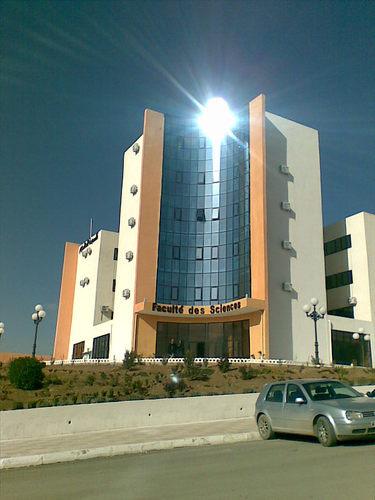
University Sétif 1 FERHAT ABBAS Faculty of Sciences
Détail de l'auteur
Auteur Fatima Hathat |
Documents disponibles écrits par cet auteur


 Ajouter le résultat dans votre panier Affiner la recherche
On the solutions of nonlinear fractional partial differential equation arising in mathematical biology / Fatima Hathat
Titre : On the solutions of nonlinear fractional partial differential equation arising in mathematical biology Type de document : document électronique Auteurs : Fatima Hathat, Auteur ; Khalouta,Ali, Directeur de thèse Editeur : Setif:UFA Année de publication : 2026 Importance : 1 vol (107 f.) Format : 29 cm Langues : Anglais (eng) Catégories : Thèses & Mémoires:Mathématique Mots-clés : Fractional partial differential equations
Caputo fractional derivative
Khalouta transformIndex. décimale : 510 - Mathématique Résumé :
Fractional partial differential equations as generalizations of classical integer partial differential equations are used to model many real-world problems. The main motivation of this thesis is to propose a novel analytical technique for solving the nonlinear time-fractional biological population model The proposed technique utilizes the Khalouta transform and the reduced differential transform to construct the approximate analytical solution of the proposed model. Three numerical applications are presented to illustrate the efficiency and accuracy of the proposed method.Note de contenu :
Sommaire
Introductioniv
1 Fundamentalsoffractionalcalculustheory1
1.1Fractionalsystemsandtheirapplications................... 1
1.1.1Automaticsystems............................ 1
1.1.2Physics.................................. 2
1.1.3Mechanicsofcontinuousmedia..................... 2
1.1.4Acoustics................................. 3
1.2Functionalspaces................................. 3
1.2.1Spacesofintegrablefunctions...................... 3
1.2.2Spacesofcontinuousandabsolutelycontinuousfunctions....... 4
1.2.3Spacesofcontinuousfunctionswithweights.............. 5
1.2.4Fixedpointtheorem........................... 5
1.3Specialfunctionsforfractionalderivation.................... 6
1.3.1TheGammafunction........................... 6
1.3.2TheBêtafunction............................ 7
1.3.3TheMittag-Leerfunction....................... 7
1.4Fractionalintegralsandderivatives....................... 8
1.4.1FractionalintegralinthesenseofRiemann-Liouville......... 8
1.4.2FractionalderivativeinthesenseofRiemannLiouville........ 12
1.4.3PropertiesofthefractionalderivativeintheRiemann-Liouvillesense 15
1.4.4FractionalderivativeintheCaputosense................ 18
1.4.5PropertiesofthefractionalderivativeintheCaputosense...... 22
1.4.6RelationshipbetweentheRiemann-LiouvilleandCaputoapproaches. 23
2 Existenceanduniquenesstheoremforfractionaldi¤erentialequationwith
Caputofractionalderivative25
2.1EquivalencebetweentheFDEandtheVolterraintegralequation....... 26
2.2Existenceanduniquenesstheorem........................ 27
3 Approximateanalyticaltechniquesandtheirapplications33
3.1Adomiandecompositiontechnique(ADT)................... 33
3.1.1BasicideaofADT............................ 33
3.1.2Adomianpolynomials........................... 35
3.1.3ConvergenceanalysisofADT...................... 36
3.2Homotopyperturbationtechnique(HPT).................... 40
3.2.1BasicideaofHPT............................ 40
3.2.2ConvergenceanalysisofHPT...................... 41
3.3Variationaliterationtechnique(VIT)...................... 49
3.3.1BasicideaofVIT............................. 49
3.3.2AlternativeapproachtoVIT....................... 50
3.3.3ConvergenceanalysisofVIT....................... 52
3.4Daftardar-Gejji-Jafaritechnique(DGJT).................... 57
3.4.1BasicideaofDGJT............................ 57
3.4.2ConvergenceanalysisofDGJT...................... 58
4 SolvingnonlinearCaputotime-fractionalpartialdi¤erentialequations62
4.1AnalysisoftheADT............................... 63
4.2AnalysisoftheHPT............................... 67
4.3AnalysisoftheVIT................................ 71
4.4AnalysisoftheDGJT.............................. 74
5 Anovelhybridtechniquetoresolvethenonlineartime-fractionalbiologi-
calpopulationmodel 79
5.1Mathematicalformulationofthenonlineartime-fractionalbiologicalpopula-
tionmodel..................................... 79
5.2Khaloutatransform(KHT)........................... 81
5.3Reduceddi¤erentialtransformmethod(RDTM)................ 84
5.4Khaloutareduceddi¤erentialtransformmethod(KHRDTM)......... 86
5.5ConvergenceanalysisoftheKHRDTM..................... 87
5.6Applicationsandnumericalresults....................... 89
Conclusionandresearchperspectives101Côte titre : DM/0225 On the solutions of nonlinear fractional partial differential equation arising in mathematical biology [document électronique] / Fatima Hathat, Auteur ; Khalouta,Ali, Directeur de thèse . - [S.l.] : Setif:UFA, 2026 . - 1 vol (107 f.) ; 29 cm.
Langues : Anglais (eng)
Catégories : Thèses & Mémoires:Mathématique Mots-clés : Fractional partial differential equations
Caputo fractional derivative
Khalouta transformIndex. décimale : 510 - Mathématique Résumé :
Fractional partial differential equations as generalizations of classical integer partial differential equations are used to model many real-world problems. The main motivation of this thesis is to propose a novel analytical technique for solving the nonlinear time-fractional biological population model The proposed technique utilizes the Khalouta transform and the reduced differential transform to construct the approximate analytical solution of the proposed model. Three numerical applications are presented to illustrate the efficiency and accuracy of the proposed method.Note de contenu :
Sommaire
Introductioniv
1 Fundamentalsoffractionalcalculustheory1
1.1Fractionalsystemsandtheirapplications................... 1
1.1.1Automaticsystems............................ 1
1.1.2Physics.................................. 2
1.1.3Mechanicsofcontinuousmedia..................... 2
1.1.4Acoustics................................. 3
1.2Functionalspaces................................. 3
1.2.1Spacesofintegrablefunctions...................... 3
1.2.2Spacesofcontinuousandabsolutelycontinuousfunctions....... 4
1.2.3Spacesofcontinuousfunctionswithweights.............. 5
1.2.4Fixedpointtheorem........................... 5
1.3Specialfunctionsforfractionalderivation.................... 6
1.3.1TheGammafunction........................... 6
1.3.2TheBêtafunction............................ 7
1.3.3TheMittag-Leerfunction....................... 7
1.4Fractionalintegralsandderivatives....................... 8
1.4.1FractionalintegralinthesenseofRiemann-Liouville......... 8
1.4.2FractionalderivativeinthesenseofRiemannLiouville........ 12
1.4.3PropertiesofthefractionalderivativeintheRiemann-Liouvillesense 15
1.4.4FractionalderivativeintheCaputosense................ 18
1.4.5PropertiesofthefractionalderivativeintheCaputosense...... 22
1.4.6RelationshipbetweentheRiemann-LiouvilleandCaputoapproaches. 23
2 Existenceanduniquenesstheoremforfractionaldi¤erentialequationwith
Caputofractionalderivative25
2.1EquivalencebetweentheFDEandtheVolterraintegralequation....... 26
2.2Existenceanduniquenesstheorem........................ 27
3 Approximateanalyticaltechniquesandtheirapplications33
3.1Adomiandecompositiontechnique(ADT)................... 33
3.1.1BasicideaofADT............................ 33
3.1.2Adomianpolynomials........................... 35
3.1.3ConvergenceanalysisofADT...................... 36
3.2Homotopyperturbationtechnique(HPT).................... 40
3.2.1BasicideaofHPT............................ 40
3.2.2ConvergenceanalysisofHPT...................... 41
3.3Variationaliterationtechnique(VIT)...................... 49
3.3.1BasicideaofVIT............................. 49
3.3.2AlternativeapproachtoVIT....................... 50
3.3.3ConvergenceanalysisofVIT....................... 52
3.4Daftardar-Gejji-Jafaritechnique(DGJT).................... 57
3.4.1BasicideaofDGJT............................ 57
3.4.2ConvergenceanalysisofDGJT...................... 58
4 SolvingnonlinearCaputotime-fractionalpartialdi¤erentialequations62
4.1AnalysisoftheADT............................... 63
4.2AnalysisoftheHPT............................... 67
4.3AnalysisoftheVIT................................ 71
4.4AnalysisoftheDGJT.............................. 74
5 Anovelhybridtechniquetoresolvethenonlineartime-fractionalbiologi-
calpopulationmodel 79
5.1Mathematicalformulationofthenonlineartime-fractionalbiologicalpopula-
tionmodel..................................... 79
5.2Khaloutatransform(KHT)........................... 81
5.3Reduceddi¤erentialtransformmethod(RDTM)................ 84
5.4Khaloutareduceddi¤erentialtransformmethod(KHRDTM)......... 86
5.5ConvergenceanalysisoftheKHRDTM..................... 87
5.6Applicationsandnumericalresults....................... 89
Conclusionandresearchperspectives101Côte titre : DM/0225 Exemplaires (1)
Code-barres Cote Support Localisation Section Disponibilité DM/0225 DM/0225 Thèse Bibliothèque des sciences Arabe Disponible
Disponible