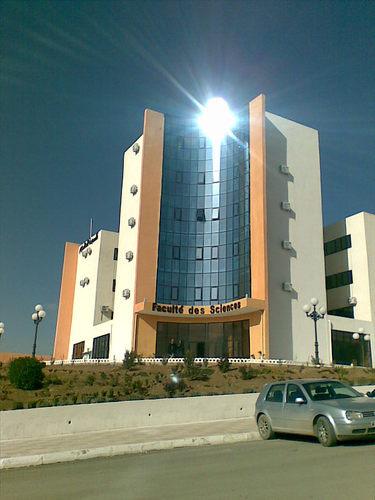
University Sétif 1 FERHAT ABBAS Faculty of Sciences
Détail de l'indexation
 004 - Informatique
 Ouvrages de la bibliothèque en indexation 004

 Ajouter le résultat dans votre panier Affiner la recherche
Titre : Adaptation d'application multimédia a l'environnement d'exécution Type de document : texte imprimé Auteurs : Chehili, el-batoul ; DOUIDI, L, Directeur de thèse Editeur : Setif:UFA Année de publication : 2017 Importance : 1 vol (89f.) Format : 29 cm Langues : Français (fre) Catégories : Thèses & Mémoires:Informatique Mots-clés : Génie Logiciel
documents multimédias
différente plateforme
bootstrap
responsive design
navigateursIndex. décimale : 004 Informatique Côte titre : MAI/0183 Adaptation d'application multimédia a l'environnement d'exécution [texte imprimé] / Chehili, el-batoul ; DOUIDI, L, Directeur de thèse . - [S.l.] : Setif:UFA, 2017 . - 1 vol (89f.) ; 29 cm.
Langues : Français (fre)
Catégories : Thèses & Mémoires:Informatique Mots-clés : Génie Logiciel
documents multimédias
différente plateforme
bootstrap
responsive design
navigateursIndex. décimale : 004 Informatique Côte titre : MAI/0183 Exemplaires (1)
Code-barres Cote Support Localisation Section Disponibilité MAI/0183 MAI/0183 Mémoire Bibliothèque des sciences Français Disponible
Disponible
Titre : Adaptation automatique des services web de qualité Type de document : texte imprimé Auteurs : SAFFIDIN, Rania ; Alti,Adel, Directeur de thèse Editeur : Setif:UFA Année de publication : 2012 Importance : 1 vol (52f.) Format : 29 cm Langues : Français (fre) Catégories : Thèses & Mémoires:Informatique Mots-clés : Service web, Ontologie, sensibilité aux contextes, Systèmes pervasifs, document multimédia, adaptation automatique et sémantique. Index. décimale : 004 Informatique Résumé :
Résumé :
Actuellement, les documents multimédia sont les aspects clés des technologies web. Ils doivent pouvoir être exécutés sur de nombreuses plates-formes (Smartphone, PDA, ordinateurs de bureau, Tablette etc.), qui a donné la naissance de nouveaux systèmes d’informations dits pervasifs. Ces différents contextes de présentation multimédia introduisent différentes contraintes sur la présentation elle-même. Par-exemple les contraintes d’utilisation et les préférences de l’utilisateur. En conséquence de ces dernières, le problème d’hétérogénéité soulève. Pour clarifier cette complexité, les documents multimédia doivent être adaptés.
Et notre travail consiste à définir une approche d’adaptation automatique et sémantique de documents multimédia basée sur les services web qui exécutent physiquement les services d’adaptation, ainsi sur une ontologie qui décrit les caractéristiques (Sémantique, Coût, Qualité ...) et c’est une extension des services Web qui permet de considérer la sensibilité aux contextes tout au long de sélection des services d’adaptation.
Note de contenu :
Table des matières
Introduction générale 1
Chapitre 1: Service Web Sémantique
1. Introduction 3
2. Service web 3
2.1. Définition des services web 3
2.2. Principaux objectifs 4
2.3. Architecture des services web 4
2.4. Standards utilisés pour les services web 5
2.5. Processus d’invocation d’un service web 6
2.6. Les avantages et les inconvénients des services web 7
3. Ontologies et web service sémantique 8
3.1. Présentation des ontologies 8
3.2. Langages du web sémantique 8
3.3. Les annotations sémantiques 10
3.4. Service web sémantique 10
3.5. Approches proposées pour les services Web sémantiques 11
4. Contexte et sensibilité aux contextes 12
4.1. Définition du contexte 13
4.2. Catégories du contexte 13
4.2.1. Contexte utilisateur 13
4.2.2. Contexte de l’environnement 14
4.2.3. Contexte dispositif 14
4.2.4. Contexte du service 14
5. Conclusion 14
Chapitre 2: Etat de domaine
1. Introduction 16
2. Problématique 16
3. Approches existantes 16
3.1. Adaptation côté serveur 17
3.2. Adaptation côté client 17
3.3. Adaptation intermédiaire 18
4. Discussion et proposition 20
5. Conclusion 21
Chapitre 3: Conception
1. Introduction 22
2. Le modèle fonctionnel du système d'adaptation 22
3. Approche automatique d’adaptation des données multimédia 23
3.1. Architecture générale 23
3.1.1. Profil utilisateur 24
3.1.2. Description des caractéristiques de document multimédia 25
3.1.3. Ontologie développée 25
3.2. Construction automatique d’adaptation automatique des services 32
4. Conclusion 34
Chapitre 4: Implémentation
1. Introduction 35
2. Outils de développement 35
2.1. Editeur d’ontologie 35
2.2. Le langage SWRL 35
2.3. NetBeans 36
2.4. Le langage Java 36
3. Implémentation du système 37
3.1. Validation 46
4. Conclusion 51
Conclusion générale 52
Côte titre : MAI/0040 Adaptation automatique des services web de qualité [texte imprimé] / SAFFIDIN, Rania ; Alti,Adel, Directeur de thèse . - [S.l.] : Setif:UFA, 2012 . - 1 vol (52f.) ; 29 cm.
Langues : Français (fre)
Catégories : Thèses & Mémoires:Informatique Mots-clés : Service web, Ontologie, sensibilité aux contextes, Systèmes pervasifs, document multimédia, adaptation automatique et sémantique. Index. décimale : 004 Informatique Résumé :
Résumé :
Actuellement, les documents multimédia sont les aspects clés des technologies web. Ils doivent pouvoir être exécutés sur de nombreuses plates-formes (Smartphone, PDA, ordinateurs de bureau, Tablette etc.), qui a donné la naissance de nouveaux systèmes d’informations dits pervasifs. Ces différents contextes de présentation multimédia introduisent différentes contraintes sur la présentation elle-même. Par-exemple les contraintes d’utilisation et les préférences de l’utilisateur. En conséquence de ces dernières, le problème d’hétérogénéité soulève. Pour clarifier cette complexité, les documents multimédia doivent être adaptés.
Et notre travail consiste à définir une approche d’adaptation automatique et sémantique de documents multimédia basée sur les services web qui exécutent physiquement les services d’adaptation, ainsi sur une ontologie qui décrit les caractéristiques (Sémantique, Coût, Qualité ...) et c’est une extension des services Web qui permet de considérer la sensibilité aux contextes tout au long de sélection des services d’adaptation.
Note de contenu :
Table des matières
Introduction générale 1
Chapitre 1: Service Web Sémantique
1. Introduction 3
2. Service web 3
2.1. Définition des services web 3
2.2. Principaux objectifs 4
2.3. Architecture des services web 4
2.4. Standards utilisés pour les services web 5
2.5. Processus d’invocation d’un service web 6
2.6. Les avantages et les inconvénients des services web 7
3. Ontologies et web service sémantique 8
3.1. Présentation des ontologies 8
3.2. Langages du web sémantique 8
3.3. Les annotations sémantiques 10
3.4. Service web sémantique 10
3.5. Approches proposées pour les services Web sémantiques 11
4. Contexte et sensibilité aux contextes 12
4.1. Définition du contexte 13
4.2. Catégories du contexte 13
4.2.1. Contexte utilisateur 13
4.2.2. Contexte de l’environnement 14
4.2.3. Contexte dispositif 14
4.2.4. Contexte du service 14
5. Conclusion 14
Chapitre 2: Etat de domaine
1. Introduction 16
2. Problématique 16
3. Approches existantes 16
3.1. Adaptation côté serveur 17
3.2. Adaptation côté client 17
3.3. Adaptation intermédiaire 18
4. Discussion et proposition 20
5. Conclusion 21
Chapitre 3: Conception
1. Introduction 22
2. Le modèle fonctionnel du système d'adaptation 22
3. Approche automatique d’adaptation des données multimédia 23
3.1. Architecture générale 23
3.1.1. Profil utilisateur 24
3.1.2. Description des caractéristiques de document multimédia 25
3.1.3. Ontologie développée 25
3.2. Construction automatique d’adaptation automatique des services 32
4. Conclusion 34
Chapitre 4: Implémentation
1. Introduction 35
2. Outils de développement 35
2.1. Editeur d’ontologie 35
2.2. Le langage SWRL 35
2.3. NetBeans 36
2.4. Le langage Java 36
3. Implémentation du système 37
3.1. Validation 46
4. Conclusion 51
Conclusion générale 52
Côte titre : MAI/0040 Exemplaires (1)
Code-barres Cote Support Localisation Section Disponibilité MAI/0040 MAI/0040 Mémoire Bibliothèque des sciences Français Disponible
Disponible
Titre : Adaptive flow-level scheduling for the IoT-MAC Type de document : texte imprimé Auteurs : Rahma Zeghouda, Auteur ; Khadidja Anani, Auteur ; Gherbi ,Chirihane, Directeur de thèse Année de publication : 2022 Importance : 1 vol (70 f .) Format : 29cm Langues : Français (fre) Catégories : Thèses & Mémoires:Informatique Mots-clés : Informatique Index. décimale : 004 Informatique Résumé :
Due to the recent progress in the field of microelectronics and the emergence of wireless
communication technologies, the Heterogenous sensor networks have emerged. Moreover,
one of the major problems of this type of network is the lifetime of the networkwhich
usually operate using batteries ,also its productivity. To solve this problem,several works
within the literature have targeted the matter of network lifetime maximization and at
different design levels : deployment, sensor scheduling, communication load balancing,
transmission rate selection, transmission power selection, routing.
Research on scheduling sensor activity start with the assumption that sensors have
two operating modes : active mode where sensing, communication and computation is
performed ; and sleep mode where the sensor consumes a really bit of energy .Activity
scheduling consists of keeping only a subset of sensors in active mode and might be performed
in a very distributed way where a sensor communicates with its neighbors to make
your mind up whether it should shut down or not.
We proposed the TMSH protocol (TDMA-Mac Scheduling in HWSNs). Our suggestion
involves a better clustering algorithm based on three factors : energy residual, the
number of neighbors, and distance to BS. This adopted clustering will produce a distributed
and loadbalanced clusters .Our proposed TMSH depends on a TDMA allocating
process in order to increase throughput and reduce delays. It also uses the multihop routing
mechanism and inter-cluster.
Simulation experiments have been conducted to examine the performance of TMSH
using the NS3 simulator. The results demonstrate that the TMSH protocol performs better
in terms of network lifetime, throughput , energy consumption, the number of CHs,
and transmission delay.Côte titre : MAI/0645 En ligne : https://drive.google.com/file/d/1bDBAGVUeyVw0PlVik3eBuca1SSySDA5z/view?usp=share [...] Format de la ressource électronique : Adaptive flow-level scheduling for the IoT-MAC [texte imprimé] / Rahma Zeghouda, Auteur ; Khadidja Anani, Auteur ; Gherbi ,Chirihane, Directeur de thèse . - 2022 . - 1 vol (70 f .) ; 29cm.
Langues : Français (fre)
Catégories : Thèses & Mémoires:Informatique Mots-clés : Informatique Index. décimale : 004 Informatique Résumé :
Due to the recent progress in the field of microelectronics and the emergence of wireless
communication technologies, the Heterogenous sensor networks have emerged. Moreover,
one of the major problems of this type of network is the lifetime of the networkwhich
usually operate using batteries ,also its productivity. To solve this problem,several works
within the literature have targeted the matter of network lifetime maximization and at
different design levels : deployment, sensor scheduling, communication load balancing,
transmission rate selection, transmission power selection, routing.
Research on scheduling sensor activity start with the assumption that sensors have
two operating modes : active mode where sensing, communication and computation is
performed ; and sleep mode where the sensor consumes a really bit of energy .Activity
scheduling consists of keeping only a subset of sensors in active mode and might be performed
in a very distributed way where a sensor communicates with its neighbors to make
your mind up whether it should shut down or not.
We proposed the TMSH protocol (TDMA-Mac Scheduling in HWSNs). Our suggestion
involves a better clustering algorithm based on three factors : energy residual, the
number of neighbors, and distance to BS. This adopted clustering will produce a distributed
and loadbalanced clusters .Our proposed TMSH depends on a TDMA allocating
process in order to increase throughput and reduce delays. It also uses the multihop routing
mechanism and inter-cluster.
Simulation experiments have been conducted to examine the performance of TMSH
using the NS3 simulator. The results demonstrate that the TMSH protocol performs better
in terms of network lifetime, throughput , energy consumption, the number of CHs,
and transmission delay.Côte titre : MAI/0645 En ligne : https://drive.google.com/file/d/1bDBAGVUeyVw0PlVik3eBuca1SSySDA5z/view?usp=share [...] Format de la ressource électronique : Exemplaires (1)
Code-barres Cote Support Localisation Section Disponibilité MAI/0645 MAI/0645 Mémoire Bibliothèque des sciences Anglais Disponible
DisponibleAdaptive Network-based Fuzzy Inference Systems (ANFIS) optimization based on Particle Swarm Optimization (PSO) / Abdellah Djoudi

Titre : Adaptive Network-based Fuzzy Inference Systems (ANFIS) optimization based on Particle Swarm Optimization (PSO) Type de document : texte imprimé Auteurs : Abdellah Djoudi, Auteur ; Sebti, Rabah, Auteur ; Mohamed Abderraouf Ferradji, Directeur de thèse Année de publication : 2022 Importance : 1 vol (48 f .) Format : 29cm Langues : Français (fre) Catégories : Thèses & Mémoires:Informatique Mots-clés : Neuronal network (NN) Index. décimale : 004 Informatique Résumé :
Adaptive Network-based Fuzzy Inference System (ANFIS) is a kind of artificial neural networks that is used to find the relationships between input and output parameters in different domains. but, the optimization of ANFIS parameters represents an important problem that has been recently addressed by researchers.
In this work, we try to optimize the parameters of Adaptive Network-based Fuzzy Inference System (ANFIS) using an optimization method which is called Particle Swarm Optimization (PSO). The new model is named as ANFIS-PSO. PSO is a metaheuristic algorithm that is based on the swarm intelligence concept (such as the flocking of birds) for solving complex optimization problems.
The experimental results showed a significant improvement by applying the hybrid model (ANFIS-PSO), which shows and confirms the accuracy of the composite model and its ability to improve performance in search of more accurate resultsCôte titre : MAI/0581 En ligne : https://drive.google.com/file/d/1XPxFMkKMzacZHEf9u9o0ntH7yfM46T3v/view?usp=share [...] Format de la ressource électronique : Adaptive Network-based Fuzzy Inference Systems (ANFIS) optimization based on Particle Swarm Optimization (PSO) [texte imprimé] / Abdellah Djoudi, Auteur ; Sebti, Rabah, Auteur ; Mohamed Abderraouf Ferradji, Directeur de thèse . - 2022 . - 1 vol (48 f .) ; 29cm.
Langues : Français (fre)
Catégories : Thèses & Mémoires:Informatique Mots-clés : Neuronal network (NN) Index. décimale : 004 Informatique Résumé :
Adaptive Network-based Fuzzy Inference System (ANFIS) is a kind of artificial neural networks that is used to find the relationships between input and output parameters in different domains. but, the optimization of ANFIS parameters represents an important problem that has been recently addressed by researchers.
In this work, we try to optimize the parameters of Adaptive Network-based Fuzzy Inference System (ANFIS) using an optimization method which is called Particle Swarm Optimization (PSO). The new model is named as ANFIS-PSO. PSO is a metaheuristic algorithm that is based on the swarm intelligence concept (such as the flocking of birds) for solving complex optimization problems.
The experimental results showed a significant improvement by applying the hybrid model (ANFIS-PSO), which shows and confirms the accuracy of the composite model and its ability to improve performance in search of more accurate resultsCôte titre : MAI/0581 En ligne : https://drive.google.com/file/d/1XPxFMkKMzacZHEf9u9o0ntH7yfM46T3v/view?usp=share [...] Format de la ressource électronique : Exemplaires (1)
Code-barres Cote Support Localisation Section Disponibilité MAI/0581 MAI/0581 Mémoire Bibliothèque des sciences Anglais Disponible
DisponibleAdvanced bioinformatics tools and artificial intelligence in genomic data analysis: application in cancer diagnosis / Bouthaina Mezghiche
Titre : Advanced bioinformatics tools and artificial intelligence in genomic data analysis: application in cancer diagnosis Type de document : document électronique Auteurs : Bouthaina Mezghiche ; Hind Bakhouche, Auteur ; ZENBOUT,Imene, Directeur de thèse Editeur : Setif:UFA Année de publication : 2025 Importance : 1 vol (70 f .) Format : 29 cm Langues : Anglais (eng) Catégories : Thèses & Mémoires:Informatique Mots-clés : Bioinformatics
Machine learning
Deep learning
Artificial intelligence
Cancer classification
Transcriptomics
Proteomics
TCGAIndex. décimale : 004 Informatique Résumé :
Throughout the past decades, proteomics and transcriptomics have contributed
to a large extent in unraveling the complex molecular mechanisms
of cancer. The widespread acceptance of next-generation sequencing and
high-throughput technologies has transformed our ability to study large-scale
biological data, yet several challenges still remain — from heterogeneity,
dimensionality of data to the multimodal information integration challenge.
Addressing these challenges is critical in making enhanced cancer diagnosis,
monitoring, and treatment a reality through the precision medicine paradigm.
Parallel to that, artificial intelligence more specifically machine learning
and deep learning — has emerged as a remarkable facilitator in biomedical
research capable of extracting useful patterns from complex data structures.
This thesis follows the integration of transcriptomic profiles with image-based
data derived from protein interaction networks, represented as protein graph
images. Through these various data sources, we aim to improve the accuracy
and interpretability of cancer classification models.From actual datasets in
The Cancer Genome Atlas (TCGA), we constructed and validated machine
learning models with MLP, SVM, and KNN classifiers to detect cancer-relevant
molecular signatures. Our integrated approach demonstrates the efficacy of
applying omics data and image representation in early detection. The work
contributes to the new field of computational oncology and provides a valuable
starting point for researchers designing multi-modal, AI-enabled tools for
personalized cancer diagnostics.Note de contenu : Sommaire
Abstract iv
List of Figures ix
List of Tables xi
List of Acronyms xii
General Introduction 1
1 Background on Bioinformatics and Artificial Intelligence 4
1.1 Introduction . . . . . . . . . . . . . . . . . . . . . . . . . . 4
1.2 Biological concept . . . . . . . . . . . . . . . . . . . . . . 5
1.2.1 Genomics . . . . . . . . . . . . . . . . . . . . . . . 6
1.2.2 Transcriptomics . . . . . . . . . . . . . . . . . . . . 7
1.2.3 Proteomics . . . . . . . . . . . . . . . . . . . . . . 9
1.2.4 Metabolomics . . . . . . . . . . . . . . . . . . . . . 10
1.3 Bioinformatics . . . . . . . . . . . . . . . . . . . . . . . . 11
1.4 Bioinformatics in cancer . . . . . . . . . . . . . . . . . . . 12
1.4.1 Overview . . . . . . . . . . . . . . . . . . . . . . . 12
1.4.2 Applications . . . . . . . . . . . . . . . . . . . . . 13
1.5 Cancer databases and platforms . . . . . . . . . . . . . . . . 14
1.6 Machine Learning . . . . . . . . . . . . . . . . . . . . . . . 15
1.6.1 Definition . . . . . . . . . . . . . . . . . . . . . . 15
1.6.2 Types of Learning . . . . . . . . . . . . . . . . . . 16
1.7 Deep Learning Overview . . . . . . . . . . . . . . . . . . . 19
1.8 Neural Networks . . . . . . . . . . . . . . . . . . . . . . . 19
1.8.1 Convolutional Neural Networks (CNNs) . . . . . . . 20
1.8.2 Auto-Encoders (AEs) . . . . . . . . . . . . . . . . . 20
1.8.3 Recurrent Neural Networks (RNNs) . . . . . . . . . 21
1.9 Conclusion . . . . . . . . . . . . . . . . . . . . . . . . . . 22
2 Literature Review 23
2.1 Introduction . . . . . . . . . . . . . . . . . . . . . . . . . . 23
2.2 Collection of Research Papers . . . . . . . . . . . . . . . . 23
2.3 Selection and Filtering of Relevant Studies . . . . . . . . . . 24
2.4 Machine Learning in Omics Integration . . . . . . . . . . . 25
2.5 Deep Learning in Omics Integration . . . . . . . . . . . . . 28
2.6 Strengths and limitations . . . . . . . . . . . . . . . . . . . 30
2.7 Conclusion . . . . . . . . . . . . . . . . . . . . . . . . . . 32
3 Contributions in omics data analysis 33
3.1 Introduction . . . . . . . . . . . . . . . . . . . . . . . . . . 33
3.2 Contributions general overview . . . . . . . . . . . . . . . . 33
3.3 Data collection . . . . . . . . . . . . . . . . . . . . . . . . 34
3.4 Preprocessing . . . . . . . . . . . . . . . . . . . . . . . . . 35
3.5 Data image generation . . . . . . . . . . . . . . . . . . . . 36
3.6 Dimensionality reduction using biological databases . . . . . 38
3.7 Model Architecture . . . . . . . . . . . . . . . . . . . . . . 38
3.7.1 Encoding Transcriptomic Data using Autoencoders . 39
3.8 Fusion Strategy . . . . . . . . . . . . . . . . . . . . . . . . 40
3.8.1 Fusion of Transcriptomic Representations . . . . . . 41
3.8.2 Image Feature Extraction using Convolutional Autoencoder
. . . . . . . . . . . . . . . . . . . . . . . . . 41
3.9 Fusion of Transcriptomic and Proteomic Representations . . 42
3.10 Deep Neural Network Classifier for Cancer Type Prediction . 42
3.11 Evaluation . . . . . . . . . . . . . . . . . . . . . . . . . . . 43
3.11.1 Accuracy . . . . . . . . . . . . . . . . . . . . . . . 43
3.11.2 F1-score . . . . . . . . . . . . . . . . . . . . . . . . 43
3.11.3 Precision . . . . . . . . . . . . . . . . . . . . . . . 43
3.11.4 Recall . . . . . . . . . . . . . . . . . . . . . . . . . 44
3.12 Conclusion . . . . . . . . . . . . . . . . . . . . . . . . . . 44
4 Experimental results and discussion 45
4.1 Introduction . . . . . . . . . . . . . . . . . . . . . . . . . . 45
4.2 Data collection and preparation . . . . . . . . . . . . . . . . 45
4.2.1 Protein-to-Gene Mapping and mRNA Filtering . . . 47
4.3 Data preprocessing . . . . . . . . . . . . . . . . . . . . . . 49
4.4 Proteomic interaction image generation . . . . . . . . . . . 50
4.5 Image preprocessing . . . . . . . . . . . . . . . . . . . . . 51
4.6 Multi-modal traditional and Convolutional autoencoder . . . 53
4.7 Convolutional Autoencoder . . . . . . . . . . . . . . . . . . 54
4.8 Autoencoder . . . . . . . . . . . . . . . . . . . . . . . . . . 55
4.9 Multimodal Fusion Methods and Performance . . . . . . . . 57
4.10 Results and discussion of the classification . . . . . . . . . . 59
4.10.1 Side by side comparison . . . . . . . . . . . . . . . 60
4.11 Ablation study . . . . . . . . . . . . . . . . . . . . . . . . . 61
4.11.1 Discussion . . . . . . . . . . . . . . . . . . . . . . 61
4.12 Conclusion . . . . . . . . . . . . . . . . . . . . . . . . . . 62
Bibliography 65Côte titre : MAI/1001 Advanced bioinformatics tools and artificial intelligence in genomic data analysis: application in cancer diagnosis [document électronique] / Bouthaina Mezghiche ; Hind Bakhouche, Auteur ; ZENBOUT,Imene, Directeur de thèse . - [S.l.] : Setif:UFA, 2025 . - 1 vol (70 f .) ; 29 cm.
Langues : Anglais (eng)
Catégories : Thèses & Mémoires:Informatique Mots-clés : Bioinformatics
Machine learning
Deep learning
Artificial intelligence
Cancer classification
Transcriptomics
Proteomics
TCGAIndex. décimale : 004 Informatique Résumé :
Throughout the past decades, proteomics and transcriptomics have contributed
to a large extent in unraveling the complex molecular mechanisms
of cancer. The widespread acceptance of next-generation sequencing and
high-throughput technologies has transformed our ability to study large-scale
biological data, yet several challenges still remain — from heterogeneity,
dimensionality of data to the multimodal information integration challenge.
Addressing these challenges is critical in making enhanced cancer diagnosis,
monitoring, and treatment a reality through the precision medicine paradigm.
Parallel to that, artificial intelligence more specifically machine learning
and deep learning — has emerged as a remarkable facilitator in biomedical
research capable of extracting useful patterns from complex data structures.
This thesis follows the integration of transcriptomic profiles with image-based
data derived from protein interaction networks, represented as protein graph
images. Through these various data sources, we aim to improve the accuracy
and interpretability of cancer classification models.From actual datasets in
The Cancer Genome Atlas (TCGA), we constructed and validated machine
learning models with MLP, SVM, and KNN classifiers to detect cancer-relevant
molecular signatures. Our integrated approach demonstrates the efficacy of
applying omics data and image representation in early detection. The work
contributes to the new field of computational oncology and provides a valuable
starting point for researchers designing multi-modal, AI-enabled tools for
personalized cancer diagnostics.Note de contenu : Sommaire
Abstract iv
List of Figures ix
List of Tables xi
List of Acronyms xii
General Introduction 1
1 Background on Bioinformatics and Artificial Intelligence 4
1.1 Introduction . . . . . . . . . . . . . . . . . . . . . . . . . . 4
1.2 Biological concept . . . . . . . . . . . . . . . . . . . . . . 5
1.2.1 Genomics . . . . . . . . . . . . . . . . . . . . . . . 6
1.2.2 Transcriptomics . . . . . . . . . . . . . . . . . . . . 7
1.2.3 Proteomics . . . . . . . . . . . . . . . . . . . . . . 9
1.2.4 Metabolomics . . . . . . . . . . . . . . . . . . . . . 10
1.3 Bioinformatics . . . . . . . . . . . . . . . . . . . . . . . . 11
1.4 Bioinformatics in cancer . . . . . . . . . . . . . . . . . . . 12
1.4.1 Overview . . . . . . . . . . . . . . . . . . . . . . . 12
1.4.2 Applications . . . . . . . . . . . . . . . . . . . . . 13
1.5 Cancer databases and platforms . . . . . . . . . . . . . . . . 14
1.6 Machine Learning . . . . . . . . . . . . . . . . . . . . . . . 15
1.6.1 Definition . . . . . . . . . . . . . . . . . . . . . . 15
1.6.2 Types of Learning . . . . . . . . . . . . . . . . . . 16
1.7 Deep Learning Overview . . . . . . . . . . . . . . . . . . . 19
1.8 Neural Networks . . . . . . . . . . . . . . . . . . . . . . . 19
1.8.1 Convolutional Neural Networks (CNNs) . . . . . . . 20
1.8.2 Auto-Encoders (AEs) . . . . . . . . . . . . . . . . . 20
1.8.3 Recurrent Neural Networks (RNNs) . . . . . . . . . 21
1.9 Conclusion . . . . . . . . . . . . . . . . . . . . . . . . . . 22
2 Literature Review 23
2.1 Introduction . . . . . . . . . . . . . . . . . . . . . . . . . . 23
2.2 Collection of Research Papers . . . . . . . . . . . . . . . . 23
2.3 Selection and Filtering of Relevant Studies . . . . . . . . . . 24
2.4 Machine Learning in Omics Integration . . . . . . . . . . . 25
2.5 Deep Learning in Omics Integration . . . . . . . . . . . . . 28
2.6 Strengths and limitations . . . . . . . . . . . . . . . . . . . 30
2.7 Conclusion . . . . . . . . . . . . . . . . . . . . . . . . . . 32
3 Contributions in omics data analysis 33
3.1 Introduction . . . . . . . . . . . . . . . . . . . . . . . . . . 33
3.2 Contributions general overview . . . . . . . . . . . . . . . . 33
3.3 Data collection . . . . . . . . . . . . . . . . . . . . . . . . 34
3.4 Preprocessing . . . . . . . . . . . . . . . . . . . . . . . . . 35
3.5 Data image generation . . . . . . . . . . . . . . . . . . . . 36
3.6 Dimensionality reduction using biological databases . . . . . 38
3.7 Model Architecture . . . . . . . . . . . . . . . . . . . . . . 38
3.7.1 Encoding Transcriptomic Data using Autoencoders . 39
3.8 Fusion Strategy . . . . . . . . . . . . . . . . . . . . . . . . 40
3.8.1 Fusion of Transcriptomic Representations . . . . . . 41
3.8.2 Image Feature Extraction using Convolutional Autoencoder
. . . . . . . . . . . . . . . . . . . . . . . . . 41
3.9 Fusion of Transcriptomic and Proteomic Representations . . 42
3.10 Deep Neural Network Classifier for Cancer Type Prediction . 42
3.11 Evaluation . . . . . . . . . . . . . . . . . . . . . . . . . . . 43
3.11.1 Accuracy . . . . . . . . . . . . . . . . . . . . . . . 43
3.11.2 F1-score . . . . . . . . . . . . . . . . . . . . . . . . 43
3.11.3 Precision . . . . . . . . . . . . . . . . . . . . . . . 43
3.11.4 Recall . . . . . . . . . . . . . . . . . . . . . . . . . 44
3.12 Conclusion . . . . . . . . . . . . . . . . . . . . . . . . . . 44
4 Experimental results and discussion 45
4.1 Introduction . . . . . . . . . . . . . . . . . . . . . . . . . . 45
4.2 Data collection and preparation . . . . . . . . . . . . . . . . 45
4.2.1 Protein-to-Gene Mapping and mRNA Filtering . . . 47
4.3 Data preprocessing . . . . . . . . . . . . . . . . . . . . . . 49
4.4 Proteomic interaction image generation . . . . . . . . . . . 50
4.5 Image preprocessing . . . . . . . . . . . . . . . . . . . . . 51
4.6 Multi-modal traditional and Convolutional autoencoder . . . 53
4.7 Convolutional Autoencoder . . . . . . . . . . . . . . . . . . 54
4.8 Autoencoder . . . . . . . . . . . . . . . . . . . . . . . . . . 55
4.9 Multimodal Fusion Methods and Performance . . . . . . . . 57
4.10 Results and discussion of the classification . . . . . . . . . . 59
4.10.1 Side by side comparison . . . . . . . . . . . . . . . 60
4.11 Ablation study . . . . . . . . . . . . . . . . . . . . . . . . . 61
4.11.1 Discussion . . . . . . . . . . . . . . . . . . . . . . 61
4.12 Conclusion . . . . . . . . . . . . . . . . . . . . . . . . . . 62
Bibliography 65Côte titre : MAI/1001 Exemplaires (1)
Code-barres Cote Support Localisation Section Disponibilité MAI/1001 MAI/1001 Mémoire Bibliothèque des sciences Anglais Disponible
Disponible
PermalinkPermalink
PermalinkPermalinkPermalinkPermalinkPermalinkPermalink
PermalinkPermalink