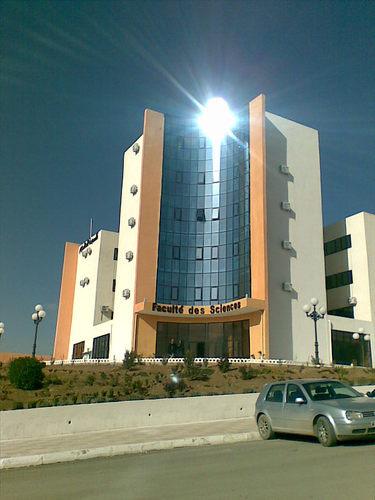
University Sétif 1 FERHAT ABBAS Faculty of Sciences
Détail de l'auteur
Auteur Semcheddine,Moussa |
Documents disponibles écrits par cet auteur


 Ajouter le résultat dans votre panier Affiner la recherche
Titre : Artificial Rabbit Optimization For Tuning Deep Learning Parameters Type de document : texte imprimé Auteurs : Yasmine Tigha ; Ibtihel Boussahel ; Semcheddine,Moussa, Directeur de thèse Editeur : Setif:UFA Année de publication : 2023 Importance : 1 vol (84 f .) Format : 29 cm Langues : Français (fre) Catégories : Thèses & Mémoires:Informatique Mots-clés : Optimization Artificial Rabbit Optimization Genetic Algorithms Particle
Swarm Optimization Grey Wolf Optimization Deep Learning learning rate and dropout rateIndex. décimale : 004 - Informatique Résumé : Deep learning models’ performance heavily relies on selecting appropriate hyperparameters,
such as learning rate, dropout rate , and network architecture.
However, finding the optimal values for these hyperparameters is challenging due
to the lack of fixed rules.
In this thesis, we propose using bio-inspired algorithms, including ARO, PSO,
GA, and GWO, to optimize the hyperparameters of a feed-forward neural network.
The experiments are conducted on the MNIST dataset, commonly used for image
analysis. Comparing the accuracy of models trained with these algorithms, with
and without dropout, reveals that bio-inspired algorithms improve deep learning
model accuracy. Incorporating bio-inspired algorithms in hyperparameter tuning
shows promise for optimizing deep learning models. By drawing inspiration from
nature, these algorithms enhance performance and generalization, demonstrating
their efficacy in deep learning hyperparameter tuning
Côte titre : MAI/0761 En ligne : https://drive.google.com/file/d/1WcfNow4t2G8wXoZTx2oNMTp_XM-CbHG0/view?usp=drive [...] Format de la ressource électronique : Artificial Rabbit Optimization For Tuning Deep Learning Parameters [texte imprimé] / Yasmine Tigha ; Ibtihel Boussahel ; Semcheddine,Moussa, Directeur de thèse . - [S.l.] : Setif:UFA, 2023 . - 1 vol (84 f .) ; 29 cm.
Langues : Français (fre)
Catégories : Thèses & Mémoires:Informatique Mots-clés : Optimization Artificial Rabbit Optimization Genetic Algorithms Particle
Swarm Optimization Grey Wolf Optimization Deep Learning learning rate and dropout rateIndex. décimale : 004 - Informatique Résumé : Deep learning models’ performance heavily relies on selecting appropriate hyperparameters,
such as learning rate, dropout rate , and network architecture.
However, finding the optimal values for these hyperparameters is challenging due
to the lack of fixed rules.
In this thesis, we propose using bio-inspired algorithms, including ARO, PSO,
GA, and GWO, to optimize the hyperparameters of a feed-forward neural network.
The experiments are conducted on the MNIST dataset, commonly used for image
analysis. Comparing the accuracy of models trained with these algorithms, with
and without dropout, reveals that bio-inspired algorithms improve deep learning
model accuracy. Incorporating bio-inspired algorithms in hyperparameter tuning
shows promise for optimizing deep learning models. By drawing inspiration from
nature, these algorithms enhance performance and generalization, demonstrating
their efficacy in deep learning hyperparameter tuning
Côte titre : MAI/0761 En ligne : https://drive.google.com/file/d/1WcfNow4t2G8wXoZTx2oNMTp_XM-CbHG0/view?usp=drive [...] Format de la ressource électronique : Exemplaires (1)
Code-barres Cote Support Localisation Section Disponibilité MAI/0761 MAI/0761 Mémoire Bibliothèque des sciences Anglais Disponible
Disponible
Titre : Developpement of Algerian Mobile Application for CARPOOL Type de document : texte imprimé Auteurs : Yasmine Bouzid, Auteur ; Lyna Bouselsal ; Semcheddine,Moussa, Directeur de thèse Editeur : Setif:UFA Année de publication : 2024 Importance : 1 vol (55 f .) Format : 29 cm Langues : Anglais (eng) Catégories : Thèses & Mémoires:Informatique Mots-clés : WebSite Responsive
Application Mobile
Django
CarpoolIndex. décimale : 004 - Informatique Résumé :
This project involves developing a carpool mobile app designed to meet
users’ needs and ensure their trust and satisfaction. The app includes a secure
registration process to verify user identities and an effective evaluation
mechanism for trip participants. It facilitates posting and searching for rides
and features a real-time localization system to help users identify meeting
points and track drivers or passengers. The development of the app involved
the use of various development tools and frameworks for both back-end and
front-end, including technologies for real-time experiences, caching, maps
integration, and responsive design. Additionally, the app incorporates progressive
web application (PWA) technologies. The project not only addresses
the challenges of traffic congestion, environmental pollution, and high transportation
costs but also aims to provide a user-friendly, reliable, and secure
carpooling solution.Note de contenu : Sommaire
Abstract 1
Table of contents 3
List of figures 4
List of tables 5
General Introduction 6
1 Carpooling and Mobile Applications 8
1.1 Introduction: . . . . . . . . . . . . . . . . . . . . . . . . . . . 9
1.2 Definition: . . . . . . . . . . . . . . . . . . . . . . . . . . . . . 9
1.3 Principle: . . . . . . . . . . . . . . . . . . . . . . . . . . . . . 9
1.4 Types of carpooling: . . . . . . . . . . . . . . . . . . . . . . . 10
1.5 Advantages and disadvantages of carpooling: . . . . . . . . . . 11
1.6 Examples of carpool apps: . . . . . . . . . . . . . . . . . . . . 12
1.6.1 TOP 4 carpooling apps [10]: . . . . . . . . . . . . . . . 12
1.6.2 Algerian carpooling apps: . . . . . . . . . . . . . . . . 13
1.7 Mobile app definition: . . . . . . . . . . . . . . . . . . . . . . 13
1.8 Types of Mobile Application: . . . . . . . . . . . . . . . . . . 13
1.8.1 Native Apps . . . . . . . . . . . . . . . . . . . . . . . . 14
1.8.2 Web Apps : . . . . . . . . . . . . . . . . . . . . . . . . 14
1.8.3 Hybrid Application : . . . . . . . . . . . . . . . . . . . 14
1.8.4 Progressive Web Apps (PWAs) : . . . . . . . . . . . . . 14
1.9 Different mobile operating systems: . . . . . . . . . . . . . . . 15
1.10 The advantages and disadvantages of mobile applications: . . . 15
1.11 Most commonly used development environments and tools
(languages, frameworks......): . . . . . . . . . . . . . . . . . . . 16
1.11.1 Programming Languages: . . . . . . . . . . . . . . . . 16
1.11.2 Frameworks: . . . . . . . . . . . . . . . . . . . . . . . . 17
1.12 Native apps vs web apps: . . . . . . . . . . . . . . . . . . . . . 18
1.13 From web app to native app: . . . . . . . . . . . . . . . . . . . 19
1.14 Conclusion: . . . . . . . . . . . . . . . . . . . . . . . . . . . . 19
2 Analysis and design 20
2.1 Introduction: . . . . . . . . . . . . . . . . . . . . . . . . . . . 21
2.2 Identifying the actors: . . . . . . . . . . . . . . . . . . . . . . 21
2.3 Requirements specifications: . . . . . . . . . . . . . . . . . . . 22
2.4 Design: . . . . . . . . . . . . . . . . . . . . . . . . . . . . . . . 24
2.5 Database Design . . . . . . . . . . . . . . . . . . . . . . . . . 32
2.6 Conclusion: . . . . . . . . . . . . . . . . . . . . . . . . . . . . 37
3 Creation and implementation 38
3.1 Introduction: . . . . . . . . . . . . . . . . . . . . . . . . . . . 39
3.2 Development tools: . . . . . . . . . . . . . . . . . . . . . . . . 39
3.3 Application navigation diagram: . . . . . . . . . . . . . . . . . 44
3.4 Present the application interfaces . . . . . . . . . . . . . . . . 44
3.5 Conclusion: . . . . . . . . . . . . . . . . . . . . . . . . . . . . 50Côte titre : MAI/0907
Developpement of Algerian Mobile Application for CARPOOL [texte imprimé] / Yasmine Bouzid, Auteur ; Lyna Bouselsal ; Semcheddine,Moussa, Directeur de thèse . - [S.l.] : Setif:UFA, 2024 . - 1 vol (55 f .) ; 29 cm.
Langues : Anglais (eng)
Catégories : Thèses & Mémoires:Informatique Mots-clés : WebSite Responsive
Application Mobile
Django
CarpoolIndex. décimale : 004 - Informatique Résumé :
This project involves developing a carpool mobile app designed to meet
users’ needs and ensure their trust and satisfaction. The app includes a secure
registration process to verify user identities and an effective evaluation
mechanism for trip participants. It facilitates posting and searching for rides
and features a real-time localization system to help users identify meeting
points and track drivers or passengers. The development of the app involved
the use of various development tools and frameworks for both back-end and
front-end, including technologies for real-time experiences, caching, maps
integration, and responsive design. Additionally, the app incorporates progressive
web application (PWA) technologies. The project not only addresses
the challenges of traffic congestion, environmental pollution, and high transportation
costs but also aims to provide a user-friendly, reliable, and secure
carpooling solution.Note de contenu : Sommaire
Abstract 1
Table of contents 3
List of figures 4
List of tables 5
General Introduction 6
1 Carpooling and Mobile Applications 8
1.1 Introduction: . . . . . . . . . . . . . . . . . . . . . . . . . . . 9
1.2 Definition: . . . . . . . . . . . . . . . . . . . . . . . . . . . . . 9
1.3 Principle: . . . . . . . . . . . . . . . . . . . . . . . . . . . . . 9
1.4 Types of carpooling: . . . . . . . . . . . . . . . . . . . . . . . 10
1.5 Advantages and disadvantages of carpooling: . . . . . . . . . . 11
1.6 Examples of carpool apps: . . . . . . . . . . . . . . . . . . . . 12
1.6.1 TOP 4 carpooling apps [10]: . . . . . . . . . . . . . . . 12
1.6.2 Algerian carpooling apps: . . . . . . . . . . . . . . . . 13
1.7 Mobile app definition: . . . . . . . . . . . . . . . . . . . . . . 13
1.8 Types of Mobile Application: . . . . . . . . . . . . . . . . . . 13
1.8.1 Native Apps . . . . . . . . . . . . . . . . . . . . . . . . 14
1.8.2 Web Apps : . . . . . . . . . . . . . . . . . . . . . . . . 14
1.8.3 Hybrid Application : . . . . . . . . . . . . . . . . . . . 14
1.8.4 Progressive Web Apps (PWAs) : . . . . . . . . . . . . . 14
1.9 Different mobile operating systems: . . . . . . . . . . . . . . . 15
1.10 The advantages and disadvantages of mobile applications: . . . 15
1.11 Most commonly used development environments and tools
(languages, frameworks......): . . . . . . . . . . . . . . . . . . . 16
1.11.1 Programming Languages: . . . . . . . . . . . . . . . . 16
1.11.2 Frameworks: . . . . . . . . . . . . . . . . . . . . . . . . 17
1.12 Native apps vs web apps: . . . . . . . . . . . . . . . . . . . . . 18
1.13 From web app to native app: . . . . . . . . . . . . . . . . . . . 19
1.14 Conclusion: . . . . . . . . . . . . . . . . . . . . . . . . . . . . 19
2 Analysis and design 20
2.1 Introduction: . . . . . . . . . . . . . . . . . . . . . . . . . . . 21
2.2 Identifying the actors: . . . . . . . . . . . . . . . . . . . . . . 21
2.3 Requirements specifications: . . . . . . . . . . . . . . . . . . . 22
2.4 Design: . . . . . . . . . . . . . . . . . . . . . . . . . . . . . . . 24
2.5 Database Design . . . . . . . . . . . . . . . . . . . . . . . . . 32
2.6 Conclusion: . . . . . . . . . . . . . . . . . . . . . . . . . . . . 37
3 Creation and implementation 38
3.1 Introduction: . . . . . . . . . . . . . . . . . . . . . . . . . . . 39
3.2 Development tools: . . . . . . . . . . . . . . . . . . . . . . . . 39
3.3 Application navigation diagram: . . . . . . . . . . . . . . . . . 44
3.4 Present the application interfaces . . . . . . . . . . . . . . . . 44
3.5 Conclusion: . . . . . . . . . . . . . . . . . . . . . . . . . . . . 50Côte titre : MAI/0907
Exemplaires (1)
Code-barres Cote Support Localisation Section Disponibilité MAI/0907 MAI/0907 Mémoire Bibliothèque des sciences Anglais Disponible
Disponible
Titre : Elephant herding optimization for image begmentation Type de document : texte imprimé Auteurs : Harrouche,Oussama, Auteur ; Semcheddine,Moussa, Directeur de thèse Editeur : Setif:UFA Année de publication : 2020 Importance : 1 vol (70 f .) Format : 29 cm Langues : Français (fre) Catégories : Thèses & Mémoires:Informatique Mots-clés : Informatique Index. décimale : 004 - Informatique Côte titre : MAI/0421 En ligne : https://drive.google.com/file/d/1zjYqn6jyDSrFx_IRf7fBSJxUE5f7ZrGp/view?usp=shari [...] Format de la ressource électronique : Elephant herding optimization for image begmentation [texte imprimé] / Harrouche,Oussama, Auteur ; Semcheddine,Moussa, Directeur de thèse . - [S.l.] : Setif:UFA, 2020 . - 1 vol (70 f .) ; 29 cm.
Langues : Français (fre)
Catégories : Thèses & Mémoires:Informatique Mots-clés : Informatique Index. décimale : 004 - Informatique Côte titre : MAI/0421 En ligne : https://drive.google.com/file/d/1zjYqn6jyDSrFx_IRf7fBSJxUE5f7ZrGp/view?usp=shari [...] Format de la ressource électronique : Exemplaires (1)
Code-barres Cote Support Localisation Section Disponibilité MAI/0421 MAI/0421 Mémoire Bibliothèque des sciences Français Disponible
Disponible
Titre : Fast fuzzy c-menas for mr brain image segmentation Type de document : texte imprimé Auteurs : Serti,Chouaib, Auteur ; Semcheddine,Moussa, Directeur de thèse Editeur : Setif:UFA Année de publication : 2019 Importance : 1 vol (53 f .) Format : 29 cm Langues : Français (fre) Catégories : Thèses & Mémoires:Informatique Mots-clés : Informatique Index. décimale : 004 Informatique Côte titre : MAI/0294 Fast fuzzy c-menas for mr brain image segmentation [texte imprimé] / Serti,Chouaib, Auteur ; Semcheddine,Moussa, Directeur de thèse . - [S.l.] : Setif:UFA, 2019 . - 1 vol (53 f .) ; 29 cm.
Langues : Français (fre)
Catégories : Thèses & Mémoires:Informatique Mots-clés : Informatique Index. décimale : 004 Informatique Côte titre : MAI/0294 Exemplaires (1)
Code-barres Cote Support Localisation Section Disponibilité MAI/0294 MAI/0294 Mémoire Bibliothèque des sciences Français Disponible
DisponibleMachine Learning and Deep Learning for Autism Spectrum Disorder (ASD) detection / Nour elhouda Mahdaoui
Titre : Machine Learning and Deep Learning for Autism Spectrum Disorder (ASD) detection Type de document : document électronique Auteurs : Nour elhouda Mahdaoui ; kaouther Belkefoul, Auteur ; Semcheddine,Moussa, Directeur de thèse Editeur : Setif:UFA Année de publication : 2025 Importance : 1 vol (75 f .) Format : 29 cm Langues : Anglais (eng) Catégories : Thèses & Mémoires:Informatique Mots-clés : Autism Spectrum Disorder
Early detection
Deep learning
Facial images
MovementIndex. décimale : 004 Informatique Résumé : Autism Spectrum Disorder (ASD) is a neurodevelopmental disorder characterized by difficulties
with social interaction, communication, and behavior. Early identification ensures timely
intervention and improves quality of life. The present study proposes a two-modality binary
classification approach for ASD detection based on facial image data and movement data. The
image dataset consists of facial photos of children labeled as ASD or non-ASD. The movement
data, captured using a Kinect v2 sensor, comprises 1,259 features per subject derived from 3D
joint positions and gait metrics, with a total of 800 samples.
A DenseNet121 convolutional neural network (CNN) was employed for images, achieving 89%
accuracy. Grad-CAM was used to provide visual explanations by highlighting important regions
in the images. For the movement modality, a Multi-Layer Perceptron (MLP) trained on
features learned via an autoencoder achieved 99.38% accuracy, with Shapley Additive exPlanations
(SHAP) applied to identify key features influencing model decisions. Finally, a late
fusion mechanism combining both models was evaluated, resulting in 88.12% accuracy. Results
highlight the effectiveness of unimodal solutions, particularly the MLP with autoencoder, and
indicate that multimodal fusion requires further optimization for enhanced overall performanceNote de contenu : Sommaire
List of Figures iv
List of Tables v
List of abbreviations vi
General Introduction 1
Chapter 1 : Autism spectrum disorder (ASD) 3
Introduction . . . . . . . . . . . . . . . . . . . . . . . . . . . . . . . . . 4
1 Definition and overview . . . . . . . . . . . . . . . . . . . . . . . . 4
1.1 Historical perspective on autism . . . . . . . . . . . . . . . . . 5
2 Prevalence and epidemiology of ASD . . . . . . . . . . . . . . . . . 6
3 Causes and risks . . . . . . . . . . . . . . . . . . . . . . . . . . . . 6
3.1 Genetic factors . . . . . . . . . . . . . . . . . . . . . . . . . . 6
3.2 Environmental risk factors . . . . . . . . . . . . . . . . . . . . 7
3.3 Parental age and premature birth . . . . . . . . . . . . . . . . . 7
4 Signs and symptoms of autism spectrum disorder (ASD) . . . . . . . 8
5 Diagnosis of autism spectrum disorder . . . . . . . . . . . . . . . . . 9
6 Importance of early diagnosis . . . . . . . . . . . . . . . . . . . . . 11
7 Comorbidities of autism spectrum disorder (ASD) . . . . . . . . . . . 11
7.1 Common comorbidities . . . . . . . . . . . . . . . . . . . . . 11
7.2 Psychiatric conditions . . . . . . . . . . . . . . . . . . . . . . 12
8 Interventions and treatments for ASD . . . . . . . . . . . . . . . . . 12
9 The role of technology in autism spectrum disorder . . . . . . . . . . 13
Conclusion . . . . . . . . . . . . . . . . . . . . . . . . . . . . . . . . . . 14
Chapter 2 : Background and Literature Review 15
Introduction . . . . . . . . . . . . . . . . . . . . . . . . . . . . . . . . . 16
1 Machine learning (ML) . . . . . . . . . . . . . . . . . . . . . . . . . 16
1.1 Definition and basic concepts of ML . . . . . . . . . . . . . . 16
1.2 Types of machine learning . . . . . . . . . . . . . . . . . . . . 17
2 Deep learning (DL) . . . . . . . . . . . . . . . . . . . . . . . . . . . 19
2.1 Definition and basic concepts of DL . . . . . . . . . . . . . . . 19
2.2 Evolution of deep learning models . . . . . . . . . . . . . . . 20
2.3 Types of artificial neural networks . . . . . . . . . . . . . . . . 21
2.4 Evaluation metrics for deep learning and machine learning models 25
2.5 Deep learning vs. traditional machine learning . . . . . . . . . 26
3 ML and DL for ASD detection . . . . . . . . . . . . . . . . . . . . . 26
3.1 Advantages of ML/DL over traditional methods . . . . . . . . 27
3.2 Analyzing complex patterns in large datasets . . . . . . . . . . 27
4 Machine learning techniques for ASD detection . . . . . . . . . . . . 27
4.1 Neuroimaging-based approaches . . . . . . . . . . . . . . . . 28
4.2 Behavioral data and feature-based models . . . . . . . . . . . . 30
4.3 Hybrid and ensemble learning approaches . . . . . . . . . . . 31
5 Deep learning techniques for ASD detection . . . . . . . . . . . . . . 32
5.1 Convolutional neural networks for ASD classification . . . . . 33
5.2 Transfer learning for ASD detection using facial features . . . . 34
5.3 Hybrid and multi-modal learning approaches . . . . . . . . . . 36
6 Data sources for machine learning and deep learning in autism spectrum
disorder . . . . . . . . . . . . . . . . . . . . . . . . . . . . . . 36
7 Challenges and limitations in ML/DL for ASD detection . . . . . . . 37
7.1 Unavailable MRI neuroimaging datasets of ASD patients . . . 38
7.2 Challenges in artificial intelligence algorithms in diagnosing
autism spectrum disorder . . . . . . . . . . . . . . . . . . . . 38
7.3 Challenges in hardware . . . . . . . . . . . . . . . . . . . . . 38
Conclusion . . . . . . . . . . . . . . . . . . . . . . . . . . . . . . . . . . 39
Chapter3 : Contribution,experiments and results 40
Introduction . . . . . . . . . . . . . . . . . . . . . . . . . . . . . . . . . 41
1 Development environment . . . . . . . . . . . . . . . . . . . . . . . 41
1.1 Hardware . . . . . . . . . . . . . . . . . . . . . . . . . . . . . 41
1.2 Software . . . . . . . . . . . . . . . . . . . . . . . . . . . . . 41
2 Proposed methodology . . . . . . . . . . . . . . . . . . . . . . . . . 43
2.1 Phase 1: Motion data analysis . . . . . . . . . . . . . . . . . . 43
2.2 Phase 2: Analysis of image data using deep learning . . . . . . 47
2.3 Phase 3: Multimodal learning via late fusion . . . . . . . . . . 51
3 Validation Strategy . . . . . . . . . . . . . . . . . . . . . . . . . . . 53
3.1 Dataset Preparation . . . . . . . . . . . . . . . . . . . . . . . 53
3.2 Model Architectures . . . . . . . . . . . . . . . . . . . . . . . 53
3.3 Experimental Settings . . . . . . . . . . . . . . . . . . . . . . 56
3.4 Results and Analysis . . . . . . . . . . . . . . . . . . . . . . . 57
Conclusion . . . . . . . . . . . . . . . . . . . . . . . . . . . . . . . . . . 59
Conclusion and future work 60
Bibliographie 75Côte titre : MAI/0965 Machine Learning and Deep Learning for Autism Spectrum Disorder (ASD) detection [document électronique] / Nour elhouda Mahdaoui ; kaouther Belkefoul, Auteur ; Semcheddine,Moussa, Directeur de thèse . - [S.l.] : Setif:UFA, 2025 . - 1 vol (75 f .) ; 29 cm.
Langues : Anglais (eng)
Catégories : Thèses & Mémoires:Informatique Mots-clés : Autism Spectrum Disorder
Early detection
Deep learning
Facial images
MovementIndex. décimale : 004 Informatique Résumé : Autism Spectrum Disorder (ASD) is a neurodevelopmental disorder characterized by difficulties
with social interaction, communication, and behavior. Early identification ensures timely
intervention and improves quality of life. The present study proposes a two-modality binary
classification approach for ASD detection based on facial image data and movement data. The
image dataset consists of facial photos of children labeled as ASD or non-ASD. The movement
data, captured using a Kinect v2 sensor, comprises 1,259 features per subject derived from 3D
joint positions and gait metrics, with a total of 800 samples.
A DenseNet121 convolutional neural network (CNN) was employed for images, achieving 89%
accuracy. Grad-CAM was used to provide visual explanations by highlighting important regions
in the images. For the movement modality, a Multi-Layer Perceptron (MLP) trained on
features learned via an autoencoder achieved 99.38% accuracy, with Shapley Additive exPlanations
(SHAP) applied to identify key features influencing model decisions. Finally, a late
fusion mechanism combining both models was evaluated, resulting in 88.12% accuracy. Results
highlight the effectiveness of unimodal solutions, particularly the MLP with autoencoder, and
indicate that multimodal fusion requires further optimization for enhanced overall performanceNote de contenu : Sommaire
List of Figures iv
List of Tables v
List of abbreviations vi
General Introduction 1
Chapter 1 : Autism spectrum disorder (ASD) 3
Introduction . . . . . . . . . . . . . . . . . . . . . . . . . . . . . . . . . 4
1 Definition and overview . . . . . . . . . . . . . . . . . . . . . . . . 4
1.1 Historical perspective on autism . . . . . . . . . . . . . . . . . 5
2 Prevalence and epidemiology of ASD . . . . . . . . . . . . . . . . . 6
3 Causes and risks . . . . . . . . . . . . . . . . . . . . . . . . . . . . 6
3.1 Genetic factors . . . . . . . . . . . . . . . . . . . . . . . . . . 6
3.2 Environmental risk factors . . . . . . . . . . . . . . . . . . . . 7
3.3 Parental age and premature birth . . . . . . . . . . . . . . . . . 7
4 Signs and symptoms of autism spectrum disorder (ASD) . . . . . . . 8
5 Diagnosis of autism spectrum disorder . . . . . . . . . . . . . . . . . 9
6 Importance of early diagnosis . . . . . . . . . . . . . . . . . . . . . 11
7 Comorbidities of autism spectrum disorder (ASD) . . . . . . . . . . . 11
7.1 Common comorbidities . . . . . . . . . . . . . . . . . . . . . 11
7.2 Psychiatric conditions . . . . . . . . . . . . . . . . . . . . . . 12
8 Interventions and treatments for ASD . . . . . . . . . . . . . . . . . 12
9 The role of technology in autism spectrum disorder . . . . . . . . . . 13
Conclusion . . . . . . . . . . . . . . . . . . . . . . . . . . . . . . . . . . 14
Chapter 2 : Background and Literature Review 15
Introduction . . . . . . . . . . . . . . . . . . . . . . . . . . . . . . . . . 16
1 Machine learning (ML) . . . . . . . . . . . . . . . . . . . . . . . . . 16
1.1 Definition and basic concepts of ML . . . . . . . . . . . . . . 16
1.2 Types of machine learning . . . . . . . . . . . . . . . . . . . . 17
2 Deep learning (DL) . . . . . . . . . . . . . . . . . . . . . . . . . . . 19
2.1 Definition and basic concepts of DL . . . . . . . . . . . . . . . 19
2.2 Evolution of deep learning models . . . . . . . . . . . . . . . 20
2.3 Types of artificial neural networks . . . . . . . . . . . . . . . . 21
2.4 Evaluation metrics for deep learning and machine learning models 25
2.5 Deep learning vs. traditional machine learning . . . . . . . . . 26
3 ML and DL for ASD detection . . . . . . . . . . . . . . . . . . . . . 26
3.1 Advantages of ML/DL over traditional methods . . . . . . . . 27
3.2 Analyzing complex patterns in large datasets . . . . . . . . . . 27
4 Machine learning techniques for ASD detection . . . . . . . . . . . . 27
4.1 Neuroimaging-based approaches . . . . . . . . . . . . . . . . 28
4.2 Behavioral data and feature-based models . . . . . . . . . . . . 30
4.3 Hybrid and ensemble learning approaches . . . . . . . . . . . 31
5 Deep learning techniques for ASD detection . . . . . . . . . . . . . . 32
5.1 Convolutional neural networks for ASD classification . . . . . 33
5.2 Transfer learning for ASD detection using facial features . . . . 34
5.3 Hybrid and multi-modal learning approaches . . . . . . . . . . 36
6 Data sources for machine learning and deep learning in autism spectrum
disorder . . . . . . . . . . . . . . . . . . . . . . . . . . . . . . 36
7 Challenges and limitations in ML/DL for ASD detection . . . . . . . 37
7.1 Unavailable MRI neuroimaging datasets of ASD patients . . . 38
7.2 Challenges in artificial intelligence algorithms in diagnosing
autism spectrum disorder . . . . . . . . . . . . . . . . . . . . 38
7.3 Challenges in hardware . . . . . . . . . . . . . . . . . . . . . 38
Conclusion . . . . . . . . . . . . . . . . . . . . . . . . . . . . . . . . . . 39
Chapter3 : Contribution,experiments and results 40
Introduction . . . . . . . . . . . . . . . . . . . . . . . . . . . . . . . . . 41
1 Development environment . . . . . . . . . . . . . . . . . . . . . . . 41
1.1 Hardware . . . . . . . . . . . . . . . . . . . . . . . . . . . . . 41
1.2 Software . . . . . . . . . . . . . . . . . . . . . . . . . . . . . 41
2 Proposed methodology . . . . . . . . . . . . . . . . . . . . . . . . . 43
2.1 Phase 1: Motion data analysis . . . . . . . . . . . . . . . . . . 43
2.2 Phase 2: Analysis of image data using deep learning . . . . . . 47
2.3 Phase 3: Multimodal learning via late fusion . . . . . . . . . . 51
3 Validation Strategy . . . . . . . . . . . . . . . . . . . . . . . . . . . 53
3.1 Dataset Preparation . . . . . . . . . . . . . . . . . . . . . . . 53
3.2 Model Architectures . . . . . . . . . . . . . . . . . . . . . . . 53
3.3 Experimental Settings . . . . . . . . . . . . . . . . . . . . . . 56
3.4 Results and Analysis . . . . . . . . . . . . . . . . . . . . . . . 57
Conclusion . . . . . . . . . . . . . . . . . . . . . . . . . . . . . . . . . . 59
Conclusion and future work 60
Bibliographie 75Côte titre : MAI/0965 Exemplaires (1)
Code-barres Cote Support Localisation Section Disponibilité MAI/0965 MAI/0965 Mémoire Bibliothèque des sciences Anglais Disponible
DisponiblePermalinkA Modified Black Widow Optimization Algorithm for Multilevel Thresholding Image Segmentation / Hocine Seif Eddine Lakhal

PermalinkPermalinkPermalinkPermalink