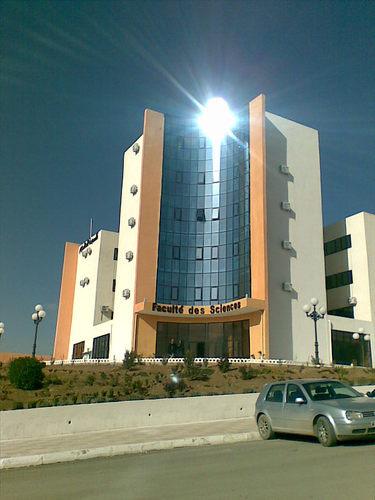
University Sétif 1 FERHAT ABBAS Faculty of Sciences
Détail de l'auteur
Auteur Sabrina Lazeli |
Documents disponibles écrits par cet auteur


 Ajouter le résultat dans votre panier Affiner la recherche
Enhancing Deep Learning with Quantum Computing: Exploring Hybrid Algorithms for Image Classification / Sabrina Lazeli
Titre : Enhancing Deep Learning with Quantum Computing: Exploring Hybrid Algorithms for Image Classification Type de document : document électronique Auteurs : Sabrina Lazeli ; Abdelouahab Moussaoui, Directeur de thèse Editeur : Setif:UFA Année de publication : 2025 Importance : 1 vol (66 f .) Format : 29 cm Langues : Anglais (eng) Catégories : Thèses & Mémoires:Informatique Mots-clés : Deep Learning
Quantum Computing
Image ClassificationIndex. décimale : 004 Informatique Résumé :
This thesis explores the integration of quantum computing and deep learning paradigms
to enhance image classification, with a particular focus on detecting Alzheimer’s disease
stages from MRI images. An innovative hybrid architecture, combining the pre-trained
ResNet50 neural network for feature extraction with a variational quantum circuit (VQC)
for classification, was developed and evaluated on the Augmented Alzheimer MRI Dataset.
This approach leverages the hierarchical feature extraction capabilities of classical convolutional
neural networks and quantum properties such as superposition and entanglement
to enhance the representation of complex patterns. The results demonstrate an overall
accuracy of 97.35%, with outstanding performance in discriminating moderate stages
(F1-score of 99.92%) and confirmed robustness through low variance. A comparative
analysis with state-of-the-art approaches positions the proposed model among the top
performers, highlighting the potential of hybrid quantum-classical algorithms to overcome
computational limitations of classical methods, despite the constraints of current Noisy
Intermediate-Scale Quantum NISQ devices. This work also proposes perspectives for optimizing
quantum circuits and extending this approach to other medical imaging tasks,
emphasizing the importance of future advancements in quantum hardware for practical
implementation.Note de contenu : Sommaire
General Introduction 8
0.1 Research problem ................................................................. 9
0.2 Objectives and contributions..................................................... 9
1 Theoretical Foundations of Quantum Computing 11
1.1 Principles of quantum computing ............................................... 12
1.1.1 Qubits and superposition ................................................ 12
1.1.2 Quantum entanglement .................................................. 12
1.1.3 Measurement .............................................................. 13
1.1.4 Quantum gates and circuits.............................................. 13
1.2 NISQ Devices: Noisy Intermediate-Scale Quantum Computing ............... 16
1.2.1 Special features of NISQ devices ........................................ 16
1.2.2 Hardware Architectures of NISQ Devices ............................... 17
1.3 Fundamental Quantum Algorithms ............................................. 18
1.3.1 Grover’s Algorithm ....................................................... 18
1.3.2 Shor’s Algorithm.......................................................... 18
2 Theoretical Foundations of Deep Learning 20
2.1 Principles of Deep learning ...................................................... 20
2.1.1 Artificial Neural Networks (ANN)....................................... 21
2.1.2 Convolutional Neural Networks (CNN) ................................. 21
2.1.3 Recurrent Neural Networks (RNN) ..................................... 23
2.1.4 Generative Adversarial Networks (GANs) .............................. 23
2.1.5 Current Challenges of Classical Deep Learning Approaches ........... 23
3 Hybrid Quantum Classical Algorithms 25
3.1 Structure of hybrid quantum-classical algorithms .............................. 25
3.1.1 Variational quantum circuit (VQC) ..................................... 27
3.1.2 Cost Functions ............................................................ 33
3.1.3 Optimization .............................................................. 34
3.2 Hybrid Quantum Classical Approaches for Image Classification: State of
the Art ............................................................................ 35
3.2.1 Quantum Machine Learning for Image Classification introduced by
Senokosov et al. ........................................................... 35
3.2.2 COVID-19 Detection Using Quantum Classical Transfer Learning
Introduced by E. Acar and I. Yilmaz ................................... 36
3.2.3 Quantum Convolutional Neural Network for Image Classification
Introduced by Al-Yousif et Al-Khateeb ................................ 37
3.2.4 Deep Ensemble learning and quantum machine learning approach
for Alzheimer’s disease detection Introduced by A. J. Belay ......... 38
3.3 Challenges and Opportunities of Hybrid Quantum Classical Algorithms..... 38
3.3.1 The Challenges ........................................................... 39
3.3.2 The Advantages........................................................... 39
4 Hybrid Model for Image Classification: The Proposed Approach 41
4.1 Alzheimer’s Disease overview .................................................... 41
4.1.1 Symptoms and progression of the disease ............................... 41
4.1.2 Diagnostic methods and challenges of early detection ................. 41
4.1.3 Role of image classification in Alzheimer’s Diagnosis .................. 42
4.2 Hybrid Model Architecture ...................................................... 42
4.2.1 Classic Component: ResNet50........................................... 43
4.2.2 Quantum Component: Variational Quantum Circuit .................. 44
4.2.3 Hybrid Integration and Complete Architecture ........................ 45
4.3 DataSet and Preparation ......................................................... 47
4.3.1 Augmented Alzheimer MRI Dataset .................................... 47
4.3.2 Augmentation and Preprocessing........................................ 49
4.4 Training Configuration and Optimization....................................... 50
4.4.1 Multi-Scale Optimization Strategy ...................................... 50
4.4.2 Training configuration .................................................... 50
4.4.3 Hardware configuration .................................................. 51
4.4.4 Evaluation Metrics ....................................................... 51
5 Results and Analysis 54
5.1 Hybrid model performance ....................................................... 54
5.1.1 Final Results .............................................................. 54
5.2 Convergence Analysis............................................................. 55
5.2.1 Evolution of the Loss Function .......................................... 55
5.2.2 Evolution of the Accuracy Function..................................... 56
5.3 Performance Analysis by Class .................................................. 57
5.4 Validation of Hybrid Architecture ............................................... 59
5.4.1 State of the Art Comparison for Alzheimer’s Disease Classification
Performance ............................................................... 59
5.4.2 Specific Contribution of Components ................................... 60
5.4.3 Robustness and Generalization .......................................... 61
Conclusion and Perspectives 62Côte titre : MAI/0977 Enhancing Deep Learning with Quantum Computing: Exploring Hybrid Algorithms for Image Classification [document électronique] / Sabrina Lazeli ; Abdelouahab Moussaoui, Directeur de thèse . - [S.l.] : Setif:UFA, 2025 . - 1 vol (66 f .) ; 29 cm.
Langues : Anglais (eng)
Catégories : Thèses & Mémoires:Informatique Mots-clés : Deep Learning
Quantum Computing
Image ClassificationIndex. décimale : 004 Informatique Résumé :
This thesis explores the integration of quantum computing and deep learning paradigms
to enhance image classification, with a particular focus on detecting Alzheimer’s disease
stages from MRI images. An innovative hybrid architecture, combining the pre-trained
ResNet50 neural network for feature extraction with a variational quantum circuit (VQC)
for classification, was developed and evaluated on the Augmented Alzheimer MRI Dataset.
This approach leverages the hierarchical feature extraction capabilities of classical convolutional
neural networks and quantum properties such as superposition and entanglement
to enhance the representation of complex patterns. The results demonstrate an overall
accuracy of 97.35%, with outstanding performance in discriminating moderate stages
(F1-score of 99.92%) and confirmed robustness through low variance. A comparative
analysis with state-of-the-art approaches positions the proposed model among the top
performers, highlighting the potential of hybrid quantum-classical algorithms to overcome
computational limitations of classical methods, despite the constraints of current Noisy
Intermediate-Scale Quantum NISQ devices. This work also proposes perspectives for optimizing
quantum circuits and extending this approach to other medical imaging tasks,
emphasizing the importance of future advancements in quantum hardware for practical
implementation.Note de contenu : Sommaire
General Introduction 8
0.1 Research problem ................................................................. 9
0.2 Objectives and contributions..................................................... 9
1 Theoretical Foundations of Quantum Computing 11
1.1 Principles of quantum computing ............................................... 12
1.1.1 Qubits and superposition ................................................ 12
1.1.2 Quantum entanglement .................................................. 12
1.1.3 Measurement .............................................................. 13
1.1.4 Quantum gates and circuits.............................................. 13
1.2 NISQ Devices: Noisy Intermediate-Scale Quantum Computing ............... 16
1.2.1 Special features of NISQ devices ........................................ 16
1.2.2 Hardware Architectures of NISQ Devices ............................... 17
1.3 Fundamental Quantum Algorithms ............................................. 18
1.3.1 Grover’s Algorithm ....................................................... 18
1.3.2 Shor’s Algorithm.......................................................... 18
2 Theoretical Foundations of Deep Learning 20
2.1 Principles of Deep learning ...................................................... 20
2.1.1 Artificial Neural Networks (ANN)....................................... 21
2.1.2 Convolutional Neural Networks (CNN) ................................. 21
2.1.3 Recurrent Neural Networks (RNN) ..................................... 23
2.1.4 Generative Adversarial Networks (GANs) .............................. 23
2.1.5 Current Challenges of Classical Deep Learning Approaches ........... 23
3 Hybrid Quantum Classical Algorithms 25
3.1 Structure of hybrid quantum-classical algorithms .............................. 25
3.1.1 Variational quantum circuit (VQC) ..................................... 27
3.1.2 Cost Functions ............................................................ 33
3.1.3 Optimization .............................................................. 34
3.2 Hybrid Quantum Classical Approaches for Image Classification: State of
the Art ............................................................................ 35
3.2.1 Quantum Machine Learning for Image Classification introduced by
Senokosov et al. ........................................................... 35
3.2.2 COVID-19 Detection Using Quantum Classical Transfer Learning
Introduced by E. Acar and I. Yilmaz ................................... 36
3.2.3 Quantum Convolutional Neural Network for Image Classification
Introduced by Al-Yousif et Al-Khateeb ................................ 37
3.2.4 Deep Ensemble learning and quantum machine learning approach
for Alzheimer’s disease detection Introduced by A. J. Belay ......... 38
3.3 Challenges and Opportunities of Hybrid Quantum Classical Algorithms..... 38
3.3.1 The Challenges ........................................................... 39
3.3.2 The Advantages........................................................... 39
4 Hybrid Model for Image Classification: The Proposed Approach 41
4.1 Alzheimer’s Disease overview .................................................... 41
4.1.1 Symptoms and progression of the disease ............................... 41
4.1.2 Diagnostic methods and challenges of early detection ................. 41
4.1.3 Role of image classification in Alzheimer’s Diagnosis .................. 42
4.2 Hybrid Model Architecture ...................................................... 42
4.2.1 Classic Component: ResNet50........................................... 43
4.2.2 Quantum Component: Variational Quantum Circuit .................. 44
4.2.3 Hybrid Integration and Complete Architecture ........................ 45
4.3 DataSet and Preparation ......................................................... 47
4.3.1 Augmented Alzheimer MRI Dataset .................................... 47
4.3.2 Augmentation and Preprocessing........................................ 49
4.4 Training Configuration and Optimization....................................... 50
4.4.1 Multi-Scale Optimization Strategy ...................................... 50
4.4.2 Training configuration .................................................... 50
4.4.3 Hardware configuration .................................................. 51
4.4.4 Evaluation Metrics ....................................................... 51
5 Results and Analysis 54
5.1 Hybrid model performance ....................................................... 54
5.1.1 Final Results .............................................................. 54
5.2 Convergence Analysis............................................................. 55
5.2.1 Evolution of the Loss Function .......................................... 55
5.2.2 Evolution of the Accuracy Function..................................... 56
5.3 Performance Analysis by Class .................................................. 57
5.4 Validation of Hybrid Architecture ............................................... 59
5.4.1 State of the Art Comparison for Alzheimer’s Disease Classification
Performance ............................................................... 59
5.4.2 Specific Contribution of Components ................................... 60
5.4.3 Robustness and Generalization .......................................... 61
Conclusion and Perspectives 62Côte titre : MAI/0977 Exemplaires (1)
Code-barres Cote Support Localisation Section Disponibilité MAI/0977 MAI/0977 Mémoire Bibliothèque des sciences Anglais Disponible
Disponible