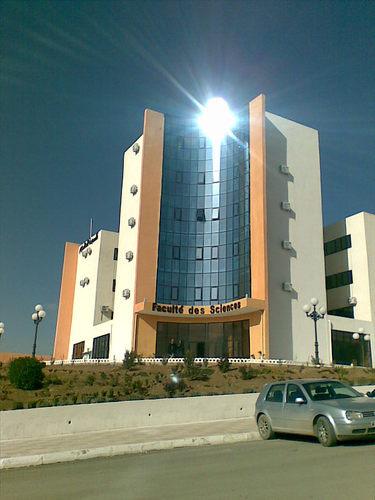
University Sétif 1 FERHAT ABBAS Faculty of Sciences
Détail de l'auteur
Auteur Ratiba Mebarki |
Documents disponibles écrits par cet auteur


 Ajouter le résultat dans votre panier Affiner la recherche
Performance Evaluation of the Deep Learning Model TransUNet for Automatic Segmentation in Medical Imaging / Ratiba Mebarki
Titre : Performance Evaluation of the Deep Learning Model TransUNet for Automatic Segmentation in Medical Imaging Type de document : document électronique Auteurs : Ratiba Mebarki, Auteur ; Imene Guerioune, Auteur ; Hacene Azizi, Directeur de thèse Editeur : Setif:UFA Année de publication : 2025 Importance : 1 vol (50 f.) Format : 29 cm Langues : Anglais (eng) Catégories : Thèses & Mémoires:Physique Mots-clés : Medical imaging
Automatic segmentation
Deep learning
TransUNet
SegNet
Microultrasound
ProstateIndex. décimale : 530 - Physique Résumé :
Medical image segmentation is a crucial step in many clinical procedures, particularly in oncology and
radiotherapy. However, manual segmentation remains tedious, subject to inter-practitioner
variability, and difficult to reproduce accurately. This thesis is part of an effort to automate this
process through advances in deep learning. We studied and implemented the TransUNet model,
known for its ability to combine the strengths of convolutional networks and transformers in
segmentation tasks. Applying this model to micro-ultrasound images of the prostate allowed us to
evaluate its performance using robust metrics, such as the Dice coefficient and the Hausdorff
Distance (HD). The results obtained—Dice = 94% and Hausdorff Distance = 1.960—confirm the
model’s reliability, as it successfully reproduces the contours of the prostate while ensuring spatial
consistency and good generalization. This work concretely illustrates how artificial intelligence (AI)
can reduce the workload of healthcare professionals and improve diagnostic quality. It also opens the
door to promising prospects, notably the extension of its application to other anatomical structures
and the clinical integration of such tools.Note de contenu : Sommaire
Remerciement i
Liste des figures vi
Liste des tableaux xi
Liste des abr´eviations xii
Introduction 1
1 ´Etat de l’art :Segmentation des images m´edicales 3
1.1 Introduction . . . . . . . . . . . . . . . . . . . . . . . . . . . . . . . . . 4
1.2 Imagerie m´edicale . . . . . . . . . . . . . . . . . . . . . . . . . . . . . . 4
1.3 La segmentation en imagerie m´edicale . . . . . . . . . . . . . . . . . . 5
1.3.1 ´Evolution des diff´erentes m´ethodes de segmentation dans
l’imagerie m´edicale . . . . . . . . . . . . . . . . . . . . . . . . . 5
1.3.2 D´efinition de la segmentation . . . . . . . . . . . . . . . . . . . 5
1.3.3 Les diff´erentes m´ethodes de segmentation . . . . . . . . . . . . . 6
1.3.3.1 M´ethodes classiques de Segmentation : . . . . . . . . . 7
1.3.3.2 M´ethodes bas´ees sur l’IA . . . . . . . . . . . . . . . . 11
1.3.4 Comparaison entre les m´ethodes classiques et profondes dans la
segmentation d’images m´edicales . . . . . . . . . . . . . . . . . 12
1.4 Les Objectifs de la segmentation . . . . . . . . . . . . . . . . . . . . . 14
1.5 Applications Cliniques de la segmentation . . . . . . . . . . . . . . . . 14
1.5.1 Radioth´erapie et Oncologie . . . . . . . . . . . . . . . . . . . . 14
1.5.2 Ophtalmologie et R´etinopathie . . . . . . . . . . . . . . . . . . 15
1.5.3 Cardiologie . . . . . . . . . . . . . . . . . . . . . . . . . . . . . 15
1.6 Conclusion . . . . . . . . . . . . . . . . . . . . . . . . . . . . . . . . . . 16
2 Application d’apprentissage profond dans la segmentation des images
m´edicale 17
2.1 Introduction . . . . . . . . . . . . . . . . . . . . . . . . . . . . . . . . . 18
2.2 M´ethodes d’apprentissage en imagerie m´edicale . . . . . . . . . . . . . 18
2.2.1 D´efinition et concepts de l’intelligence artificielle . . . . . . . . 18
2.2.2 Apprentissage automatique : techniques et applications en
imagerie m´edicale . . . . . . . . . . . . . . . . . . . . . . . . . 19
2.2.2.1 Apprentissage supervis´e . . . . . . . . . . . . . . . . . 19
2.2.2.2 Apprentissage non supervis´e . . . . . . . . . . . . . . 20
2.2.3 Apprentissage profond . . . . . . . . . . . . . . . . . . . . . . . 20
2.2.4 Comparaison entre la Machine Learning et Deep Learning . . . 21
2.2.5 Applications en imagerie m´edicale . . . . . . . . . . . . . . . . 21
2.3 Introduction aux r´eseaux de neurones profonds . . . . . . . . . . . . . 21
2.3.1 Architectures des r´eseaux de neurones profonds . . . . . . . . . 22
2.3.2 R´eseaux de neurones convolutifs . . . . . . . . . . . . . . . . . 22
2.4 Techniques de segmentation en apprentissage profond . . . . . . . . . . 24
2.4.1 Segmentation par U-Net . . . . . . . . . . . . . . . . . . . . . . 24
2.4.2 Segmentation par SegNet . . . . . . . . . . . . . . . . . . . . . 26
2.4.3 Segmentation par Transformer . . . . . . . . . . . . . . . . . . 27
2.5 Conclusion . . . . . . . . . . . . . . . . . . . . . . . . . . . . . . . . . . 28
3 Mat´eriels et M´ethodes 29
3.1 Introduction . . . . . . . . . . . . . . . . . . . . . . . . . . . . . . . . . 29
3.2 Description des donn´ees . . . . . . . . . . . . . . . . . . . . . . . . . . 30
3.2.1 Base de donn´ees MicroSegNet (MicroSegNet Dataset) . . . . . . 30
3.3 Mat´eriels utilis´es . . . . . . . . . . . . . . . . . . . . . . . . . . . . . . 30
3.3.1 Python et Google Colab . . . . . . . . . . . . . . . . . . . . . . 30
3.3.2 Mod`ele d’architecture . . . . . . . . . . . . . . . . . . . . . . . 31
3.3.2.1 MicroSegNet . . . . . . . . . . . . . . . . . . . . . . . 31
3.3.2.2 Composants cl´es de TransUNet int´egr´es dans
MicroSegNet . . . . . . . . . . . . . . . . . . . . . . . 32
3.4 Param`etres du mod`ele . . . . . . . . . . . . . . . . . . . . . . . . . . . 33
3.5 hyperparam`etres d’entraˆınement . . . . . . . . . . . . . . . . . . . . . 34
3.6 Les m´etriques d’´evaluation . . . . . . . . . . . . . . . . . . . . . . . . 34
3.7 Conclusion . . . . . . . . . . . . . . . . . . . . . . . . . . . . . . . . . 35
4 R´esultats et Discussions 36
4.1 Introduction . . . . . . . . . . . . . . . . . . . . . . . . . . . . . . . . . 36
4.2 Protocole d’Entraˆınement de Mod`ele . . . . . . . . . . . . . . . . . . . 37
4.3 R´esultats d’entrainement . . . . . . . . . . . . . . . . . . . . . . . . . 38
4.3.1 Comparaison qualitative . . . . . . . . . . . . . . . . . . . . . . 39
4.3.2 Comparaison quantitative . . . . . . . . . . . . . . . . . . . . . 44
4.3.2.1 M´etrique d’´evaluation . . . . . . . . . . . . . . . . . . 44
4.3.2.2 Fonction de coˆut pour l’apprentissage du mod`ele . . . 45
4.4 Le ”Benchmarking” . . . . . . . . . . . . . . . . . . . . . . . . . . . . . 46
4.5 Conclusion . . . . . . . . . . . . . . . . . . . . . . . . . . . . . . . . . . 47
Conclusion G´en´erale & Perspectives 49
Bibliographie i
Annexe vCôte titre : MAPH/0678 Performance Evaluation of the Deep Learning Model TransUNet for Automatic Segmentation in Medical Imaging [document électronique] / Ratiba Mebarki, Auteur ; Imene Guerioune, Auteur ; Hacene Azizi, Directeur de thèse . - [S.l.] : Setif:UFA, 2025 . - 1 vol (50 f.) ; 29 cm.
Langues : Anglais (eng)
Catégories : Thèses & Mémoires:Physique Mots-clés : Medical imaging
Automatic segmentation
Deep learning
TransUNet
SegNet
Microultrasound
ProstateIndex. décimale : 530 - Physique Résumé :
Medical image segmentation is a crucial step in many clinical procedures, particularly in oncology and
radiotherapy. However, manual segmentation remains tedious, subject to inter-practitioner
variability, and difficult to reproduce accurately. This thesis is part of an effort to automate this
process through advances in deep learning. We studied and implemented the TransUNet model,
known for its ability to combine the strengths of convolutional networks and transformers in
segmentation tasks. Applying this model to micro-ultrasound images of the prostate allowed us to
evaluate its performance using robust metrics, such as the Dice coefficient and the Hausdorff
Distance (HD). The results obtained—Dice = 94% and Hausdorff Distance = 1.960—confirm the
model’s reliability, as it successfully reproduces the contours of the prostate while ensuring spatial
consistency and good generalization. This work concretely illustrates how artificial intelligence (AI)
can reduce the workload of healthcare professionals and improve diagnostic quality. It also opens the
door to promising prospects, notably the extension of its application to other anatomical structures
and the clinical integration of such tools.Note de contenu : Sommaire
Remerciement i
Liste des figures vi
Liste des tableaux xi
Liste des abr´eviations xii
Introduction 1
1 ´Etat de l’art :Segmentation des images m´edicales 3
1.1 Introduction . . . . . . . . . . . . . . . . . . . . . . . . . . . . . . . . . 4
1.2 Imagerie m´edicale . . . . . . . . . . . . . . . . . . . . . . . . . . . . . . 4
1.3 La segmentation en imagerie m´edicale . . . . . . . . . . . . . . . . . . 5
1.3.1 ´Evolution des diff´erentes m´ethodes de segmentation dans
l’imagerie m´edicale . . . . . . . . . . . . . . . . . . . . . . . . . 5
1.3.2 D´efinition de la segmentation . . . . . . . . . . . . . . . . . . . 5
1.3.3 Les diff´erentes m´ethodes de segmentation . . . . . . . . . . . . . 6
1.3.3.1 M´ethodes classiques de Segmentation : . . . . . . . . . 7
1.3.3.2 M´ethodes bas´ees sur l’IA . . . . . . . . . . . . . . . . 11
1.3.4 Comparaison entre les m´ethodes classiques et profondes dans la
segmentation d’images m´edicales . . . . . . . . . . . . . . . . . 12
1.4 Les Objectifs de la segmentation . . . . . . . . . . . . . . . . . . . . . 14
1.5 Applications Cliniques de la segmentation . . . . . . . . . . . . . . . . 14
1.5.1 Radioth´erapie et Oncologie . . . . . . . . . . . . . . . . . . . . 14
1.5.2 Ophtalmologie et R´etinopathie . . . . . . . . . . . . . . . . . . 15
1.5.3 Cardiologie . . . . . . . . . . . . . . . . . . . . . . . . . . . . . 15
1.6 Conclusion . . . . . . . . . . . . . . . . . . . . . . . . . . . . . . . . . . 16
2 Application d’apprentissage profond dans la segmentation des images
m´edicale 17
2.1 Introduction . . . . . . . . . . . . . . . . . . . . . . . . . . . . . . . . . 18
2.2 M´ethodes d’apprentissage en imagerie m´edicale . . . . . . . . . . . . . 18
2.2.1 D´efinition et concepts de l’intelligence artificielle . . . . . . . . 18
2.2.2 Apprentissage automatique : techniques et applications en
imagerie m´edicale . . . . . . . . . . . . . . . . . . . . . . . . . 19
2.2.2.1 Apprentissage supervis´e . . . . . . . . . . . . . . . . . 19
2.2.2.2 Apprentissage non supervis´e . . . . . . . . . . . . . . 20
2.2.3 Apprentissage profond . . . . . . . . . . . . . . . . . . . . . . . 20
2.2.4 Comparaison entre la Machine Learning et Deep Learning . . . 21
2.2.5 Applications en imagerie m´edicale . . . . . . . . . . . . . . . . 21
2.3 Introduction aux r´eseaux de neurones profonds . . . . . . . . . . . . . 21
2.3.1 Architectures des r´eseaux de neurones profonds . . . . . . . . . 22
2.3.2 R´eseaux de neurones convolutifs . . . . . . . . . . . . . . . . . 22
2.4 Techniques de segmentation en apprentissage profond . . . . . . . . . . 24
2.4.1 Segmentation par U-Net . . . . . . . . . . . . . . . . . . . . . . 24
2.4.2 Segmentation par SegNet . . . . . . . . . . . . . . . . . . . . . 26
2.4.3 Segmentation par Transformer . . . . . . . . . . . . . . . . . . 27
2.5 Conclusion . . . . . . . . . . . . . . . . . . . . . . . . . . . . . . . . . . 28
3 Mat´eriels et M´ethodes 29
3.1 Introduction . . . . . . . . . . . . . . . . . . . . . . . . . . . . . . . . . 29
3.2 Description des donn´ees . . . . . . . . . . . . . . . . . . . . . . . . . . 30
3.2.1 Base de donn´ees MicroSegNet (MicroSegNet Dataset) . . . . . . 30
3.3 Mat´eriels utilis´es . . . . . . . . . . . . . . . . . . . . . . . . . . . . . . 30
3.3.1 Python et Google Colab . . . . . . . . . . . . . . . . . . . . . . 30
3.3.2 Mod`ele d’architecture . . . . . . . . . . . . . . . . . . . . . . . 31
3.3.2.1 MicroSegNet . . . . . . . . . . . . . . . . . . . . . . . 31
3.3.2.2 Composants cl´es de TransUNet int´egr´es dans
MicroSegNet . . . . . . . . . . . . . . . . . . . . . . . 32
3.4 Param`etres du mod`ele . . . . . . . . . . . . . . . . . . . . . . . . . . . 33
3.5 hyperparam`etres d’entraˆınement . . . . . . . . . . . . . . . . . . . . . 34
3.6 Les m´etriques d’´evaluation . . . . . . . . . . . . . . . . . . . . . . . . 34
3.7 Conclusion . . . . . . . . . . . . . . . . . . . . . . . . . . . . . . . . . 35
4 R´esultats et Discussions 36
4.1 Introduction . . . . . . . . . . . . . . . . . . . . . . . . . . . . . . . . . 36
4.2 Protocole d’Entraˆınement de Mod`ele . . . . . . . . . . . . . . . . . . . 37
4.3 R´esultats d’entrainement . . . . . . . . . . . . . . . . . . . . . . . . . 38
4.3.1 Comparaison qualitative . . . . . . . . . . . . . . . . . . . . . . 39
4.3.2 Comparaison quantitative . . . . . . . . . . . . . . . . . . . . . 44
4.3.2.1 M´etrique d’´evaluation . . . . . . . . . . . . . . . . . . 44
4.3.2.2 Fonction de coˆut pour l’apprentissage du mod`ele . . . 45
4.4 Le ”Benchmarking” . . . . . . . . . . . . . . . . . . . . . . . . . . . . . 46
4.5 Conclusion . . . . . . . . . . . . . . . . . . . . . . . . . . . . . . . . . . 47
Conclusion G´en´erale & Perspectives 49
Bibliographie i
Annexe vCôte titre : MAPH/0678 Exemplaires (1)
Code-barres Cote Support Localisation Section Disponibilité MAPH/0678 MAPH/0678 Mémoire Bibliothèque des sciences Anglais Disponible
Disponible