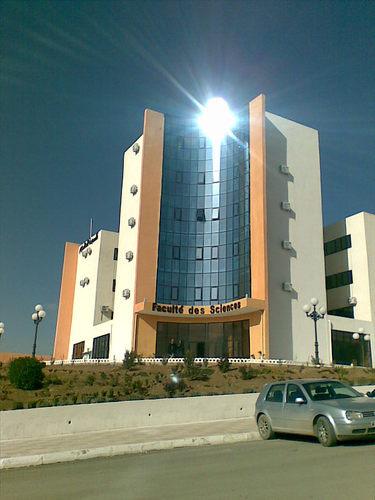
University Sétif 1 FERHAT ABBAS Faculty of Sciences
Catégories


 Ajouter le résultat dans votre panier Affiner la recherche
Titre : Ab-initio Study of fundamental properties of a cubic perovskite - BiIno3 Type de document : document électronique Auteurs : Sanaa Abiren, Auteur ; Mohamed Salah Halati, Directeur de thèse Editeur : Setif:UFA Année de publication : 2025 Importance : 1 vol (80 f.) Format : 29 cm Langues : Anglais (eng) Catégories : Thèses & Mémoires:Physique Mots-clés : BiIn????????
PP-PW method
Elastic constants
Electronic properties
Structural properties
Elastic properties and chemical bondingIndex. décimale : 530 - Physique Résumé :
In this work, we studied the structural, electronic and elastic properties of the cubic perovskite composite BiIn????????. The aim of this work is to know the properties of BiIn???????? in preparation for the possible use of this compound in certain applications and fields. For this purpose, we used the (ab initio) calculation method, based on the density functional theory (DFT) included in CASTEP and integrated with the plane wave method and pseudopotentials (PP-PW), to calculate the cross-correlation potential (Xc), we used the localized density approximation (LDA) as well as the generalized gradient approximation (GGA) in the calculations and found that the lattice constant and compressive modulus obtained are consistent with the theoretical results. The elasticity constants increase with increasing hydrostatic pressure, where we studied a range from 0 GPa to 40 GPa. As for the elastic properties, we calculated the Zener ratio and found that the compound is anisotropic; and more rigid along the crystalline direction [100], The elastic constants fulfilled the stability conditions, which means that our compound is structurally stable. The results of the energy band analysis indicated that the studied compound is an indirect band gap conductor, moreover, by analyzing the density of state spectrum we found that the chemical bonds are a mixture of valence and ionic bonds and that Bi -6p constitutes the majority of the conduction band, according to DOS analysis, while O -2p states practically dominate the valence band. Our results from the study of the physical properties of the BiIn???????? molecule indicate that our compound could be a good substitute (candidate) for lead-containing materials to protect nature from its toxicity .Note de contenu :
Sommaire
Acknowledgments .................................................................................................................................
Dedication .............................................................................................................................................
The used abbreviations: ........................................................................................................................
Table des matieres : ...............................................................................................................................
Tables list: .............................................................................................................................................
General Introduction ................................................................................................................... a ,b,c
Referenses: ......................................................................................................................................... d
Chapter 1 : Semiconductors: the cubic perovskite family
Semi-conductors and perovskites compounds ...................................................................................... 2
I.1. Introduction ................................................................................................................................... 2
I.2. The semi-conductor ........................................................................................................................ 3
I.2.1. Definition of semi-conductors ..................................................................................................... 3
I.2.2. Physical properties of semiconductors ........................................................................................ 4
I.2.2.1. Fermi level concept ................................................................................................................... 4
Ⅰ. 2. 2. 2. Energy Bands ........................................................................................................................ 7
Ⅰ. 2. 2. 3. Notion of direct gap and indirect gap .................................................................................... 8
Ⅰ. 2. 2. 3. 1. Direct electron transitions .................................................................................................. 8
Ⅰ. 2. 2. 3. 2. Indirect electronic transitions ............................................................................................. 8
Ⅰ. 2. 2. 4. Principles of Band Structure .................................................................................................. 8
Ⅰ. 2. 2. 5. Mobility of Free-Loading Cars ............................................................................................ 10
Ⅰ . 2 . 2 . 6 . Intermediate electrical conductivity ................................................................................. 11
Ⅰ. 2. 2. 7. Electrical resistivity ............................................................................................................ 12
Ⅰ. 2. 2. 8. Hall effect ............................................................................................................................ 12
Ⅰ. 2. 2. 9. The photovoltaic effect ........................................................................................................ 13
Ⅰ. 2. 2. 10. Optical Absorption ............................................................................................................. 15
Ⅰ. 2. 2. 11. Attenuation and absorption coefficients ............................................................................ 16
Ⅰ. 2. 2. 12. Refractive index ................................................................................................................. 17
Ⅰ. 2. 2. 13. Reflection and transmission coefficient ............................................................................. 18
I.2.3. Chemical properties ................................................................................................................... 19
I.2.3.1.Structural characteristics of semiconductors ........................................................................... 19
I.2.3.1.1.Diamond structure ................................................................................................................. 19
I.2.3.1.2.Zinc blende structure ............................................................................................................. 20
I.2.3.1.3.Wurtzite structure .................................................................................................................. 20
I.2.3.1.4.Structure of sodium chloride (NaCl) ..................................................................................... 21
I.2.3.2.Different types of semiconductors ........................................................................................... 21
I.2.3.2.1.Intrinsic semiconductors ....................................................................................................... 21
I.2.3.2.2.Intrinsic semiconductors ....................................................................................................... 22
I.2.3.3.The Different types of bonds and their influence on structures ............................................... 23
I.2.3.3.1.Covalent Bonding ................................................................................................................. 23
I.2.3.3.2.Ionic Bond ............................................................................................................................. 25
I.2.3.3.3.Ionic-Covalent bonds ............................................................................................................ 25
I.2.3.4.Doping of semiconductors ....................................................................................................... 26
I.2.3.5.The PN junction ....................................................................................................................... 26
I.3.Perovskites .................................................................................................................................... 27
I.3.1.Definition of perovskites ............................................................................................................. 27
I.3.2.Crystal structure of Perovskites .................................................................................................. 28
I.3.3.The process of Perovskite formation requires ............................................................................ 29
I.3.4.Conditions for the stability of the perovskite structure ............................................................... 29
I.3.4.1.Tolerance factor (t) .................................................................................................................. 29
I.3.4.2.The ionic form of the bonds ..................................................................................................... 30
I.3.5.Classification of Perovskites ....................................................................................................... 30
I.3.5.1.Oxide family ............................................................................................................................ 30
I.3.5.2.Halogen family ......................................................................................................................... 32
I.3.6.Applications and properties of some types of perovskites .......................................................... 32
I.4.Conclusion .................................................................................................................................... 34
Chapter 2: The (DFT): Density Functional theory with
(The used approximation ) potential and related accuracy.
II.1. introduction: ............................................................................................................................... 41
II.2. The APW method ....................................................................................................................... 41
II.3. The FP/LAPW method ............................................................................................................... 44
II.3.1. The LAPW Basis functions ..................................................................................................... 44
II.3.2. Semi-core states problem ......................................................................................................... 47
II.3.2.1. Multiple energy windows ..................................................................................................... 47
II.3.2.2. Local orbitals .........................................................................................................................
II.3.2.2.1. LAPW+LO method ........................................................................................................... 48
II.3.2.2.2. APW+lo method ................................................................................................................ 50
II.3.3. The Concept of FP-LAPWmethod .......................................................................................... 51
II.4. TB-mBJ approach (The latest correlation and exchange potential modification)
II.5. Referenses: .................................................................................................................................. 54
Chapter 3: Results and discussions
Ⅲ . 1. Introduction .............................................................................................................................. 58
Ⅲ . 2 Structural form of the compound BiIn????3 ................................................................................. 58
Ⅲ.3. Calculation method .................................................................................................................... 60
Ⅲ . 4. Results and discussions ............................................................................................................ 60
Ⅲ .4. 1. Study of Structural properties: ............................................................................................ 60
Ⅲ. 4 .2 Elastic properties .................................................................................................................... 63
Ⅲ. 4 .2.1. Elastic anisotropy study : ................................................................................................... 66
Ⅲ . 4 .2.2. Mechanical stability: ........................................................................................................ 67
Ⅲ. 4 .2.3. Calculation of anisotropic elastic wave velocities: .......................................................... 68
III .4. 2.4. Effect of pressure on the elastic constants of BiIn????3 ........................................................ 69
Ⅲ . 4. 3. Electronic Properties ........................................................................................................... 71
Conclusion: ......................................................................................................................................... 76
Références .......................................................................................................................................... 77Côte titre : MAPH/0712 Ab-initio Study of fundamental properties of a cubic perovskite - BiIno3 [document électronique] / Sanaa Abiren, Auteur ; Mohamed Salah Halati, Directeur de thèse . - [S.l.] : Setif:UFA, 2025 . - 1 vol (80 f.) ; 29 cm.
Langues : Anglais (eng)
Catégories : Thèses & Mémoires:Physique Mots-clés : BiIn????????
PP-PW method
Elastic constants
Electronic properties
Structural properties
Elastic properties and chemical bondingIndex. décimale : 530 - Physique Résumé :
In this work, we studied the structural, electronic and elastic properties of the cubic perovskite composite BiIn????????. The aim of this work is to know the properties of BiIn???????? in preparation for the possible use of this compound in certain applications and fields. For this purpose, we used the (ab initio) calculation method, based on the density functional theory (DFT) included in CASTEP and integrated with the plane wave method and pseudopotentials (PP-PW), to calculate the cross-correlation potential (Xc), we used the localized density approximation (LDA) as well as the generalized gradient approximation (GGA) in the calculations and found that the lattice constant and compressive modulus obtained are consistent with the theoretical results. The elasticity constants increase with increasing hydrostatic pressure, where we studied a range from 0 GPa to 40 GPa. As for the elastic properties, we calculated the Zener ratio and found that the compound is anisotropic; and more rigid along the crystalline direction [100], The elastic constants fulfilled the stability conditions, which means that our compound is structurally stable. The results of the energy band analysis indicated that the studied compound is an indirect band gap conductor, moreover, by analyzing the density of state spectrum we found that the chemical bonds are a mixture of valence and ionic bonds and that Bi -6p constitutes the majority of the conduction band, according to DOS analysis, while O -2p states practically dominate the valence band. Our results from the study of the physical properties of the BiIn???????? molecule indicate that our compound could be a good substitute (candidate) for lead-containing materials to protect nature from its toxicity .Note de contenu :
Sommaire
Acknowledgments .................................................................................................................................
Dedication .............................................................................................................................................
The used abbreviations: ........................................................................................................................
Table des matieres : ...............................................................................................................................
Tables list: .............................................................................................................................................
General Introduction ................................................................................................................... a ,b,c
Referenses: ......................................................................................................................................... d
Chapter 1 : Semiconductors: the cubic perovskite family
Semi-conductors and perovskites compounds ...................................................................................... 2
I.1. Introduction ................................................................................................................................... 2
I.2. The semi-conductor ........................................................................................................................ 3
I.2.1. Definition of semi-conductors ..................................................................................................... 3
I.2.2. Physical properties of semiconductors ........................................................................................ 4
I.2.2.1. Fermi level concept ................................................................................................................... 4
Ⅰ. 2. 2. 2. Energy Bands ........................................................................................................................ 7
Ⅰ. 2. 2. 3. Notion of direct gap and indirect gap .................................................................................... 8
Ⅰ. 2. 2. 3. 1. Direct electron transitions .................................................................................................. 8
Ⅰ. 2. 2. 3. 2. Indirect electronic transitions ............................................................................................. 8
Ⅰ. 2. 2. 4. Principles of Band Structure .................................................................................................. 8
Ⅰ. 2. 2. 5. Mobility of Free-Loading Cars ............................................................................................ 10
Ⅰ . 2 . 2 . 6 . Intermediate electrical conductivity ................................................................................. 11
Ⅰ. 2. 2. 7. Electrical resistivity ............................................................................................................ 12
Ⅰ. 2. 2. 8. Hall effect ............................................................................................................................ 12
Ⅰ. 2. 2. 9. The photovoltaic effect ........................................................................................................ 13
Ⅰ. 2. 2. 10. Optical Absorption ............................................................................................................. 15
Ⅰ. 2. 2. 11. Attenuation and absorption coefficients ............................................................................ 16
Ⅰ. 2. 2. 12. Refractive index ................................................................................................................. 17
Ⅰ. 2. 2. 13. Reflection and transmission coefficient ............................................................................. 18
I.2.3. Chemical properties ................................................................................................................... 19
I.2.3.1.Structural characteristics of semiconductors ........................................................................... 19
I.2.3.1.1.Diamond structure ................................................................................................................. 19
I.2.3.1.2.Zinc blende structure ............................................................................................................. 20
I.2.3.1.3.Wurtzite structure .................................................................................................................. 20
I.2.3.1.4.Structure of sodium chloride (NaCl) ..................................................................................... 21
I.2.3.2.Different types of semiconductors ........................................................................................... 21
I.2.3.2.1.Intrinsic semiconductors ....................................................................................................... 21
I.2.3.2.2.Intrinsic semiconductors ....................................................................................................... 22
I.2.3.3.The Different types of bonds and their influence on structures ............................................... 23
I.2.3.3.1.Covalent Bonding ................................................................................................................. 23
I.2.3.3.2.Ionic Bond ............................................................................................................................. 25
I.2.3.3.3.Ionic-Covalent bonds ............................................................................................................ 25
I.2.3.4.Doping of semiconductors ....................................................................................................... 26
I.2.3.5.The PN junction ....................................................................................................................... 26
I.3.Perovskites .................................................................................................................................... 27
I.3.1.Definition of perovskites ............................................................................................................. 27
I.3.2.Crystal structure of Perovskites .................................................................................................. 28
I.3.3.The process of Perovskite formation requires ............................................................................ 29
I.3.4.Conditions for the stability of the perovskite structure ............................................................... 29
I.3.4.1.Tolerance factor (t) .................................................................................................................. 29
I.3.4.2.The ionic form of the bonds ..................................................................................................... 30
I.3.5.Classification of Perovskites ....................................................................................................... 30
I.3.5.1.Oxide family ............................................................................................................................ 30
I.3.5.2.Halogen family ......................................................................................................................... 32
I.3.6.Applications and properties of some types of perovskites .......................................................... 32
I.4.Conclusion .................................................................................................................................... 34
Chapter 2: The (DFT): Density Functional theory with
(The used approximation ) potential and related accuracy.
II.1. introduction: ............................................................................................................................... 41
II.2. The APW method ....................................................................................................................... 41
II.3. The FP/LAPW method ............................................................................................................... 44
II.3.1. The LAPW Basis functions ..................................................................................................... 44
II.3.2. Semi-core states problem ......................................................................................................... 47
II.3.2.1. Multiple energy windows ..................................................................................................... 47
II.3.2.2. Local orbitals .........................................................................................................................
II.3.2.2.1. LAPW+LO method ........................................................................................................... 48
II.3.2.2.2. APW+lo method ................................................................................................................ 50
II.3.3. The Concept of FP-LAPWmethod .......................................................................................... 51
II.4. TB-mBJ approach (The latest correlation and exchange potential modification)
II.5. Referenses: .................................................................................................................................. 54
Chapter 3: Results and discussions
Ⅲ . 1. Introduction .............................................................................................................................. 58
Ⅲ . 2 Structural form of the compound BiIn????3 ................................................................................. 58
Ⅲ.3. Calculation method .................................................................................................................... 60
Ⅲ . 4. Results and discussions ............................................................................................................ 60
Ⅲ .4. 1. Study of Structural properties: ............................................................................................ 60
Ⅲ. 4 .2 Elastic properties .................................................................................................................... 63
Ⅲ. 4 .2.1. Elastic anisotropy study : ................................................................................................... 66
Ⅲ . 4 .2.2. Mechanical stability: ........................................................................................................ 67
Ⅲ. 4 .2.3. Calculation of anisotropic elastic wave velocities: .......................................................... 68
III .4. 2.4. Effect of pressure on the elastic constants of BiIn????3 ........................................................ 69
Ⅲ . 4. 3. Electronic Properties ........................................................................................................... 71
Conclusion: ......................................................................................................................................... 76
Références .......................................................................................................................................... 77Côte titre : MAPH/0712 Exemplaires (1)
Code-barres Cote Support Localisation Section Disponibilité MAPH/0712 MAPH/0712 Mémoire Bibliothèque des sciences Anglais Disponible
Disponible
Titre : Ab initio study of physical properties of some solid materials Type de document : document électronique Auteurs : Abderrazek Khireddine ; Bouhemadou,A, Directeur de thèse Editeur : Setif:UFA Année de publication : 2024 Importance : 1 vol. (141 f.) Catégories : Thèses & Mémoires:Physique Mots-clés : Density functional theory (DFT) Ternary Zintl phases First-principles (ab initio) calculations Electronic structure Effective masses Optoelectronic properties Elastic constants Thermoelectric coefficients Résumé : The structural, electronic, optical, elastic and thermoelectric properties of the ternary Zintl compounds Sr3GaAs3, Ba3GaAs3 and Ba2ZnP2 were studied using two complementary first-principles calculation methods, the pseudopotentials plane waves (PP-PW) and the full potential Linearized Augmented Plane wave (FP-LAPW) methods within the density function theory framework. Sr3GaAs3 and Ba3GaAs3 crystallize in an orthorhombic system, space group Pnma (no 62), while Ba2ZnP2 crystallizes in an orthorhombic system, space group Ibam (no 72). GGA-PBEsol was used to treat the exchange and correlation potential (XC) to calculate the structural and elastic properties. GGA-PBEsol and TB-mBJ were used to study its electronic and optical properties. The values of structural parameters (the parameters and volume of primitive cell) calculated agreed well with available experimental data. This indicates the reliability of our results. We have numerically estimated the elastic constants and associated properties (elastic constants Cij, Young's modulus E, shear modulus G, Poisson's modulus and Debye temperature D) for single-crystal and polycrystalline under zero pressure and anisotropic sound velocities. The calculation results showed that the studied compounds belong to the semiconductor family, with direct band gaps for the compounds Sr3GaAs3 and Ba3GaAs3, valued at 1.271 eV and 1.285 eV, respectively, and an indirect band gap energy with a value of 1.24 eV for Ba2ZnP2. We analysed the electronic states of the energy bands using partial density diagrams of states. Optical constants were calculated in an energy range from 0 to 30 MeV. The results of the calculations showed an increase in the static dielectric constant () with a decrease in the energy impedances of the studied compounds. The thermoelectric constants of the compounds were studied using semi-classical Boltzmann transport theory. Our results indicate that Ba2ZnP2 has a best figure of merit (ZT) of 1.77 at 300 K, making it a potential candidate for thermoelectric applications Côte titre : DPH/0296 En ligne : http://dspace.univ-setif.dz:8888/jspui/bitstream/123456789/4361/1/2303.pdf Ab initio study of physical properties of some solid materials [document électronique] / Abderrazek Khireddine ; Bouhemadou,A, Directeur de thèse . - [S.l.] : Setif:UFA, 2024 . - 1 vol. (141 f.).
Catégories : Thèses & Mémoires:Physique Mots-clés : Density functional theory (DFT) Ternary Zintl phases First-principles (ab initio) calculations Electronic structure Effective masses Optoelectronic properties Elastic constants Thermoelectric coefficients Résumé : The structural, electronic, optical, elastic and thermoelectric properties of the ternary Zintl compounds Sr3GaAs3, Ba3GaAs3 and Ba2ZnP2 were studied using two complementary first-principles calculation methods, the pseudopotentials plane waves (PP-PW) and the full potential Linearized Augmented Plane wave (FP-LAPW) methods within the density function theory framework. Sr3GaAs3 and Ba3GaAs3 crystallize in an orthorhombic system, space group Pnma (no 62), while Ba2ZnP2 crystallizes in an orthorhombic system, space group Ibam (no 72). GGA-PBEsol was used to treat the exchange and correlation potential (XC) to calculate the structural and elastic properties. GGA-PBEsol and TB-mBJ were used to study its electronic and optical properties. The values of structural parameters (the parameters and volume of primitive cell) calculated agreed well with available experimental data. This indicates the reliability of our results. We have numerically estimated the elastic constants and associated properties (elastic constants Cij, Young's modulus E, shear modulus G, Poisson's modulus and Debye temperature D) for single-crystal and polycrystalline under zero pressure and anisotropic sound velocities. The calculation results showed that the studied compounds belong to the semiconductor family, with direct band gaps for the compounds Sr3GaAs3 and Ba3GaAs3, valued at 1.271 eV and 1.285 eV, respectively, and an indirect band gap energy with a value of 1.24 eV for Ba2ZnP2. We analysed the electronic states of the energy bands using partial density diagrams of states. Optical constants were calculated in an energy range from 0 to 30 MeV. The results of the calculations showed an increase in the static dielectric constant () with a decrease in the energy impedances of the studied compounds. The thermoelectric constants of the compounds were studied using semi-classical Boltzmann transport theory. Our results indicate that Ba2ZnP2 has a best figure of merit (ZT) of 1.77 at 300 K, making it a potential candidate for thermoelectric applications Côte titre : DPH/0296 En ligne : http://dspace.univ-setif.dz:8888/jspui/bitstream/123456789/4361/1/2303.pdf Exemplaires (1)
Code-barres Cote Support Localisation Section Disponibilité DPH/0296 DPH/0296 Thèse Bibliothèque des sciences Anglais Disponible
Disponible
Titre : Ab initio Study of simple and co-axical Nanowires for solar cell application Type de document : texte imprimé Auteurs : Haffad,Slimane, Auteur ; Madani Samaha, Directeur de thèse Importance : 1 vol (123 f .) Format : 29 cm Langues : Français (fre) Catégories : Thèses & Mémoires:Physique Mots-clés : Physique des matériaux Côte titre : DPH/0261 Ab initio Study of simple and co-axical Nanowires for solar cell application [texte imprimé] / Haffad,Slimane, Auteur ; Madani Samaha, Directeur de thèse . - [s.d.] . - 1 vol (123 f .) ; 29 cm.
Langues : Français (fre)
Catégories : Thèses & Mémoires:Physique Mots-clés : Physique des matériaux Côte titre : DPH/0261 Exemplaires (1)
Code-barres Cote Support Localisation Section Disponibilité DPH/0261 DPH/0261 Thèse Bibliothèque des sciences Anglais Disponible
DisponibleAb initio Study of Some Physical Properties of the Cu2MgSiS4 and Cu2MgGeS4 diamond-like semiconductors and Sr2GeN2 Polymorphs / BEDJAOUI Abdelhak

Titre : Ab initio Study of Some Physical Properties of the Cu2MgSiS4 and Cu2MgGeS4 diamond-like semiconductors and Sr2GeN2 Polymorphs Type de document : texte imprimé Auteurs : BEDJAOUI Abdelhak, Auteur Editeur : Setif:UFA Année de publication : 2017 Importance : 1 vol (187 f .) Format : 29 cm Langues : Français (fre) Catégories : Thèses & Mémoires:Physique Mots-clés : Diamond-like compound
Sr2GeN2 polymorphs
First-principles calculations
structural parameters
Elastic moduli
Electronic structure Optical properties thermodynamic propertiesIndex. décimale : 530 Physique Résumé : In the present work, we have explored some physical properties of the two newly synthetized quaternary diamond-like
semiconductors Cu2MgSiS4 and Cu2MgGeS4, and two polymorphs of the ternary nitrides α-Sr2GeN2 and β-Sr2GeN2, using firstprinciple
calculations based on the density functional theory (DFT). The exchange-correlation effects were treated within the new
version of the generalized gradient approximation (GGA-PBEsol).
The structural, elastic, electronic and optical properties of the two considered diamond-like semiconductors were studied in
detail using two complementary first-principles approaches: the pseudopotential plane wave (PP-PW) and the full potential
augmented plane wane (FP-LAPW). The calculated equilibrium structural parameters are in good agreement with the available
experimental data. Single-crystal and polycrystalline elastic moduli and their related properties, including elastic constants, bulk
modulus, shear modulus, Young’s modulus, Poisson’s ratio, elastic anisotropy indexes, Pugh’s criterion, elastic wave velocities
and Debye temperature, were predicted. We find that the inclusion of the electronic exchange-correlation through the newly
developed TB-mBJ improves the description of the electronic structure. The TB-mBJ yields a direct band gap (Γ-Γ) of 2.64 and
1.54 eV for Cu2MgSiS4 and Cu2MgGeS4, respectively. Frequency-dependence of the dielectric function, refractive index,
extinction coefficient, absorption coefficient, reflectivity, energy loss function and optical conductivity were predicted, and the
origins of the observed electronic transitions were assigned. Both Cu2MgSiS4 and Cu2MgGeS4 exhibit noticeable absorption in the
ultraviolet range.
The structural, elastic and thermodynamic properties of the α (tetragonal) and β (orthorhombic) polymorphs of the Sr2GeN2
compound have been examined in detail using ab initio pseudopotential plane-wave calculations. Apart the structural properties at
ambient conditions, all present reported results are predicted for the first time. The calculated equilibrium lattice parameters and
inter-atomic bond-lengths of the considered polymorphs are in good agreement with the available experimental data. It is found
that α-Sr2GeN2 is energetically more stable than β-Sr2GeN2. The two examined polymorphs are very similar in their crystal
structures and have almost identical local environments. The single-crystal and polycrystalline elastic parameters and related
properties, including elastic constants, bulk, shear and Young’s moduli, Poisson’s ratio, anisotropy indexes, Pugh’s criterion,
elastic wave velocities and Debye temperature, have been predicted. Temperature and pressure dependence of some macroscopic
properties - including the bulk modulus, volume thermal expansion coefficient, heat capacity and Debye temperature - have been
evaluated using ab initio calculations combined with the quasi-harmonic Debye model.Côte titre : DPH/0207 En ligne : https://drive.google.com/file/d/1znqhYjJAUf5xV_vYR8ftRwURwdDlL9eJ/view?usp=shari [...] Format de la ressource électronique : Ab initio Study of Some Physical Properties of the Cu2MgSiS4 and Cu2MgGeS4 diamond-like semiconductors and Sr2GeN2 Polymorphs [texte imprimé] / BEDJAOUI Abdelhak, Auteur . - [S.l.] : Setif:UFA, 2017 . - 1 vol (187 f .) ; 29 cm.
Langues : Français (fre)
Catégories : Thèses & Mémoires:Physique Mots-clés : Diamond-like compound
Sr2GeN2 polymorphs
First-principles calculations
structural parameters
Elastic moduli
Electronic structure Optical properties thermodynamic propertiesIndex. décimale : 530 Physique Résumé : In the present work, we have explored some physical properties of the two newly synthetized quaternary diamond-like
semiconductors Cu2MgSiS4 and Cu2MgGeS4, and two polymorphs of the ternary nitrides α-Sr2GeN2 and β-Sr2GeN2, using firstprinciple
calculations based on the density functional theory (DFT). The exchange-correlation effects were treated within the new
version of the generalized gradient approximation (GGA-PBEsol).
The structural, elastic, electronic and optical properties of the two considered diamond-like semiconductors were studied in
detail using two complementary first-principles approaches: the pseudopotential plane wave (PP-PW) and the full potential
augmented plane wane (FP-LAPW). The calculated equilibrium structural parameters are in good agreement with the available
experimental data. Single-crystal and polycrystalline elastic moduli and their related properties, including elastic constants, bulk
modulus, shear modulus, Young’s modulus, Poisson’s ratio, elastic anisotropy indexes, Pugh’s criterion, elastic wave velocities
and Debye temperature, were predicted. We find that the inclusion of the electronic exchange-correlation through the newly
developed TB-mBJ improves the description of the electronic structure. The TB-mBJ yields a direct band gap (Γ-Γ) of 2.64 and
1.54 eV for Cu2MgSiS4 and Cu2MgGeS4, respectively. Frequency-dependence of the dielectric function, refractive index,
extinction coefficient, absorption coefficient, reflectivity, energy loss function and optical conductivity were predicted, and the
origins of the observed electronic transitions were assigned. Both Cu2MgSiS4 and Cu2MgGeS4 exhibit noticeable absorption in the
ultraviolet range.
The structural, elastic and thermodynamic properties of the α (tetragonal) and β (orthorhombic) polymorphs of the Sr2GeN2
compound have been examined in detail using ab initio pseudopotential plane-wave calculations. Apart the structural properties at
ambient conditions, all present reported results are predicted for the first time. The calculated equilibrium lattice parameters and
inter-atomic bond-lengths of the considered polymorphs are in good agreement with the available experimental data. It is found
that α-Sr2GeN2 is energetically more stable than β-Sr2GeN2. The two examined polymorphs are very similar in their crystal
structures and have almost identical local environments. The single-crystal and polycrystalline elastic parameters and related
properties, including elastic constants, bulk, shear and Young’s moduli, Poisson’s ratio, anisotropy indexes, Pugh’s criterion,
elastic wave velocities and Debye temperature, have been predicted. Temperature and pressure dependence of some macroscopic
properties - including the bulk modulus, volume thermal expansion coefficient, heat capacity and Debye temperature - have been
evaluated using ab initio calculations combined with the quasi-harmonic Debye model.Côte titre : DPH/0207 En ligne : https://drive.google.com/file/d/1znqhYjJAUf5xV_vYR8ftRwURwdDlL9eJ/view?usp=shari [...] Format de la ressource électronique : Exemplaires (1)
Code-barres Cote Support Localisation Section Disponibilité DPH/0207 DPH/0207 Thèse Bibliothèque des sciences Anglais Disponible
DisponibleAb initio study of some physical properties of the newly synthesized selenides TI2CDXSE4(X = Ge, Sn). / Karkour,Selma
Titre : Ab initio study of some physical properties of the newly synthesized selenides TI2CDXSE4(X = Ge, Sn). Type de document : document électronique Auteurs : Karkour,Selma ; Bouhemadou,A, Directeur de thèse Editeur : Setif:UFA Année de publication : 2024 Importance : 1 vol. (100 f.) Catégories : Thèses & Mémoires:Physique Mots-clés : First-principles calculations Spin-orbit coupling Effective masse DFT FP-LAPW GGA TB-mBJ. Résumé : Motivated by the increasing need for high-performance semiconductor materials, we conducted a comprehensive investigation into the structural, elastic, electronic, and optical properties of two recently synthesized compounds, namely Tl2CdGeSe4 and Tl2CdSnSe4, using the full potential linearized augmented plane wave (FP-LAPW) and pseudopotential plane wave (PP-PW) employing density functional theory calculations. The calculations were carried out with the inclusion of relativistic effects, specifically accounting for spin-orbit coupling (SOC). The resulting equilibrium structural parameters obtained from the computations exhibit remarkable agreement with available measurements. It should be noted that the calculations for all the properties examined were carried out using the theoretic equilibrium lattice parameters. The obtained results for both monocrystalline and polycrystalline elastic constants indicate that the investigated compounds exhibit softness, ductility, mechanical stability, and significant structural and elastic anisotropy. By employing the Tran-Blaha modified Becke-Johnson potential and considering the inclusion of spin-orbit coupling (SOC), our calculations reveal that both Tl2CdGeSe4 and Tl2CdSnSe4 are direct bandgap semiconductors. Incorporating SOC leads to a reduction in the fundamental bandgap of Tl2CdGeSe4 from 1.123 to 0.981 eV and that of Tl2CdSnSe4 from 1.097 to 0.953 eV. The l-decomposed atom-projected densities of states were utilized to determine the individual contributions of each constituent atom to the electronic states within the energy bands. The upper valence subband predominantly arises from the Se-4p states, while the bottom of the conduction band primarily originates from the Se-4p and Ge-4p/Sn-5p states. Furthermore, frequency-dependent linear optical parameters, including the complex dielectric function, absorption coefficient, refractive index, reflectivity, and energy-loss function, were calculated across a wide energy range for electromagnetic waves polarized parallel and perpendicular to the c-axis. Efforts were made to elucidate the microscopic origins of the observed peaks and structures in the calculated optical spectra. Côte titre : DPH/0303 En ligne : http://dspace.univ-setif.dz:8888/jspui/handle/123456789/4404 Ab initio study of some physical properties of the newly synthesized selenides TI2CDXSE4(X = Ge, Sn). [document électronique] / Karkour,Selma ; Bouhemadou,A, Directeur de thèse . - [S.l.] : Setif:UFA, 2024 . - 1 vol. (100 f.).
Catégories : Thèses & Mémoires:Physique Mots-clés : First-principles calculations Spin-orbit coupling Effective masse DFT FP-LAPW GGA TB-mBJ. Résumé : Motivated by the increasing need for high-performance semiconductor materials, we conducted a comprehensive investigation into the structural, elastic, electronic, and optical properties of two recently synthesized compounds, namely Tl2CdGeSe4 and Tl2CdSnSe4, using the full potential linearized augmented plane wave (FP-LAPW) and pseudopotential plane wave (PP-PW) employing density functional theory calculations. The calculations were carried out with the inclusion of relativistic effects, specifically accounting for spin-orbit coupling (SOC). The resulting equilibrium structural parameters obtained from the computations exhibit remarkable agreement with available measurements. It should be noted that the calculations for all the properties examined were carried out using the theoretic equilibrium lattice parameters. The obtained results for both monocrystalline and polycrystalline elastic constants indicate that the investigated compounds exhibit softness, ductility, mechanical stability, and significant structural and elastic anisotropy. By employing the Tran-Blaha modified Becke-Johnson potential and considering the inclusion of spin-orbit coupling (SOC), our calculations reveal that both Tl2CdGeSe4 and Tl2CdSnSe4 are direct bandgap semiconductors. Incorporating SOC leads to a reduction in the fundamental bandgap of Tl2CdGeSe4 from 1.123 to 0.981 eV and that of Tl2CdSnSe4 from 1.097 to 0.953 eV. The l-decomposed atom-projected densities of states were utilized to determine the individual contributions of each constituent atom to the electronic states within the energy bands. The upper valence subband predominantly arises from the Se-4p states, while the bottom of the conduction band primarily originates from the Se-4p and Ge-4p/Sn-5p states. Furthermore, frequency-dependent linear optical parameters, including the complex dielectric function, absorption coefficient, refractive index, reflectivity, and energy-loss function, were calculated across a wide energy range for electromagnetic waves polarized parallel and perpendicular to the c-axis. Efforts were made to elucidate the microscopic origins of the observed peaks and structures in the calculated optical spectra. Côte titre : DPH/0303 En ligne : http://dspace.univ-setif.dz:8888/jspui/handle/123456789/4404 Exemplaires (1)
Code-barres Cote Support Localisation Section Disponibilité DPH/0303 DPH/0303 Thèse Bibliothèque des sciences Anglais Disponible
DisponiblePermalinkPermalink
Permalink
PermalinkPermalink
Permalink
PermalinkPermalinkPermalinkPermalink