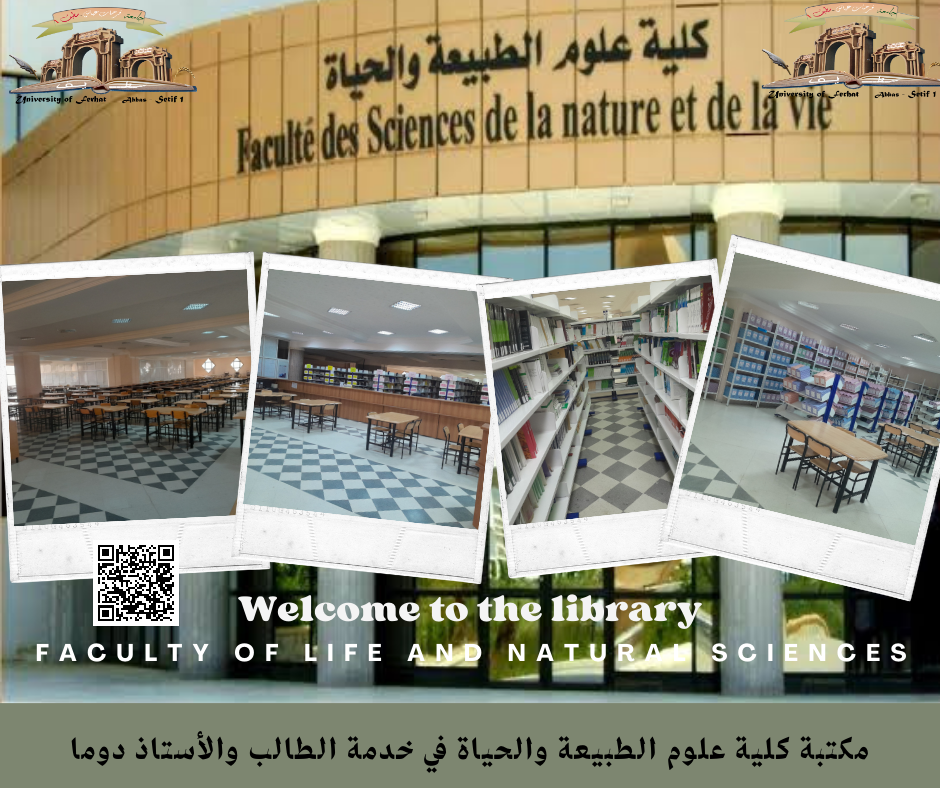
Catalogue de la bibliothèque de SNV
A partir de cette page vous pouvez :
| Retourner au premier écran avec les catégories... | Votre compte | Aide |
Détail de l'éditeur
Cambridge University Press |
Documents disponibles chez cet éditeur


 Affiner la recherche
An introduction to genetic engineering / Desmond S. T. Nicholl / Cambridge University Press (2023)


Titre : An introduction to genetic engineering Type de document : texte imprimé Auteurs : Desmond S. T. Nicholl Mention d'édition : Fourth edition. Editeur : Cambridge University Press Année de publication : 2023 Importance : 1 vol. (451 p.) Présentation : ill.en coul. Format : 24 cm ISBN/ISSN/EAN : 978-1-00-918059-7 Langues : Anglais Catégories : Biochimie - Biotechnologie - Génie chimique - Génétique ... Mots-clés : Génie génétique Index. décimale : 576.5 Génétique Résumé :
The fourth edition of this popular textbook retains its focus on the fundamental principles of gene manipulation, providing an accessible and broad-based introduction to the subject for beginning undergraduate students. It has been brought thoroughly up to date with new chapters on the story of DNA and genome editing, and new sections on bioethics, significant developments in sequencing technology and structural, functional and comparative genomics and proteomics, and the impact of transgenic plants. In addition to chapter summaries, learning objectives, concept maps, glossary and key word lists the book now also features new concluding sections, further reading lists and web-search activities for each chapter to provide a comprehensive suite of learning resources to help students develop a flexible and critical approach to the study of genetic engineering.Note de contenu :
Sommaire:
-1- Genetic engineering in context
-2- The basic of Genetic engineering
-3- The methodology of gene manipulation
-4- Genetic engineering in actionAn introduction to genetic engineering [texte imprimé] / Desmond S. T. Nicholl . - Fourth edition. . - [S.l.] : Cambridge University Press, 2023 . - 1 vol. (451 p.) : ill.en coul. ; 24 cm.
ISBN : 978-1-00-918059-7
Langues : Anglais
Catégories : Biochimie - Biotechnologie - Génie chimique - Génétique ... Mots-clés : Génie génétique Index. décimale : 576.5 Génétique Résumé :
The fourth edition of this popular textbook retains its focus on the fundamental principles of gene manipulation, providing an accessible and broad-based introduction to the subject for beginning undergraduate students. It has been brought thoroughly up to date with new chapters on the story of DNA and genome editing, and new sections on bioethics, significant developments in sequencing technology and structural, functional and comparative genomics and proteomics, and the impact of transgenic plants. In addition to chapter summaries, learning objectives, concept maps, glossary and key word lists the book now also features new concluding sections, further reading lists and web-search activities for each chapter to provide a comprehensive suite of learning resources to help students develop a flexible and critical approach to the study of genetic engineering.Note de contenu :
Sommaire:
-1- Genetic engineering in context
-2- The basic of Genetic engineering
-3- The methodology of gene manipulation
-4- Genetic engineering in actionExemplaires
Code-barres Cote Support Localisation Section Disponibilité FB/15710 SNV8/1809 Livre Bibliothèque SNV Français Disponible FB/15711 SNV8/1809 Livre Bibliothèque SNV Français Disponible Documents numériques
https://www.todostuslibros.com/libros/an-introduction-to-genetic-engineering_978-1-00-918059-7URL
Titre : Computational thinking for life scientists Type de document : texte imprimé Auteurs : Benny Chor (195.-2021), Editeur scientifique ; Amir Rubinstein (1977-....), Editeur scientifique Editeur : Cambridge University Press Année de publication : 2022 Importance : 1 vol. (209 p.) Présentation : ill. en coul. Format : 26 cm ISBN/ISSN/EAN : 978-1-107-19724-4 Langues : Anglais Catégories : Bio-informatique - Biostatistiques - Biomathématique - Mathématique - Informatique Mots-clés : Bio-informatique Informatique Index. décimale : 570.285 Informatique appliquée à la biologie et aux sciences de la vie - bio-informatique - Résumé :
Computational Thinking is increasingly gaining importance in modern biology, due to the unprecedented scale at which data is nowadays produced. Bridging the cultural gap between the biological and computational sciences, this book serves as an accessible introduction to computational concepts for students in the life sciences. It focuses on teaching algorithmic and logical thinking, rather than just the use of existing bioinformatics tools or programming. Topics are presented from a biological point of view, to demonstrate how computational approaches can be used to solve problems in biology such as biological image processing, regulatory networks, and sequence analysis. The book contains a range of pedagogical features to aid understanding, including real-world examples, in-text exercises, end-of-chapter problems, colour-coded Python code, and 'code explained' boxes. User-friendly throughout, Computational Thinking for Life Scientists promotes the thinking skills and self-efficacy required for any modern biologist to adopt computational approaches in their research with confidenceNote de contenu :
Sommaire:
-1- Programming in Python
-2- Sequences
-3- Graphs and Networks
-4- Images
-5- Limitations of ComputingComputational thinking for life scientists [texte imprimé] / Benny Chor (195.-2021), Editeur scientifique ; Amir Rubinstein (1977-....), Editeur scientifique . - [S.l.] : Cambridge University Press, 2022 . - 1 vol. (209 p.) : ill. en coul. ; 26 cm.
ISBN : 978-1-107-19724-4
Langues : Anglais
Catégories : Bio-informatique - Biostatistiques - Biomathématique - Mathématique - Informatique Mots-clés : Bio-informatique Informatique Index. décimale : 570.285 Informatique appliquée à la biologie et aux sciences de la vie - bio-informatique - Résumé :
Computational Thinking is increasingly gaining importance in modern biology, due to the unprecedented scale at which data is nowadays produced. Bridging the cultural gap between the biological and computational sciences, this book serves as an accessible introduction to computational concepts for students in the life sciences. It focuses on teaching algorithmic and logical thinking, rather than just the use of existing bioinformatics tools or programming. Topics are presented from a biological point of view, to demonstrate how computational approaches can be used to solve problems in biology such as biological image processing, regulatory networks, and sequence analysis. The book contains a range of pedagogical features to aid understanding, including real-world examples, in-text exercises, end-of-chapter problems, colour-coded Python code, and 'code explained' boxes. User-friendly throughout, Computational Thinking for Life Scientists promotes the thinking skills and self-efficacy required for any modern biologist to adopt computational approaches in their research with confidenceNote de contenu :
Sommaire:
-1- Programming in Python
-2- Sequences
-3- Graphs and Networks
-4- Images
-5- Limitations of ComputingExemplaires
Code-barres Cote Support Localisation Section Disponibilité FB/15768 SNV8/1825 Livre Bibliothèque SNV Englais Disponible FB/15767 SNV8/1825 Livre Bibliothèque SNV Englais Disponible Documents numériques
https://www.amazon.com/Computational-Thinking-Life-Scientists-Algorithms/dp/1316647595URL
Titre : Ecohydrology : Dynamics of life and water in the critical zone Type de document : texte imprimé Auteurs : Amilcare Porporato (1968-....), Auteur ; Jun Yin (1984-....), Auteur Editeur : Cambridge University Press Année de publication : 2022 Importance : 1 vol. (XIV-382 p.) Présentation : ill.en coul. Format : 27 cm ISBN/ISSN/EAN : 978-1-108-84054-5 Langues : Anglais Catégories : Hydraulique - L' Eau Mots-clés : Écohydrologie Index. décimale : 577.6 Écologie des eaux Résumé :
Ecohydrology is the study of the two-way interaction between the hydrological cycle and ecosystems. More broadly, it is the science of the linkages between life and water on Earth. On the one hand, the space and time variability of the hydrological cycle controls the water availability for ecosystems; on the other hand, ecosystems, especially through transpiration by vegetation, control the main pathway by which water returns to the atmosphere from land. The terrestrial water cycle also drives some of the dynamics of soil organic matter, 7 8 CHAPTER INTRO DUCTION Abiotic processes (water and energy cycles) Biotic processes (carbon and nutrient cycles, vegetation and soil microbes) 2-way interaction Society Agroecosystems (60% of rainfall goes in transpiration in agricultural land Rule of thumb: 1 kg of bread requires 1 m3 of water) 2-way interaction Figure 1.1: Ecohydrology is characterized by the feedbacks between hydrological and ecological processes, involving numerous biotic and abiotic components, as well as by the growing interactions with the social components, especially ftwowayg through agroecosystems. microbial biomass, and the related nutrient cycling. These in turn not only a ect the vegetation dynamics but also impact the hydraulic and thermodynamic properties of soil, thereby directly acting on the partitioning of water and energy uxes at the land-atmosphere interface. The interaction between water balance and plants is responsible for some of the fundamental di erences among biomes (e.g., forests, grasslands, savannas) and for the developments of their space-time patterns. Thus one of the rst objectives of ecohydrology is to understand the intertwined dynamics of climate, soil, and vegetation. This interaction is especially interesting in water-limited ecosystems, where water is a limiting factor not only because of its scarcity but also because of its intermittent and unpredictable appearance. Many important practical issues depend on the quantitative understanding of the ecohydrological processes, including environmental preservation and proper management of soil and water resources. A solid scientic foundation of sustainable development and eco-agriculture must take into account the two-way interaction between biosphere and hydrosphere, as well as include a quantitative description of the human interference with these processes (see Fig. 1.1)Note de contenu :
Sommaire:
-1- Introduction
-2- Physics Background for Ecohydrology
-3- The Soil
-4- Plants
-5- The Atmosphere
-6- Stochastic Tools for Ecohydrology
-7- Stochastic Soil Moisture Dynamics
-8- From Plant Water Stress to Ecosystem Structure
-9- Soil Carbon and Nitrogen Cycles
-10 Ecohydrology of AgroecosystemsEcohydrology : Dynamics of life and water in the critical zone [texte imprimé] / Amilcare Porporato (1968-....), Auteur ; Jun Yin (1984-....), Auteur . - [S.l.] : Cambridge University Press, 2022 . - 1 vol. (XIV-382 p.) : ill.en coul. ; 27 cm.
ISBN : 978-1-108-84054-5
Langues : Anglais
Catégories : Hydraulique - L' Eau Mots-clés : Écohydrologie Index. décimale : 577.6 Écologie des eaux Résumé :
Ecohydrology is the study of the two-way interaction between the hydrological cycle and ecosystems. More broadly, it is the science of the linkages between life and water on Earth. On the one hand, the space and time variability of the hydrological cycle controls the water availability for ecosystems; on the other hand, ecosystems, especially through transpiration by vegetation, control the main pathway by which water returns to the atmosphere from land. The terrestrial water cycle also drives some of the dynamics of soil organic matter, 7 8 CHAPTER INTRO DUCTION Abiotic processes (water and energy cycles) Biotic processes (carbon and nutrient cycles, vegetation and soil microbes) 2-way interaction Society Agroecosystems (60% of rainfall goes in transpiration in agricultural land Rule of thumb: 1 kg of bread requires 1 m3 of water) 2-way interaction Figure 1.1: Ecohydrology is characterized by the feedbacks between hydrological and ecological processes, involving numerous biotic and abiotic components, as well as by the growing interactions with the social components, especially ftwowayg through agroecosystems. microbial biomass, and the related nutrient cycling. These in turn not only a ect the vegetation dynamics but also impact the hydraulic and thermodynamic properties of soil, thereby directly acting on the partitioning of water and energy uxes at the land-atmosphere interface. The interaction between water balance and plants is responsible for some of the fundamental di erences among biomes (e.g., forests, grasslands, savannas) and for the developments of their space-time patterns. Thus one of the rst objectives of ecohydrology is to understand the intertwined dynamics of climate, soil, and vegetation. This interaction is especially interesting in water-limited ecosystems, where water is a limiting factor not only because of its scarcity but also because of its intermittent and unpredictable appearance. Many important practical issues depend on the quantitative understanding of the ecohydrological processes, including environmental preservation and proper management of soil and water resources. A solid scientic foundation of sustainable development and eco-agriculture must take into account the two-way interaction between biosphere and hydrosphere, as well as include a quantitative description of the human interference with these processes (see Fig. 1.1)Note de contenu :
Sommaire:
-1- Introduction
-2- Physics Background for Ecohydrology
-3- The Soil
-4- Plants
-5- The Atmosphere
-6- Stochastic Tools for Ecohydrology
-7- Stochastic Soil Moisture Dynamics
-8- From Plant Water Stress to Ecosystem Structure
-9- Soil Carbon and Nitrogen Cycles
-10 Ecohydrology of AgroecosystemsExemplaires
Code-barres Cote Support Localisation Section Disponibilité FB/15780 SNV4/0525 Livre Bibliothèque SNV Englais Disponible FB/15781 SNV4/0525 Livre Bibliothèque SNV Englais Disponible Documents numériques

https://www.amazon.fr/Ecohydrology-Dynamics-Life-Water-Critical/dp/110884054X/ref=sr_1_1?__mk_fr_FR=%C3%85M%C3%85%C5%BD%C3%95%C3%91&crid=2S87SJHLF88IY&dib=eyJ2IjoiMSJ9.NKN-3A0axt6FUoQv8UBOR5rL3ejmquwncDB61gPEs8XGjHj071QN20LucGBJIEps.cDCSywgKzQSFuxuAm_JrF-URL
Titre : Ecotoxicology Type de document : texte imprimé Auteurs : Peter G. C. Campbell, Auteur ; Peter V. Hodson, Auteur ; Pamela M. Welbourn, Auteur Editeur : Cambridge University Press Année de publication : 2022 Importance : 1 vol. (XVIII-576 p.) Présentation : ill. en coul. Format : 28 cm ISBN/ISSN/EAN : 978-1-108-83469-8 Langues : Anglais Catégories : Ecologie et Environnement - Météorologie - Clémat - Biodiversité Mots-clés : Écotoxicologie Index. décimale : 571.95 Toxicologie (Ecotoxicologie - toxicologie environnementale) Résumé :
Ecotoxicology offers a comprehensive overview of the science underpinning the recognition and management of environmental contamination. It describes the toxicology of environmental contaminants, the methods used for assessing their toxicity and ecological impacts, and approaches employed to mitigate pollution and ecological health risks globally. Chapters covers the latest advances in research, including genomics, natural toxins, endocrine disruption and the toxicology of radioactive substances. The second half of the book focuses on applications, such as cradle-to-grave effects of selected industries, legal and economic approaches to environmental regulation, ecological risk assessment, and contaminated site remediation. With short capsules written by invited experts, numerous case studies from around the world and further reading lists, this textbook is designed for advanced undergraduate and graduate one-semester courses. It is also a valuable reference for graduate students and professionals. Online resources for instructors and students are also availableNote de contenu :
Sommaire:
-1- Approaches and Methods
-2- Toxicology of Individual Substances
-3- Complex Issues
-4- ManagementEcotoxicology [texte imprimé] / Peter G. C. Campbell, Auteur ; Peter V. Hodson, Auteur ; Pamela M. Welbourn, Auteur . - [S.l.] : Cambridge University Press, 2022 . - 1 vol. (XVIII-576 p.) : ill. en coul. ; 28 cm.
ISBN : 978-1-108-83469-8
Langues : Anglais
Catégories : Ecologie et Environnement - Météorologie - Clémat - Biodiversité Mots-clés : Écotoxicologie Index. décimale : 571.95 Toxicologie (Ecotoxicologie - toxicologie environnementale) Résumé :
Ecotoxicology offers a comprehensive overview of the science underpinning the recognition and management of environmental contamination. It describes the toxicology of environmental contaminants, the methods used for assessing their toxicity and ecological impacts, and approaches employed to mitigate pollution and ecological health risks globally. Chapters covers the latest advances in research, including genomics, natural toxins, endocrine disruption and the toxicology of radioactive substances. The second half of the book focuses on applications, such as cradle-to-grave effects of selected industries, legal and economic approaches to environmental regulation, ecological risk assessment, and contaminated site remediation. With short capsules written by invited experts, numerous case studies from around the world and further reading lists, this textbook is designed for advanced undergraduate and graduate one-semester courses. It is also a valuable reference for graduate students and professionals. Online resources for instructors and students are also availableNote de contenu :
Sommaire:
-1- Approaches and Methods
-2- Toxicology of Individual Substances
-3- Complex Issues
-4- ManagementExemplaires
Code-barres Cote Support Localisation Section Disponibilité FB/15784 SNV4/0526 Livre Bibliothèque SNV Englais Disponible FB/15785 SNV4/0526 Livre Bibliothèque SNV Englais Disponible Documents numériques

https://www.cambridge.org/dz/universitypress/subjects/earth-and-environmental-science/geochemistry-and-environmental-chemistry/ecotoxicology?format=HB&isbn=9781108834698URL
Titre : Experimental design and data analysis for biologists Type de document : texte imprimé Auteurs : Gerry P. Quinn, Auteur ; Michael J. Keough, Auteur Mention d'édition : Second Edition Editeur : Cambridge University Press Année de publication : 2023 Importance : 1 vol. (XIX-387 p.) Présentation : ill.en coul. Format : 26 cm ISBN/ISSN/EAN : 978-1-107-03671-0 Langues : Anglais Catégories : Biologie ( B-Cellulaire - B-Animale - B-Végétale - B-moléculaire - Cytologie ) Mots-clés : biology experiment model statistics design Index. décimale : 570.285 Informatique appliquée à la biologie et aux sciences de la vie - bio-informatique - Résumé :
Applying statistical concepts to biological scenarios, this established textbook continues to be the go-to tool for advanced undergraduates and postgraduates studying biostatistics or experimental design in biology-related areas. Chapters cover linear models, common regression and ANOVA methods, mixed effects models, model selection, and multivariate methods used by biologists, requiring only introductory statistics and basic mathematics. Demystifying statistical concepts with clear, jargon-free explanations, this new edition takes a holistic approach to help students understand the relationship between statistics and experimental design. Each chapter contains further-reading recommendations, and worked examples from today's biological literature. All examples reflect modern settings, methodology and equipment, representing a wide range of biological research areas. These are supported by hands-on online resources including real-world data sets, full R code to help repeat analyses for all worked examples, and additional review questions and exercises for each chapter.Note de contenu :
Sommaire:
-1- Introduction
-2- Things to know before proceeding
-3- Sampling and exprimental desing
-4- Introduction to linear models
-5- Exploratory data analysis
-6- Simple linear models with one predictor
-7- Linear models for crossed (Factorial) designs
-8- Multiple regression modelsExperimental design and data analysis for biologists [texte imprimé] / Gerry P. Quinn, Auteur ; Michael J. Keough, Auteur . - Second Edition . - [S.l.] : Cambridge University Press, 2023 . - 1 vol. (XIX-387 p.) : ill.en coul. ; 26 cm.
ISBN : 978-1-107-03671-0
Langues : Anglais
Catégories : Biologie ( B-Cellulaire - B-Animale - B-Végétale - B-moléculaire - Cytologie ) Mots-clés : biology experiment model statistics design Index. décimale : 570.285 Informatique appliquée à la biologie et aux sciences de la vie - bio-informatique - Résumé :
Applying statistical concepts to biological scenarios, this established textbook continues to be the go-to tool for advanced undergraduates and postgraduates studying biostatistics or experimental design in biology-related areas. Chapters cover linear models, common regression and ANOVA methods, mixed effects models, model selection, and multivariate methods used by biologists, requiring only introductory statistics and basic mathematics. Demystifying statistical concepts with clear, jargon-free explanations, this new edition takes a holistic approach to help students understand the relationship between statistics and experimental design. Each chapter contains further-reading recommendations, and worked examples from today's biological literature. All examples reflect modern settings, methodology and equipment, representing a wide range of biological research areas. These are supported by hands-on online resources including real-world data sets, full R code to help repeat analyses for all worked examples, and additional review questions and exercises for each chapter.Note de contenu :
Sommaire:
-1- Introduction
-2- Things to know before proceeding
-3- Sampling and exprimental desing
-4- Introduction to linear models
-5- Exploratory data analysis
-6- Simple linear models with one predictor
-7- Linear models for crossed (Factorial) designs
-8- Multiple regression modelsExemplaires
Code-barres Cote Support Localisation Section Disponibilité FB/15812 SNV8/1842 Livre Bibliothèque SNV Englais Disponible FB/15813 SNV8/1842 Livre Bibliothèque SNV Englais Disponible Documents numériques
https://www.amazon.fr/Experimental-Design-Analysis-Biologists-English-ebook/dp/B0CJMCWYJ8/ref=sr_1_1?__mk_fr_FR=%C3%85M%C3%85%C5%BD%C3%95%C3%91&crid=3QR7T1BSPR2QS&dib=eyJ2IjoiMSJ9.KwEz8EobgWOKBsrT_n9-qG7a7XcgEhtfK3TRV7WEgW5VO_bT_0q7ctcgpZJZppIFzXCc5oIoY0GURL
Permalink
Permalink
Permalink
Permalink
Permalink
Permalink