Catalogue de la bibliothèque de SNV
A partir de cette page vous pouvez :
| Retourner au premier écran avec les catégories... | Votre compte | Aide |
Détail de l'indexation
 577 Écologie (biodiversité ,écosystèmes )
Ouvrages de la bibliothèque en indexation 577.5


 Affiner la recherche
Atelier international de formation sur les risques majeurs et les catastrophes naturelles / Congrès: Centre de recherche scientifique et technique sur les régions arides Omar El Barmaoui C.R.S.T.R.A. (16-17/12/2009; Biskra, Algérie) / Biskra [Algérie] : Centre de recherche scientifique et technique sur les régions arides Omar El Barmaoui (2010)

Exemplaires
Code-barres Cote Support Localisation Section Disponibilité D-SNV/0293 D-SNV/0293 Livre Bibliothèque SNV Français Disponible 

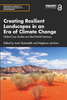
Titre : Creating resilient landscapes in an era of climate change : Global case studies and real-world solutions Type de document : texte imprimé Auteurs : Amin Rastandeh, Auteur ; Meghann Jarchow Editeur : London [UK] : Routledge Année de publication : 2022 Importance : 1 vol. (268 p.) Présentation : ill.en coul. Format : 23 cm ISBN/ISSN/EAN : 978-1-03-221037-7 Catégories : Ecologie et Environnement - Météorologie - Clémat - Biodiversité Mots-clés : Ecologie clémat Index. décimale : 577.5 Écologie de divers milieux (écologie des hautes terres) Résumé :
This book delivers a realistic and feasible framework for creating resilient landscapes in an era of anthropogenic climate change. From across six continents, this book presents fifteen case studies of differing sociocultural, economic, and biophysical backgrounds that showcase opportunities and limitations for creating resilient landscapes throughout the world. The potential to create socio-ecological resilience is examined across a wide range of landscapes, including agricultural, island, forest, coastal and urban landscapes, across the fifteen countries of Argentina, Australia, Brazil, Denmark, Finland, Greece, Guatemala, Japan, Mexico, Norway, Samoa, South Africa, the United States, Turkey, Uruguay and Vanuatu. Chapters discuss current and future issues around creating a sustainable food system, conserving biodiversity, and climate change adaptation and resilience, with green infrastructure, nature-based architecture, green-tech and ecosystem services just a few of the approaches discussed. The book emphasizes solution-oriented approaches for a "ecological hope" that can support landscape resiliency in this chaotic era and the chapters consider the importance of envisioning an unpredictable future with numerous uncertainties. In this context, the key focus is on how the next generations can tackle the intertwined impacts of climate change, biodiversity loss, and large-scale land-cover conversion in urban and non-urban landscapes with particular attention to the concept of landscape resiliency. The volume provides that much-needed link between theory and practice to deliver forward-thinking, practical solutions. This book will be of great interest to students, researchers, practitioners and policymakers who are interested in the complex relationship between landscapes, climate change, biodiversity loss, and land-based conversion at local, national and global scalesNote de contenu :
Sommaire:
-1- Landscape Resilience in the Face of Climate Change: A Call to Transition from Despair to Hope
-2- Multifunctional Land Consolidations in Denmark: Rethinking the Pattern of Landownership to Create Resilient Future Landscapes
-3- Resilient Food Production – Resilient Landscapes: The Role of Heterogeneity and Scale
-4- Re-Developing Relationships with Landscapes for Food, Water, and Energy Self-Sufficiency in Southeastern South Dakota, USA
-5- A Social Perennial Vision for the North American Great Plains Rooted in the Resilience of a Natural System-Inspired Agriculture
-6- Resilient Food Systems in the Context of Intersectional Discrimination: Successful Strategies of Women and Indigenous Peoples in Mesoamerica
-7- Improved Grazing Management for Resilience and Ecosystem Services: The Case of Beef Production Systems on the Campos Grasslands of South America
-8- How Does Gardening Reduce Vulnerability for the Urban Poor in Small Island Developing States? A Case Study of Port Vila, Vanuatu
-9- The Case of the Khayelitsha Wetlands Park, South Africa: Securing Biodiversity and Social Benefits from Urban Greenspace
-10 Green Infrastructure in Hornsby NSW: A Collaborative Method Toward Landscape ResilienceCreating resilient landscapes in an era of climate change : Global case studies and real-world solutions [texte imprimé] / Amin Rastandeh, Auteur ; Meghann Jarchow . - London (UK) : Routledge, 2022 . - 1 vol. (268 p.) : ill.en coul. ; 23 cm.
ISBN : 978-1-03-221037-7
Catégories : Ecologie et Environnement - Météorologie - Clémat - Biodiversité Mots-clés : Ecologie clémat Index. décimale : 577.5 Écologie de divers milieux (écologie des hautes terres) Résumé :
This book delivers a realistic and feasible framework for creating resilient landscapes in an era of anthropogenic climate change. From across six continents, this book presents fifteen case studies of differing sociocultural, economic, and biophysical backgrounds that showcase opportunities and limitations for creating resilient landscapes throughout the world. The potential to create socio-ecological resilience is examined across a wide range of landscapes, including agricultural, island, forest, coastal and urban landscapes, across the fifteen countries of Argentina, Australia, Brazil, Denmark, Finland, Greece, Guatemala, Japan, Mexico, Norway, Samoa, South Africa, the United States, Turkey, Uruguay and Vanuatu. Chapters discuss current and future issues around creating a sustainable food system, conserving biodiversity, and climate change adaptation and resilience, with green infrastructure, nature-based architecture, green-tech and ecosystem services just a few of the approaches discussed. The book emphasizes solution-oriented approaches for a "ecological hope" that can support landscape resiliency in this chaotic era and the chapters consider the importance of envisioning an unpredictable future with numerous uncertainties. In this context, the key focus is on how the next generations can tackle the intertwined impacts of climate change, biodiversity loss, and large-scale land-cover conversion in urban and non-urban landscapes with particular attention to the concept of landscape resiliency. The volume provides that much-needed link between theory and practice to deliver forward-thinking, practical solutions. This book will be of great interest to students, researchers, practitioners and policymakers who are interested in the complex relationship between landscapes, climate change, biodiversity loss, and land-based conversion at local, national and global scalesNote de contenu :
Sommaire:
-1- Landscape Resilience in the Face of Climate Change: A Call to Transition from Despair to Hope
-2- Multifunctional Land Consolidations in Denmark: Rethinking the Pattern of Landownership to Create Resilient Future Landscapes
-3- Resilient Food Production – Resilient Landscapes: The Role of Heterogeneity and Scale
-4- Re-Developing Relationships with Landscapes for Food, Water, and Energy Self-Sufficiency in Southeastern South Dakota, USA
-5- A Social Perennial Vision for the North American Great Plains Rooted in the Resilience of a Natural System-Inspired Agriculture
-6- Resilient Food Systems in the Context of Intersectional Discrimination: Successful Strategies of Women and Indigenous Peoples in Mesoamerica
-7- Improved Grazing Management for Resilience and Ecosystem Services: The Case of Beef Production Systems on the Campos Grasslands of South America
-8- How Does Gardening Reduce Vulnerability for the Urban Poor in Small Island Developing States? A Case Study of Port Vila, Vanuatu
-9- The Case of the Khayelitsha Wetlands Park, South Africa: Securing Biodiversity and Social Benefits from Urban Greenspace
-10 Green Infrastructure in Hornsby NSW: A Collaborative Method Toward Landscape ResilienceExemplaires
Code-barres Cote Support Localisation Section Disponibilité FB/15773 SNV8/1828 Livre Bibliothèque SNV Englais Disponible FB/15774 SNV8/1828 Livre Bibliothèque SNV Englais Disponible Documents numériques
https://www.routledge.com/Creating-Resilient-Landscapes-in-an-Era-of-Climate-Change-Global-Case-Studies-and-Real-World-Solutions/Rastandeh-Jarchow/p/book/9781032210384?srsltid=AfmBOorNMjcVairsN9AS0OavzcVfeaiOyMaNwaMNmTEv5fmm-5Bq4940URL
Titre : Les milieux rupicoles Type de document : texte imprimé Auteurs : Pierre Pech (1956-....), Auteur Editeur : Versailles : Éd. Quae Année de publication : DL 2013 Collection : Synthèses (Institut national de la recherche agronomique), ISSN 1777-4624 Importance : 1 vol. (159 p.-VIII p. de pl.) Présentation : ill. en noir et en coul., couv. ill. en coul. Format : 24 cm ISBN/ISSN/EAN : 978-2-7592-1914-8 Note générale : La couv. porte en plus : "les enjeux de la conservation des sols rocheux"
Bibliogr. p. 155-159. Glossaire. IndexLangues : Français Catégories : Ecologie et Environnement - Météorologie - Clémat - Biodiversité Mots-clés : - Milieux rupicoles Roches : Dynamique Sols : Conservation Écologie des falaises Index. décimale : 577.5 Écologie de divers milieux (écologie des hautes terres) Résumé :
Des plantes rupicoles, on connaît celles qui se développent spontanément sur les murs des villes ; certaines sont en vogue chez les architectes pour décorer des façades de bâtiments, d'autres sont employées en phytorestauration pour les sols pollués. Les configurations des milieux rupicoles sont variées : parois rocheuses, falaises littorales, éboulis, sols nus et rocailleux des surfaces proglaciaires, des regs et des corridors fluviaux, mais aussi carrières et haldes, ces lieux résultant de l'activité d'extraction. Ce sont donc des milieux naturels ou artificiels habités par des flores et des faunes particulières, adaptées à des conditions rigoureuses où les ressources sont rares. Lieux de déshérence, mais pourvoyeurs de ressources minérales, ou symboles attractifs d'une naturalité extrême vécue dans des sports comme l'escalade, la randonnée et le parapente, ils subissent une forte pression anthropique. Ils ont été utilisés comme refuges par des populations humaines dès la Préhistoire et continuent de servir d'abri à un grand nombre d'espèces végétales et animales – certaines rares, comme des vautours et des aigles, accueillant des espèces reliques et hébergeant des espèces endémiques. Dans le cadre des grands changements environnementaux en cours, ils représentent des enjeux de biodiversité importants pour les décennies à venir et méritent d'être mieux connus. Cet ouvrage synthétique propose une approche pluridisciplinaire : il présente les milieux rupicoles dans leurs richesses, explique leur fonctionnement en tant qu'écosystèmes en relation avec leurs supports, expose leur intérêt patrimonial comme conservatoire d'espèces et laboratoire d'innovation, discute leurs modes de restauration, prône leur gestion intégrée et durable. Il s'adresse à un public varié, étudiants en ingénierie, écologie, géographie, droit ou économie et gestion de l'environnement, praticiens et collectivités chargés d'exploiter ou d'aménager ces milieux, scientifiques, mais aussi tous naturalistes curieux de ces lieux rupestresLes milieux rupicoles [texte imprimé] / Pierre Pech (1956-....), Auteur . - Versailles : Éd. Quae, DL 2013 . - 1 vol. (159 p.-VIII p. de pl.) : ill. en noir et en coul., couv. ill. en coul. ; 24 cm. - (Synthèses (Institut national de la recherche agronomique), ISSN 1777-4624) .
ISBN : 978-2-7592-1914-8
La couv. porte en plus : "les enjeux de la conservation des sols rocheux"
Bibliogr. p. 155-159. Glossaire. Index
Langues : Français
Catégories : Ecologie et Environnement - Météorologie - Clémat - Biodiversité Mots-clés : - Milieux rupicoles Roches : Dynamique Sols : Conservation Écologie des falaises Index. décimale : 577.5 Écologie de divers milieux (écologie des hautes terres) Résumé :
Des plantes rupicoles, on connaît celles qui se développent spontanément sur les murs des villes ; certaines sont en vogue chez les architectes pour décorer des façades de bâtiments, d'autres sont employées en phytorestauration pour les sols pollués. Les configurations des milieux rupicoles sont variées : parois rocheuses, falaises littorales, éboulis, sols nus et rocailleux des surfaces proglaciaires, des regs et des corridors fluviaux, mais aussi carrières et haldes, ces lieux résultant de l'activité d'extraction. Ce sont donc des milieux naturels ou artificiels habités par des flores et des faunes particulières, adaptées à des conditions rigoureuses où les ressources sont rares. Lieux de déshérence, mais pourvoyeurs de ressources minérales, ou symboles attractifs d'une naturalité extrême vécue dans des sports comme l'escalade, la randonnée et le parapente, ils subissent une forte pression anthropique. Ils ont été utilisés comme refuges par des populations humaines dès la Préhistoire et continuent de servir d'abri à un grand nombre d'espèces végétales et animales – certaines rares, comme des vautours et des aigles, accueillant des espèces reliques et hébergeant des espèces endémiques. Dans le cadre des grands changements environnementaux en cours, ils représentent des enjeux de biodiversité importants pour les décennies à venir et méritent d'être mieux connus. Cet ouvrage synthétique propose une approche pluridisciplinaire : il présente les milieux rupicoles dans leurs richesses, explique leur fonctionnement en tant qu'écosystèmes en relation avec leurs supports, expose leur intérêt patrimonial comme conservatoire d'espèces et laboratoire d'innovation, discute leurs modes de restauration, prône leur gestion intégrée et durable. Il s'adresse à un public varié, étudiants en ingénierie, écologie, géographie, droit ou économie et gestion de l'environnement, praticiens et collectivités chargés d'exploiter ou d'aménager ces milieux, scientifiques, mais aussi tous naturalistes curieux de ces lieux rupestresExemplaires
Code-barres Cote Support Localisation Section Disponibilité FB/11101 SNV8/1317 Livre Bibliothèque SNV Français Disponible FB/11105 SNV8/1317 Livre Bibliothèque SNV Français Disponible FB/11104 SNV8/1317 Livre Bibliothèque SNV Français Disponible FB/11103 SNV8/1317 Livre Bibliothèque SNV Français Disponible FB/11102 SNV8/1317 Livre Bibliothèque SNV Français Disponible
Titre : The Routledge handbook of landscape ecology Type de document : texte imprimé Auteurs : Robert A. Francis, Auteur ; James D.A. Millington, Auteur Editeur : London [UK] : Routledge Année de publication : 2024 Importance : 1 vol. (472 p.) Présentation : ill.en coul. Format : 26 cm ISBN/ISSN/EAN : 978-0-367-02456-7 Langues : Anglais Catégories : Ecologie et Environnement - Météorologie - Clémat - Biodiversité Mots-clés : Environmental Sciences Ecology Index. décimale : 577.5 Écologie de divers milieux (écologie des hautes terres) Résumé :
The Handbook provides a supporting guide to key aspects and applications of landscape ecology to underpin its research and teaching. A wide range of contributions written by expert researchers in the field summarize the latest knowledge on landscape ecology theory and concepts, landscape processes, methods and tools, and emerging frontiers.
Landscape ecology is an interdisciplinary and holistic discipline, and this is reflected in the chapters contained in this Handbook. Authors from varying disciplinary backgrounds tackle key concepts such as landscape structure and function, scale and connectivity; landscape processes such as disturbance, flows, and fragmentation; methods such as remote sensing and mapping, fieldwork, pattern analysis, modelling, and participation and engagement in landscape planning; and emerging frontiers such as ecosystem services, landscape approaches to biodiversity conservation, and climate change. Each chapter provides a blend of the latest scientific understanding of its focal topics along with considerations and examples of their application from around the world.
An invaluable guide to the concepts, methods, and applications of landscape ecology, this book will be an important reference text for a wide range of students and academics in ecology, geography, biology, and interdisciplinary environmental studies.Note de contenu :
Sommaire:
- Part 1: Theory and Concepts in Landscape Ecology
- Part 2: Landscape Processes
- Part 3: Methods and Tools for Landscape Ecology
- Part 4: Landscape Ecology Frontiers
The Routledge handbook of landscape ecology [texte imprimé] / Robert A. Francis, Auteur ; James D.A. Millington, Auteur . - London (UK) : Routledge, 2024 . - 1 vol. (472 p.) : ill.en coul. ; 26 cm.
ISBN : 978-0-367-02456-7
Langues : Anglais
Catégories : Ecologie et Environnement - Météorologie - Clémat - Biodiversité Mots-clés : Environmental Sciences Ecology Index. décimale : 577.5 Écologie de divers milieux (écologie des hautes terres) Résumé :
The Handbook provides a supporting guide to key aspects and applications of landscape ecology to underpin its research and teaching. A wide range of contributions written by expert researchers in the field summarize the latest knowledge on landscape ecology theory and concepts, landscape processes, methods and tools, and emerging frontiers.
Landscape ecology is an interdisciplinary and holistic discipline, and this is reflected in the chapters contained in this Handbook. Authors from varying disciplinary backgrounds tackle key concepts such as landscape structure and function, scale and connectivity; landscape processes such as disturbance, flows, and fragmentation; methods such as remote sensing and mapping, fieldwork, pattern analysis, modelling, and participation and engagement in landscape planning; and emerging frontiers such as ecosystem services, landscape approaches to biodiversity conservation, and climate change. Each chapter provides a blend of the latest scientific understanding of its focal topics along with considerations and examples of their application from around the world.
An invaluable guide to the concepts, methods, and applications of landscape ecology, this book will be an important reference text for a wide range of students and academics in ecology, geography, biology, and interdisciplinary environmental studies.Note de contenu :
Sommaire:
- Part 1: Theory and Concepts in Landscape Ecology
- Part 2: Landscape Processes
- Part 3: Methods and Tools for Landscape Ecology
- Part 4: Landscape Ecology Frontiers
Exemplaires
Code-barres Cote Support Localisation Section Disponibilité FB/15968 SNV8/1884 Livre Bibliothèque SNV Englais Disponible Documents numériques

https://www.amazon.com/Routledge-Handbook-Landscape-Ecology/dp/036702456XURL
Titre : Urban biodiversity and equity : Justice-centered conservation in cities Type de document : texte imprimé Auteurs : Max R. Lambert, Auteur ; Christopher J. Schell Editeur : Oxford university press Année de publication : 2023 Importance : 1 vol. (290 p.) Présentation : ill.en coul. Format : 26 cm ISBN/ISSN/EAN : 978-0-19-887727-1 Catégories : Ecologie et Environnement - Météorologie - Clémat - Biodiversité Mots-clés : Biodiversité urbaine Ecologie et Environnement villes Index. décimale : 577.5 Écologie de divers milieux (écologie des hautes terres) Résumé :
Urbanization is simultaneously one of the most creative and destructive processes our planet has ever experienced. Developing rural areas into cities and suburbs results in dramatic habitat transformation, leading to significant biodiversity loss and modification. Yet, urban areas also have tremendous conservation value. Biodiversity is in crisis and, rather than considering urbanization solely as a threat, there is an urgent need to transform urbanization into a tool for conservation. We move beyond a basic scientific understanding of urban ecosystems to detail how scientists, decision makers, and practitioners develop solutions to effectively manage urban biodiversity. Such efforts necessitate unravelling the complex components that bolster or constrain biodiversity including human-wildlife interactions, resource availability, novel species relationships, and environmental heterogeneity. However, key to an understanding of these processes is also recognizing the tremendous social variation within urban areas. The diversity of urban human communities fundamentally shapes how society designs, builds, and manages urban landscapes. This means that urban environmental management unavoidably must account for human social variation. Unfortunately, urban systems have a history and continued legacy of social inequality (e.g., systemic racism and classism) that govern how cities are both built and managed. This work not only highlights these connections, but also illustrates the interdisciplinary approaches needed for advancing a justice-centered approach to conservating biodiversity. Urban conservation is an imperative for reaching our regional and global conservation goals. Equity and justice are central to successful urban conservation and, by extension, conservation more broadlyNote de contenu :
Sommaire:
-1- Urban Nature's Social Fabric
-2- Innovative Approaches for Understanding and Prioritizing Equitable Urban Conservation
-3- Emergent Urban Planning and Management Frameworks for Addressing Societal and Conservation GoalsUrban biodiversity and equity : Justice-centered conservation in cities [texte imprimé] / Max R. Lambert, Auteur ; Christopher J. Schell . - [S.l.] : Oxford university press, 2023 . - 1 vol. (290 p.) : ill.en coul. ; 26 cm.
ISBN : 978-0-19-887727-1
Catégories : Ecologie et Environnement - Météorologie - Clémat - Biodiversité Mots-clés : Biodiversité urbaine Ecologie et Environnement villes Index. décimale : 577.5 Écologie de divers milieux (écologie des hautes terres) Résumé :
Urbanization is simultaneously one of the most creative and destructive processes our planet has ever experienced. Developing rural areas into cities and suburbs results in dramatic habitat transformation, leading to significant biodiversity loss and modification. Yet, urban areas also have tremendous conservation value. Biodiversity is in crisis and, rather than considering urbanization solely as a threat, there is an urgent need to transform urbanization into a tool for conservation. We move beyond a basic scientific understanding of urban ecosystems to detail how scientists, decision makers, and practitioners develop solutions to effectively manage urban biodiversity. Such efforts necessitate unravelling the complex components that bolster or constrain biodiversity including human-wildlife interactions, resource availability, novel species relationships, and environmental heterogeneity. However, key to an understanding of these processes is also recognizing the tremendous social variation within urban areas. The diversity of urban human communities fundamentally shapes how society designs, builds, and manages urban landscapes. This means that urban environmental management unavoidably must account for human social variation. Unfortunately, urban systems have a history and continued legacy of social inequality (e.g., systemic racism and classism) that govern how cities are both built and managed. This work not only highlights these connections, but also illustrates the interdisciplinary approaches needed for advancing a justice-centered approach to conservating biodiversity. Urban conservation is an imperative for reaching our regional and global conservation goals. Equity and justice are central to successful urban conservation and, by extension, conservation more broadlyNote de contenu :
Sommaire:
-1- Urban Nature's Social Fabric
-2- Innovative Approaches for Understanding and Prioritizing Equitable Urban Conservation
-3- Emergent Urban Planning and Management Frameworks for Addressing Societal and Conservation GoalsExemplaires
Code-barres Cote Support Localisation Section Disponibilité FB/15978 SNV8/1888 Livre Bibliothèque SNV Englais Disponible FB/15979 SNV8/1888 Livre Bibliothèque SNV Englais Disponible Documents numériques

Urban biodiversity and equity : Justice-centered conservation in citiesURL