|
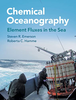
| Titre : | Chemical oceanography : Element fluxes in the sea | | Type de document : | texte imprimé | | Auteurs : | Steven Emerson (1947-....), Auteur ; Roberta C. Hamme, Auteur | | Année de publication : | 2022 | | Importance : | 1 vol. (XIII-387 p.-[12] p. de pl.) | | Présentation : | ill. en coul. | | Format : | 26 cm | | ISBN/ISSN/EAN : | 978-1-107-17989-9 | | Langues : | Anglais | | Catégories : | Biologie ( B-Cellulaire - B-Animale - B-Végétale - B-moléculaire - Cytologie )
| | Mots-clés : | Océanographie chimique | | Index. décimale : | 551.466 Océanographie chimique | | Résumé : |
The field of Chemical Oceanography is evolving from surveys of chemical distributions toward a focus on deriving element fluxes in the sea. By evaluating fluxes, ocean scientists glean an understanding of mechanisms that underlie circulation, biological processes, air-sea exchange, and interactions between seawater and solids on land and in the ocean basins. Because of the imprint each process leaves on the chemistry of the sea, chemical oceanography in many ways unites the various disciples of oceanography. As anthropogenic influences on element fluxes grow stronger so must oceanographers' understanding of processes that control them, so that humanity's impact can be predicted and informed decisions can be made about managing the ocean environment to maintain a livable planet. This book, 'Chemical Oceanography : Element Fluxes in the Sea', is both a text for teaching the subject at the level of senior undergraduates and graduate students and an aid to chemical oceanography researchers."--taken from Preface, page xi ; "'Chemical Oceanography : Element Fluxes in the Sea' focuses on the use of chemical distributions to understand mechanisms of physical, chemical, biological, and geological processes in the ocean. After an introduction describing observed chemical concentrations, chapters focus on using chemical tracers to determine fluxes on a variety of timescales. Long-term chemical cycles are dominated by exchanges between seawater and land, sediments, and underwater volcanoes. Biological and ocean mixing processes dominate internal chemical cycles that respond to changes on hundred- to thousand-year time scales. Stable and radioactive isotopes trace the fluxes of nutrients and carbon to quantify the rates and mechanisms of chemical cycles. Anthropogenic influences - which have grown to be of the same magnitude as some natural cycles - are a specific focus throughout the book. Discussion boxes and quantitative problems help instructors to deepen student learning. Appendices enhance the book's utility as a reference text for students and researchers. | | Note de contenu : |
Sommaire:
-1- Oceanography Background: Dissolved Chemicals, Circulation, and Biology in the Sea
-2- Geochemical Mass Balance: Chemical Flow across the Ocean’s Boundaries
-3- Life in the Surface Ocean: Biological Production and Export
-4- Life in the Deep Ocean: Biological Respiration
-5- Marine Carbonate Chemistry
-6- Stable Isotope Tracers
-7- Radioisotope Tracers
-8- The Role of the Ocean in the Global Carbon Cycle |
Chemical oceanography : Element fluxes in the sea [texte imprimé] / Steven Emerson (1947-....), Auteur ; Roberta C. Hamme, Auteur . - 2022 . - 1 vol. (XIII-387 p.-[12] p. de pl.) : ill. en coul. ; 26 cm. ISBN : 978-1-107-17989-9 Langues : Anglais | Catégories : | Biologie ( B-Cellulaire - B-Animale - B-Végétale - B-moléculaire - Cytologie )
| | Mots-clés : | Océanographie chimique | | Index. décimale : | 551.466 Océanographie chimique | | Résumé : |
The field of Chemical Oceanography is evolving from surveys of chemical distributions toward a focus on deriving element fluxes in the sea. By evaluating fluxes, ocean scientists glean an understanding of mechanisms that underlie circulation, biological processes, air-sea exchange, and interactions between seawater and solids on land and in the ocean basins. Because of the imprint each process leaves on the chemistry of the sea, chemical oceanography in many ways unites the various disciples of oceanography. As anthropogenic influences on element fluxes grow stronger so must oceanographers' understanding of processes that control them, so that humanity's impact can be predicted and informed decisions can be made about managing the ocean environment to maintain a livable planet. This book, 'Chemical Oceanography : Element Fluxes in the Sea', is both a text for teaching the subject at the level of senior undergraduates and graduate students and an aid to chemical oceanography researchers."--taken from Preface, page xi ; "'Chemical Oceanography : Element Fluxes in the Sea' focuses on the use of chemical distributions to understand mechanisms of physical, chemical, biological, and geological processes in the ocean. After an introduction describing observed chemical concentrations, chapters focus on using chemical tracers to determine fluxes on a variety of timescales. Long-term chemical cycles are dominated by exchanges between seawater and land, sediments, and underwater volcanoes. Biological and ocean mixing processes dominate internal chemical cycles that respond to changes on hundred- to thousand-year time scales. Stable and radioactive isotopes trace the fluxes of nutrients and carbon to quantify the rates and mechanisms of chemical cycles. Anthropogenic influences - which have grown to be of the same magnitude as some natural cycles - are a specific focus throughout the book. Discussion boxes and quantitative problems help instructors to deepen student learning. Appendices enhance the book's utility as a reference text for students and researchers. | | Note de contenu : |
Sommaire:
-1- Oceanography Background: Dissolved Chemicals, Circulation, and Biology in the Sea
-2- Geochemical Mass Balance: Chemical Flow across the Ocean’s Boundaries
-3- Life in the Surface Ocean: Biological Production and Export
-4- Life in the Deep Ocean: Biological Respiration
-5- Marine Carbonate Chemistry
-6- Stable Isotope Tracers
-7- Radioisotope Tracers
-8- The Role of the Ocean in the Global Carbon Cycle |
|  |


 Affiner la recherche
Chemical oceanography / Steven Emerson / 2022