Catalogue de la bibliothèque de SNV
A partir de cette page vous pouvez :
| Retourner au premier écran avec les catégories... | Votre compte | Aide |
Détail de l'auteur
Auteur Daniel C. Laughlin (19..-....) |
Documents disponibles écrits par cet auteur


 Affiner la recherche
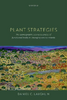
Plant strategies / Daniel C. Laughlin / Oxford university press (2023)


Titre : Plant strategies : The demographic consequences of functional traits in changing environments Type de document : texte imprimé Auteurs : Daniel C. Laughlin (19..-....), Auteur Editeur : Oxford university press Année de publication : 2023 Importance : 1 volume (512 pages) Présentation : illustrations, tableaux Format : 25 cm ISBN/ISSN/EAN : 978-0-19-286795-7 Langues : Anglais Catégories : Plantes (Botanique) Mots-clés : Stratégies végétales environnements Index. décimale : 581.7 Écologie des plantes, plantes propres à des milieux particuliers Résumé :
How Do plants make a living? Some plants are gamblers, others are swindlers. Some plants are habitual spenders while others are strugglers and miserly savers. Plants have evolved a spectacular array of solutions to the existential problems of survival and reproduction in a world where resources are scarce, disturbances can be deadly, and competition is cut-throat. Few topics have both captured the imagination and furrowed the brows of plant ecologists, yet no topic is more important for understanding the assembly of plant communities, predicting plant responses to global change, and enhancing the restoration of our rapidly degrading biosphere. The vast array of plant strategy models that characterize the discipline now require synthesis. These models tend to emphasize either life history strategies based on demography, or functional strategies based on ecophysiology. Indeed, this disciplinary divide between demography and physiology runs deep and continues to this today.
The goal of this accessible book is to articulate a coherent framework that unifies life history theory with comparative functional ecology to advance prediction in plant ecology. Armed with a deeper understanding of the dimensionality of life history and functional traits, we are now equipped to quantitively link phenotypes to population growth rates across gradients of resource availability and disturbance regimes. Predicting how species respond to global change is perhaps the most important challenge of our time. A robust framework for plant strategy theory will advance this research agenda by testing the generality of traits for predicting population dynamics.Note de contenu :
Sommaire:
-1- Foundations
-2- Demography and Life History
-3- Comparative Functional Ecology
-4- The Net Effect of Traits on Fitness
-5- The Effect of Traits on Demographic RatesPlant strategies : The demographic consequences of functional traits in changing environments [texte imprimé] / Daniel C. Laughlin (19..-....), Auteur . - [S.l.] : Oxford university press, 2023 . - 1 volume (512 pages) : illustrations, tableaux ; 25 cm.
ISBN : 978-0-19-286795-7
Langues : Anglais
Catégories : Plantes (Botanique) Mots-clés : Stratégies végétales environnements Index. décimale : 581.7 Écologie des plantes, plantes propres à des milieux particuliers Résumé :
How Do plants make a living? Some plants are gamblers, others are swindlers. Some plants are habitual spenders while others are strugglers and miserly savers. Plants have evolved a spectacular array of solutions to the existential problems of survival and reproduction in a world where resources are scarce, disturbances can be deadly, and competition is cut-throat. Few topics have both captured the imagination and furrowed the brows of plant ecologists, yet no topic is more important for understanding the assembly of plant communities, predicting plant responses to global change, and enhancing the restoration of our rapidly degrading biosphere. The vast array of plant strategy models that characterize the discipline now require synthesis. These models tend to emphasize either life history strategies based on demography, or functional strategies based on ecophysiology. Indeed, this disciplinary divide between demography and physiology runs deep and continues to this today.
The goal of this accessible book is to articulate a coherent framework that unifies life history theory with comparative functional ecology to advance prediction in plant ecology. Armed with a deeper understanding of the dimensionality of life history and functional traits, we are now equipped to quantitively link phenotypes to population growth rates across gradients of resource availability and disturbance regimes. Predicting how species respond to global change is perhaps the most important challenge of our time. A robust framework for plant strategy theory will advance this research agenda by testing the generality of traits for predicting population dynamics.Note de contenu :
Sommaire:
-1- Foundations
-2- Demography and Life History
-3- Comparative Functional Ecology
-4- The Net Effect of Traits on Fitness
-5- The Effect of Traits on Demographic RatesExemplaires
Code-barres Cote Support Localisation Section Disponibilité FB/15897 SNV8/1865 Livre Bibliothèque SNV Englais Disponible FB/15898 SNV8/1865 Livre Bibliothèque SNV Englais Disponible Documents numériques
https://www.amazon.fr/Plant-Strategies-Demographic-Consequences-Environments/dp/0192867946/ref=sr_1_1?__mk_fr_FR=%C3%85M%C3%85%C5%BD%C3%95%C3%91&crid=ZF6LISQNUN9Z&dib=eyJ2IjoiMSJ9.gBuKusPSJG17Uml83hudZbMCV-4qsKvAk5pzpg849RhXgvstHaudn7s3OUGPIDFaQUbDAxq9InUURL